
Lotus Elise.
The coilover guide.
Shop the coiloversAn Elise gives you plenty of feedback before you change anything. Choose suspension that suits the roads and tyres you use, with the generation and engine properly matched.
A small car with a long track-day life.
For a road-driven Elise, we'd keep compliance and useful travel high on the list. Good body control should let the car deal with a broken surface without making every bump a distraction. Start by finding out how much of the current behaviour comes from tired dampers, bushes or alignment.
A car on circuit tyres needs a different conversation. Tell us about the tyres, any aero and the amount of road driving it still does. Then compare spring specifications and damping controls around that use.
Lotus unveiled the Elise at Frankfurt in 1995. Its bonded aluminium chassis and mid-mounted engine set the shape of a two-seat sports car that developed through the original S1, the S2 and later cars commonly called S3. Lotus was still developing the formula for the 2021 Final Edition.
The suspension was part of that design from the beginning. The original brochure describes upper and lower wishbones with coaxial springs and dampers. The 2012 brochure still specifies independent double wishbones and springs around the dampers at both ends. Later factory equipment does not make an early car's replacement kit interchangeable.
For an owner now, the useful split is the actual car: S1, Rover-engined S2, Toyota-engined S2 or a later Elise. Our listed range includes BC Racing, SPAX, AST and MOTON. Their part numbers divide those applications differently, so identify the engine and year before choosing a range.
Model history: Lotus heritage timelineOriginal Lotus Elise brochureLotus Elise 2012 brochureLotus 2021 Final Edition brochure.
Start with your Elise.
Match the model year, engine and body style before comparing brands.

Elise S1
BC Racing BCR-ZA-02 names the 1996–2001 S1. SPAX separates RSX702 Road and RSX617 Track Day kits, both listing 1997–2001 for the Elise. AST and MOTON have S1 references too. For an early car, match the actual year and mounting specification rather than treating those catalogue dates as identical.
See S1 kits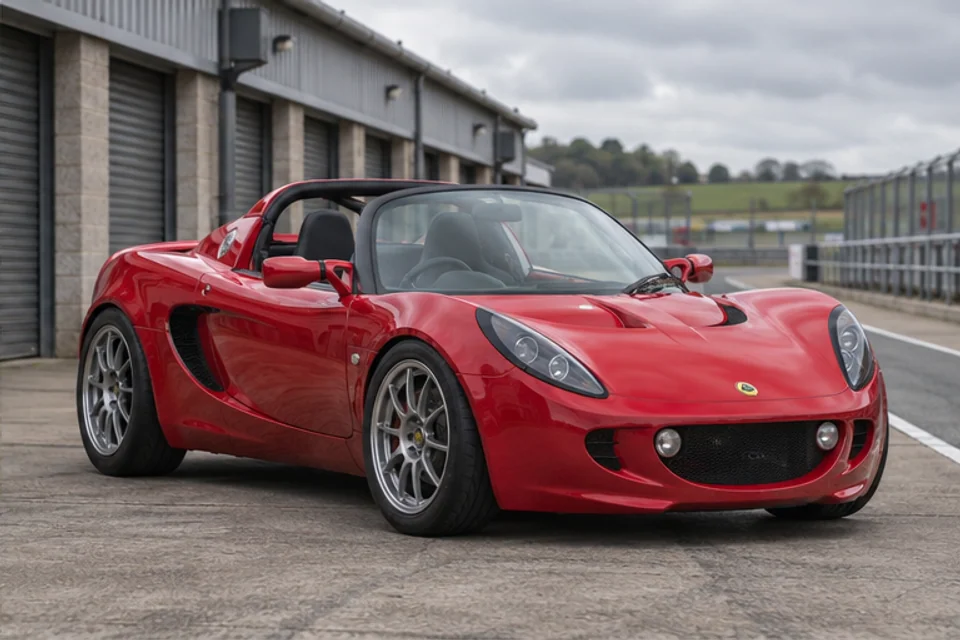
S2 with Rover K-series
BC Racing lists BCR-ZA-03 for the K-series S2, with its own 2002–2005 dates. The Toyota S2 kit has another code. An AST or MOTON entry labelled only S2 needs its full application and mounting details checked against your engine; those broader listings remain visible in the complete selection below.
See the named K-series kit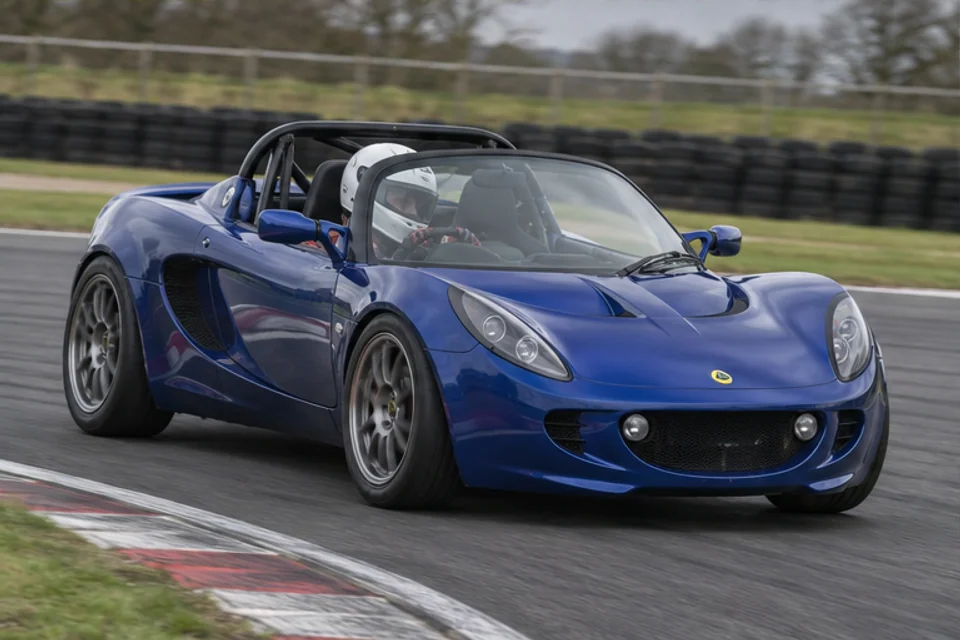
S2 with Toyota engine
BCR-ZA-01 is BC Racing's Toyota S2 listing for 2005–2011. SPAX RSX719 names the S2 VVTi, while RSX575 explicitly excludes VVTi. Match the actual engine, year and kit notes. A similar body shape or an Elise/Exige name shared on another product does not settle those differences.
See named Toyota / VVTi kits
Later Elise / S3
AST's manufacturer table lists dedicated S3 references for 2011–2021: ACA-L1203S Street, RIV-L1203S 5200 and RAC-L1203S 5300. Match the exact derivative and hardware, including any existing factory sport suspension. A 2011 registration can overlap catalogue generations, so use the car's identity as well as its date.
See the S3 listingsWhat do you want
from the car?
Road miles, circuit weekends or a car built around the lap. Start with how you drive.
Keep the car settled on a real road, with sufficient travel and a mounting arrangement that suits everyday use.
Read the buying advice
For a listed 1997–2001 S1, SPAX RSX702 is the Road Kit reference, with single-adjustable damping and application lowering of 0–20 mm front and rear. BC Racing's appropriate BR configuration is another approach to compare. Choose by the actual damper controls, mounts and application; a firmer setting or the largest drop is not automatically the better road setup.
- Keep compliance and travel
- Inspect the existing bushes and dampers
- Match the mounts and application
Choose around the tyres and the journey to the circuit. Keep a repeatable starting setup before adding more controls.
Read the buying advice
BCR-ZA-01 covers BC Racing's listed Toyota-engined S2 application. Compare its selected BR specification with the appropriate SPAX or AST reference, taking account of engine and mounting notes. A road-and-track Elise benefits from settings you can record and return to. Discuss spring choices with the supplier when changing tyre grip or adding aero.
- Choose tyres before spring rates
- Record road and circuit settings
- Confirm engine and mounting details
Separate compression and rebound controls help when the car has a defined tyre, spring and aero specification.
Read the buying advice
AST 5200 RIV-L1102S lists the S2 and separates rebound from compression. The 5300 range adds separate high- and low-speed compression controls. MOTON has S1 and S2 two- and three-way options. Agree the exact application, spring rates and reservoir installation before ordering; record changes against what the car does on track.
- Separate damping circuits
- Agree spring and reservoir specification
- Use a measured setup record
The rear spring already surrounds the damper.
The rear spring surrounds the damper on a standard Lotus Elise.
Component layout only. Mounts, dimensions and adjusters vary by kit.The Elise uses upper and lower wishbones to locate the rear wheel, with a coil spring around its damper. Original and later Lotus brochures describe that coaxial arrangement.
A replacement kit still needs the correct lengths, spring specification and mounting parts for your Elise. Similar-looking dampers, or a shared Elise/Exige label, do not prove that an S1, K-series S2 and Toyota S2 use the same assembly.
The diagram identifies the spring, damper and spring seat only. For height and preload adjustment, use the instructions for the exact kit and have the installer check travel and clearance at the final setting.
See how height and preload interact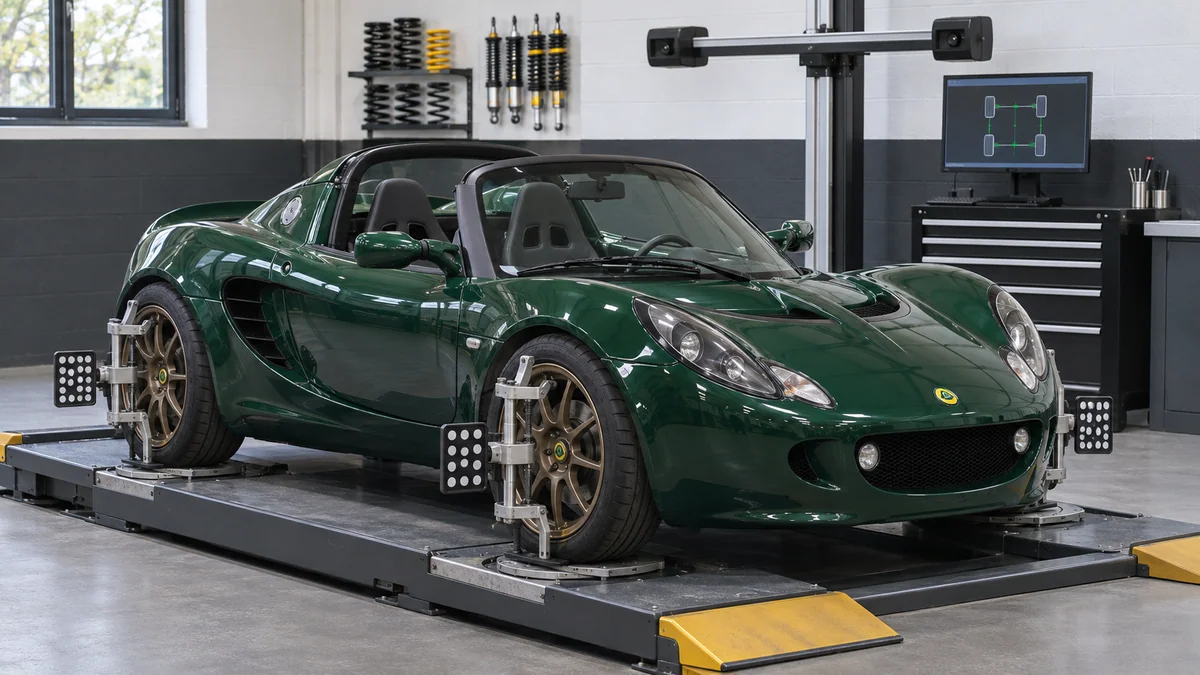
Finish the setup, not just the fitting.
Have a Lotus-experienced fitter inspect the wishbone bushes, joints, mounts and rear toe-link condition before setting the car up. Changing dampers will not remove play elsewhere in the suspension. Confirm that the mounting parts suit the car and deal with worn components first.
Set the final height, check clearance and have the geometry measured. Corner-weighting can be useful on a developed track car, with the driver load and fuel level agreed in advance. Keep the measurements and adjustment record with the car.
Tyres and staggered wheels
Give the fitter the actual front and rear wheel widths, offsets and tyres. The Elise uses different sizes front and rear; a wheel change belongs in the clearance and alignment discussion.
Bushes and rear toe links
Inspect for wear and free play before paying for a geometry setup. Discuss replacement parts with the fitter according to the exact model and how the car is used.
Ride height and body clearance
Check the front clam, underbody and wheel clearance at your intended height, including steering lock and suspension compression. Leave useful travel for the roads you drive.
Aero and circuit preparation
A wing, tyre change or weight reduction changes the setup brief. Agree the spring specification around the complete car, and plan the braking, cooling and circuit requirements too.
The current Elise range.
Compare the controls and hardware included in each range.

The S1, K-series S2 and Toyota S2 use separate BC references: ZA-02, ZA-03 and ZA-01. Compare the selected configuration's controls and mounting arrangement after matching that application.
View BC Racing Elise kitsSPAX
S1 Road RSX702 and Track Day RSX617 are distinct listings. The S2 range separates RSX575 excluding VVTi from RSX719 VVTi. Their lowering ranges belong to each exact application.
View SPAX Elise kits
The manufacturer table has S1, S2, S3 and a separate 2004–2006 Elise/Exige S2 row. Street, 5200 and 5300 controls differ. Check the full application and hardware when two S2 part numbers look similar.
View AST Elise kits
Current S1 and S2 listings provide two- and three-way damping. These are choices for a specified setup, with springs, mounts and reservoir routing to agree before fitting.
View MOTON Elise kitsFind your Elise coilovers.
Prices include UK VAT. Choose an application and brand, then open a kit for its current options and availability.
23 listings
Match the engine, body style and axle-load limits on the product page before ordering.
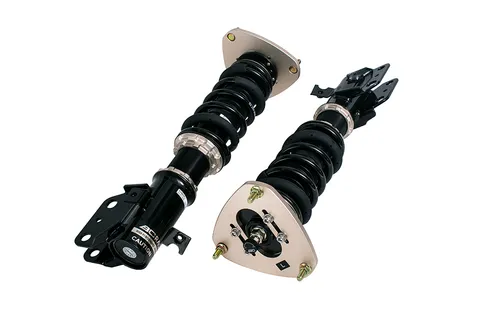
BC Racing · BCR-ZA-01
BC Racing Coilovers - Lotus Elise / Exige (Toyota) (05-11) [S2]
S2 with Toyota engine
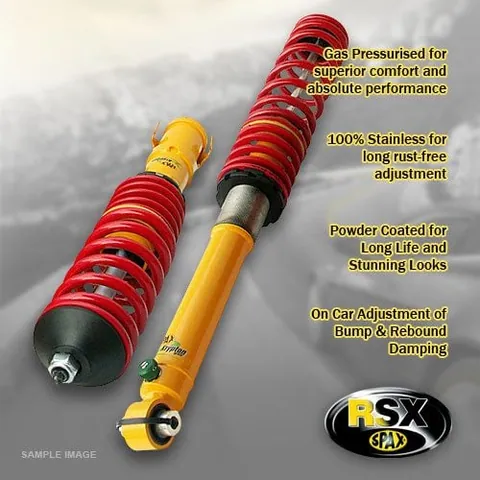
SPAX · RSX702
SPAX RSX Coilover Kit for Lotus Elise S1 (Road Kit) - RSX702
Elise S1
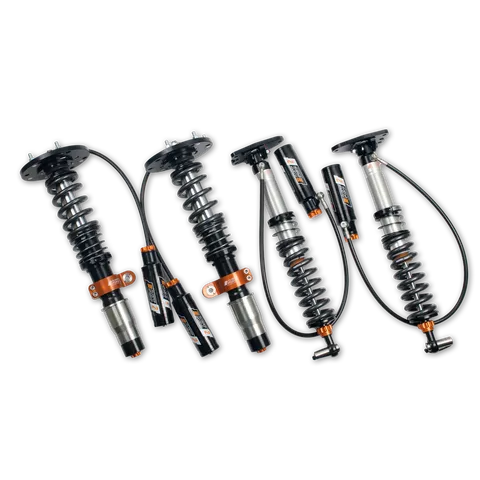
AST · RIV-L1102S
AST 5200 2-Way Motorsport Coilovers for Lotus ELISE S2 - RIV-L1102S
Check the exact application
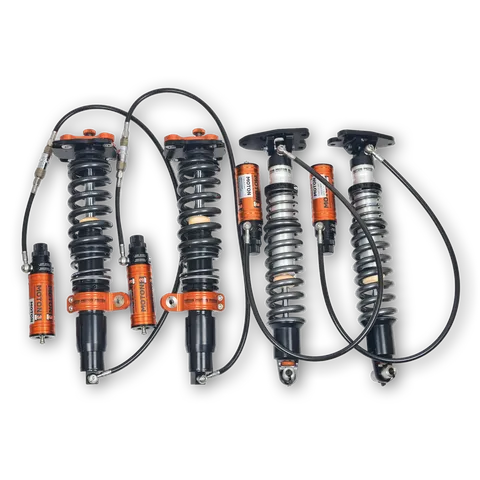
MOTON · M 510 013S
MOTON 3-Way Motorsport Coilovers for Lotus ELISE S2 - M 510 013S
Check the exact application
BC Racing · BCR-ZA-03
BC Racing Coilovers - Lotus Elise / Exige (K-Series) (02-05) [S2]
S2 with Rover K-series
SPAX · RSX575
SPAX RSX Coilover Kit for Lotus Elise S2 (All models excl. VVTi) - RSX575
Check the exact application
All Elise kit links and part numbers
- BC Racing · BCR-ZA-01: BC Racing Coilovers - Lotus Elise / Exige (Toyota) (05-11) [S2]
- BC Racing · BCR-ZA-02: BC Racing Coilovers - Lotus Elise / Exige (96-01) [S1]
- BC Racing · BCR-ZA-03: BC Racing Coilovers - Lotus Elise / Exige (K-Series) (02-05) [S2]
- AST · ACA-L1101S: AST 5100 Street Coilovers for Lotus ELISE S1 - ACA-L1101S
- AST · ACA-L1102S: AST 5100 Street Coilovers for Lotus ELISE S2 - ACA-L1102S
- AST · ACA-L1103S: AST 5100 Street Coilovers for Lotus ELISE/EXIGE S2 - ACA-L1103S
- AST · ACA-L1203S: AST 5100 Street Coilovers for Lotus ELISE S3 - ACA-L1203S
- AST · RAC-L1101S: AST 5300 3-Way Motorsport Coilovers for Lotus ELISE S1 - RAC-L1101S
- AST · RAC-L1102S: AST 5300 3-Way Motorsport Coilovers for Lotus ELISE S2 - RAC-L1102S
- AST · RAC-L1103S: AST 5300 3-Way Motorsport Coilovers for Lotus ELISE/EXIGE S2 - RAC-L1103S
- AST · RAC-L1203S: AST 5300 3-Way Motorsport Coilovers for Lotus ELISE S3 - RAC-L1203S
- AST · RIV-L1101S: AST 5200 2-Way Motorsport Coilovers for Lotus ELISE S1 - RIV-L1101S
- AST · RIV-L1102S: AST 5200 2-Way Motorsport Coilovers for Lotus ELISE S2 - RIV-L1102S
- AST · RIV-L1103S: AST 5200 2-Way Motorsport Coilovers for Lotus ELISE/EXIGE S2 - RIV-L1103S
- AST · RIV-L1203S: AST 5200 2-Way Motorsport Coilovers for Lotus ELISE S3 - RIV-L1203S
- MOTON · M 510 010S: MOTON 2-Way Motorsport Coilovers for Lotus ELISE S1 - M 510 010S
- MOTON · M 510 011S: MOTON 3-Way Motorsport Coilovers for Lotus ELISE S1 - M 510 011S
- MOTON · M 510 012S: MOTON 2-Way Motorsport Coilovers for Lotus ELISE S2 - M 510 012S
- MOTON · M 510 013S: MOTON 3-Way Motorsport Coilovers for Lotus ELISE S2 - M 510 013S
- SPAX · RSX575: SPAX RSX Coilover Kit for Lotus Elise S2 (All models excl. VVTi) - RSX575
- SPAX · RSX617: SPAX RSX Coilover Kit for Lotus applications - RSX617
- SPAX · RSX702: SPAX RSX Coilover Kit for Lotus Elise S1 (Road Kit) - RSX702
- SPAX · RSX719: SPAX RSX Coilover Kit for Lotus Elise S2 VVTi - RSX719
Before you order.
Identify your car
Identify S1, S2 or later Elise, then confirm the actual engine and production year.
Match the kit
Match the full kit application, including any Elise/Exige, VVTi or factory-suspension restriction.
Check what’s included
Confirm spring specification, mounting parts, reused components and any remote-reservoir installation.
Check your modifications
Provide front and rear wheels, tyres, aero changes and the intended height for clearance checks.
Plan fitting
Arrange inspection, fitting and geometry together; record the final settings and any corner-weighting conditions.
See what the adjustments do.
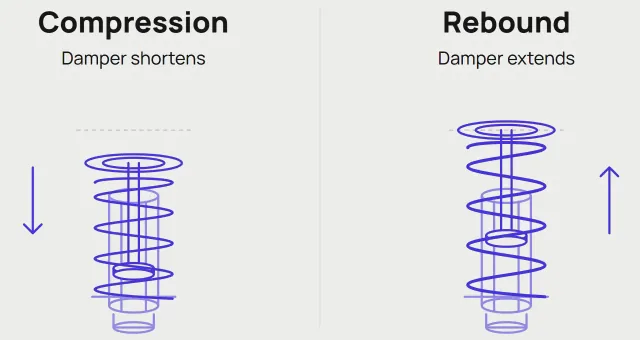
Damping adjustment explained
What combined, two-way and three-way controls change.
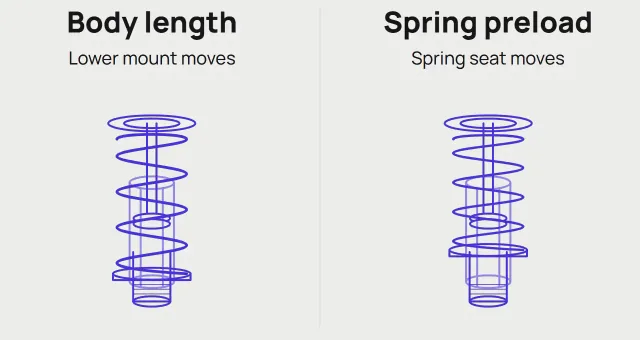
Ride height and spring preload
Understand the two adjustments before choosing a lowering range.
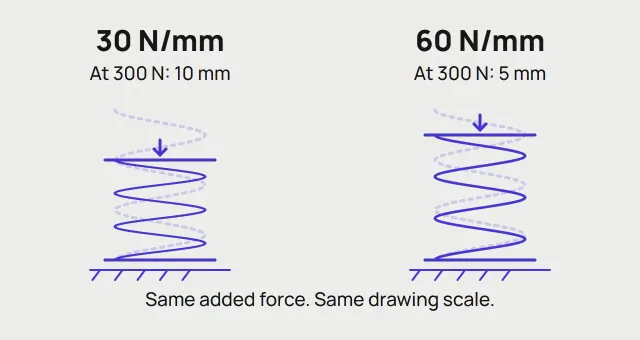
What spring rate tells you
Compare force and movement, read the units and choose a spring with the damper in mind.
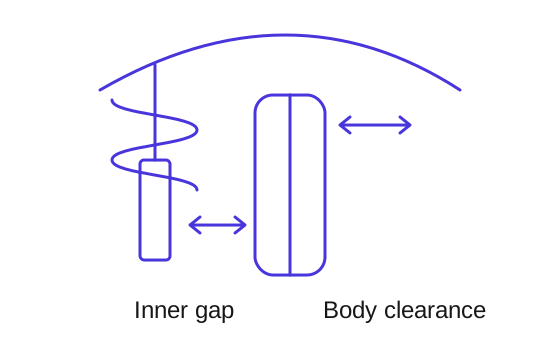
Wheel and tyre clearance with coilovers
A wheel diameter alone cannot confirm clearance to the spring, damper or body.
Questions about Lotus Elise coilovers.
Check the details before choosing your kit.
Are Elise S1, S2 and S3 coilovers interchangeable?
Choose a kit whose application names the correct generation, engine and year. Our BC Racing listings separate S1, K-series S2 and Toyota S2, while AST lists dedicated later S3 references. A similar appearance or registration year is not enough to establish fitment.
Does an Elise have a separate rear spring?
The standard Elise has a coil spring surrounding its damper at the rear. Upper and lower wishbones locate the wheel. Lotus describes coaxial springs and dampers in both the original and later brochures.
What is the difference between SPAX RSX702 and RSX617?
The listed S1 applications distinguish RSX702 as the Road Kit, with 0–20 mm front/rear lowering, and RSX617 as the Track Day Kit, with 0–30 mm. Both list 1997–2001 for the Elise. Check the full specification and instructions for the actual car.
Which SPAX S2 listing includes VVTi?
RSX719 names the Elise S2 VVTi. RSX575 says all S2 models excluding VVTi. Match the engine and application notes; do not choose between them by year or body shape alone.
Do I need separate compression and rebound adjustment?
It can be useful when you have a defined tyre and spring setup and can record the effect of changes. A road car or occasional track-day car may be well served by simpler controls. Choose adjustment to address your use, rather than the number of dials.
Will a kit listed for an Exige fit my Elise?
Only use it where the exact application includes your Elise. Some manufacturer rows name both models for particular years; that is not approval for every Exige or Elise kit to interchange.
What should be checked while the coilovers are fitted?
Ask the fitter to inspect bushes, joints, mounts and rear toe links, confirm the kit's hardware, and check wheel/body clearance at the final height. Set the geometry afterwards and keep the measurements. Discuss corner-weighting for a developed track setup.
Let’s talk suspension.
Tell us which Elise you have, its engine, wheels and how often it goes on circuit. We can help compare the right application and plan the fitting details.