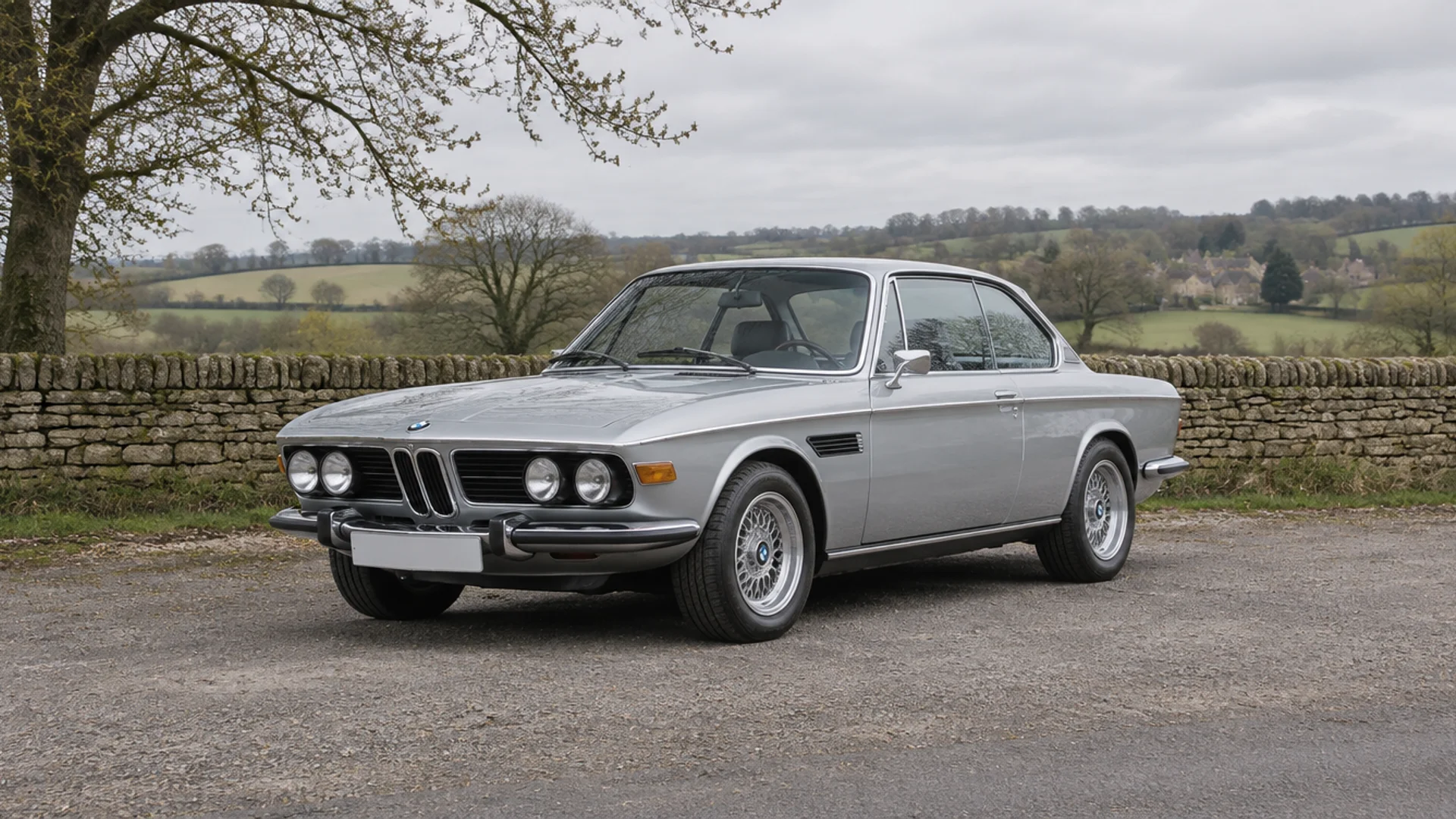
BMW E9 2800 CS and 3.0 CS.
The coilover guide.
Shop the coiloversBC Racing lists I-44 for the E9 coupe. On a car this old, condition comes first: inspect the shell and mounts, and confirm how the kit fits, before setting a height.
BMW E9 history
The E9 is BMW's classic pillarless coupe, built from 1968 to 1975 as the 2800 CS, 3.0 CS, CSi and the lightweight CSL. BC lists I-44 for it in BR RA form, with a pillowball front and rubber rear.
BC's application name for this kit includes '(Weld)'. Ask BC exactly what that means for your car, and whether any cutting or welding is needed, before booking the work.
BMW launched the 2800 CS in 1968, with bodies built by Karmann, and followed it with the 3.0 CS and fuel-injected 3.0 CSi in 1971. The lightweight 3.0 CSL became a European Touring Car Championship winner.
The E9's front suspension uses MacPherson struts and the rear semi-trailing arms, shared in principle with BMW's saloons of the time. Many cars have had suspension work over the decades, so check what is fitted now.
Rust is the E9's main enemy, including around the suspension mounts. Have the shell inspected before any suspension change, and treat a valuable original car with care.
Start with your E9 2800 CS and 3.0 CS.
Confirm the chassis, year and existing suspension before choosing your setup.
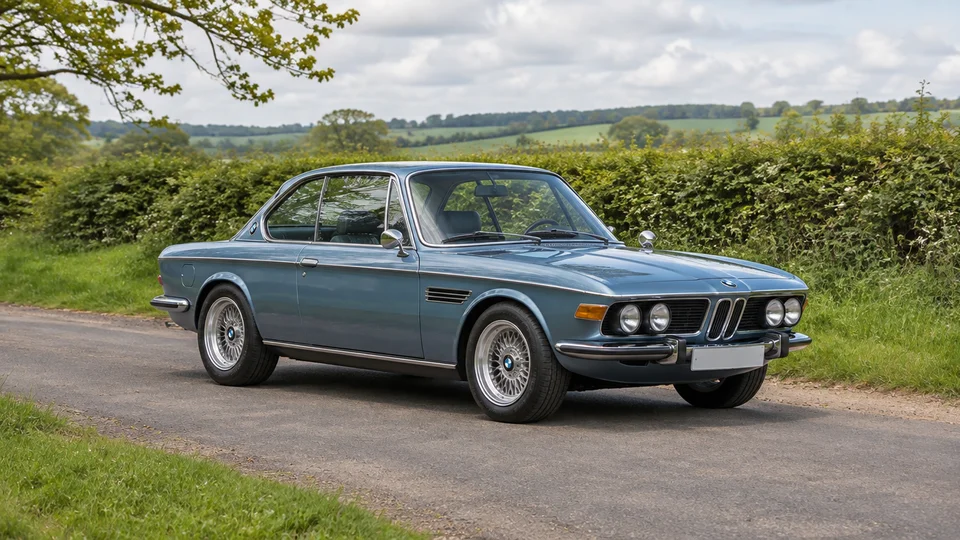
2800 CS and 3.0 CS
BC lists I-44 for the 1968-1975 E9, with default rates of 6 kg/mm front and 5 kg/mm rear. Give the supplier the model, build date and any previous suspension changes, and ask it to confirm the fitting method.
Check my E9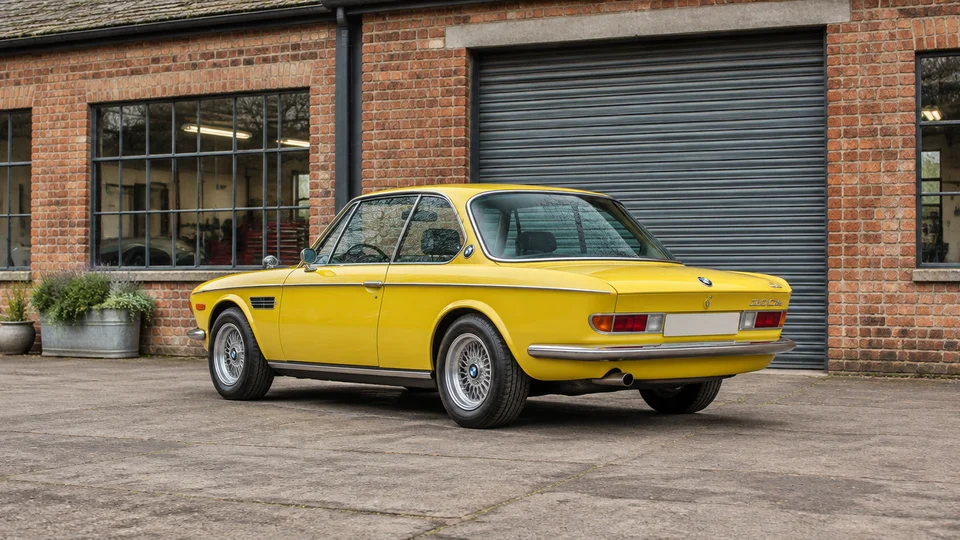
Restored and original cars
On an original or concours car, ask whether the kit can be fitted without permanent changes, and keep the original parts. Discuss the fitting method with BC and a classic BMW specialist.
Check my original E9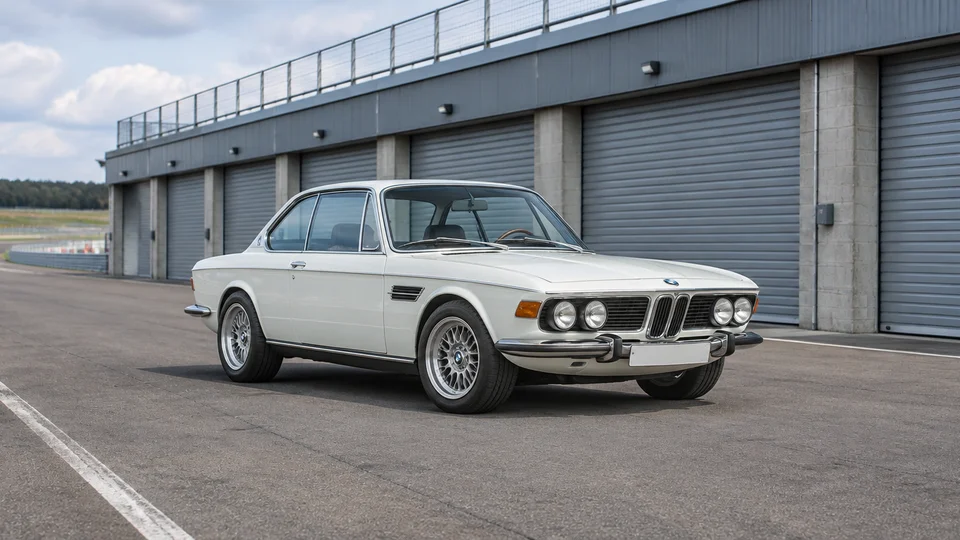
Events and fast road
Tell the supplier about the tyres and any track days or historic events. Ask whether the standard rates suit that use, and whether your event's regulations allow the kit.
Check my event E9Choose a kit for your car and driving
Tell the supplier about your tyres, usual roads and any circuit plans. Budget for fitting, alignment and setup as well as the kit. Each example below still needs an application check for your exact car.
BC lists I-44 BR RA for the E9. Confirm the fitting method and the car's condition first.
Read the buying advice
I-44 is a possible starting point once the supplier has confirmed how it fits your car. It has 30-way rebound adjustment and height set separately from spring preload. Keep the drop modest so the car keeps its character and enough travel.
- Confirm the fitting method
- Inspect the shell first
- Include alignment
Keep the original parts and avoid permanent changes where possible.
Read the buying advice
Ask BC and a classic specialist whether the kit can be fitted and removed without permanent changes. Store the original struts and springs, and record the work for the car's history file.
- Avoid permanent changes
- Keep original parts
- Record the work
Event regulations may limit suspension changes. Check them before ordering.
Read the buying advice
Read your event's technical regulations, or ask the organiser, before fitting adjustable suspension. Then agree rates and starting settings with the supplier for your tyres.
- Check event regulations
- Give tyre details
- Agree rates and settings
Check where the rear spring carries the load
On a standard BMW E9, the rear spring and shock absorber are mounted separately.
Layout only. Mounts and spring seats vary by kit.The E9 uses semi-trailing arms at the rear, with the spring mounted separately from the damper. BC lists 6 kg/mm front and 5 kg/mm rear; the springs sit in different positions, so the figures are not a direct comparison of stiffness at the wheel.
Rear camber and toe change as this suspension moves. After setting the height, have the alignment checked and ask a specialist about any hardware needed to correct it.
Read about ride height and spring preload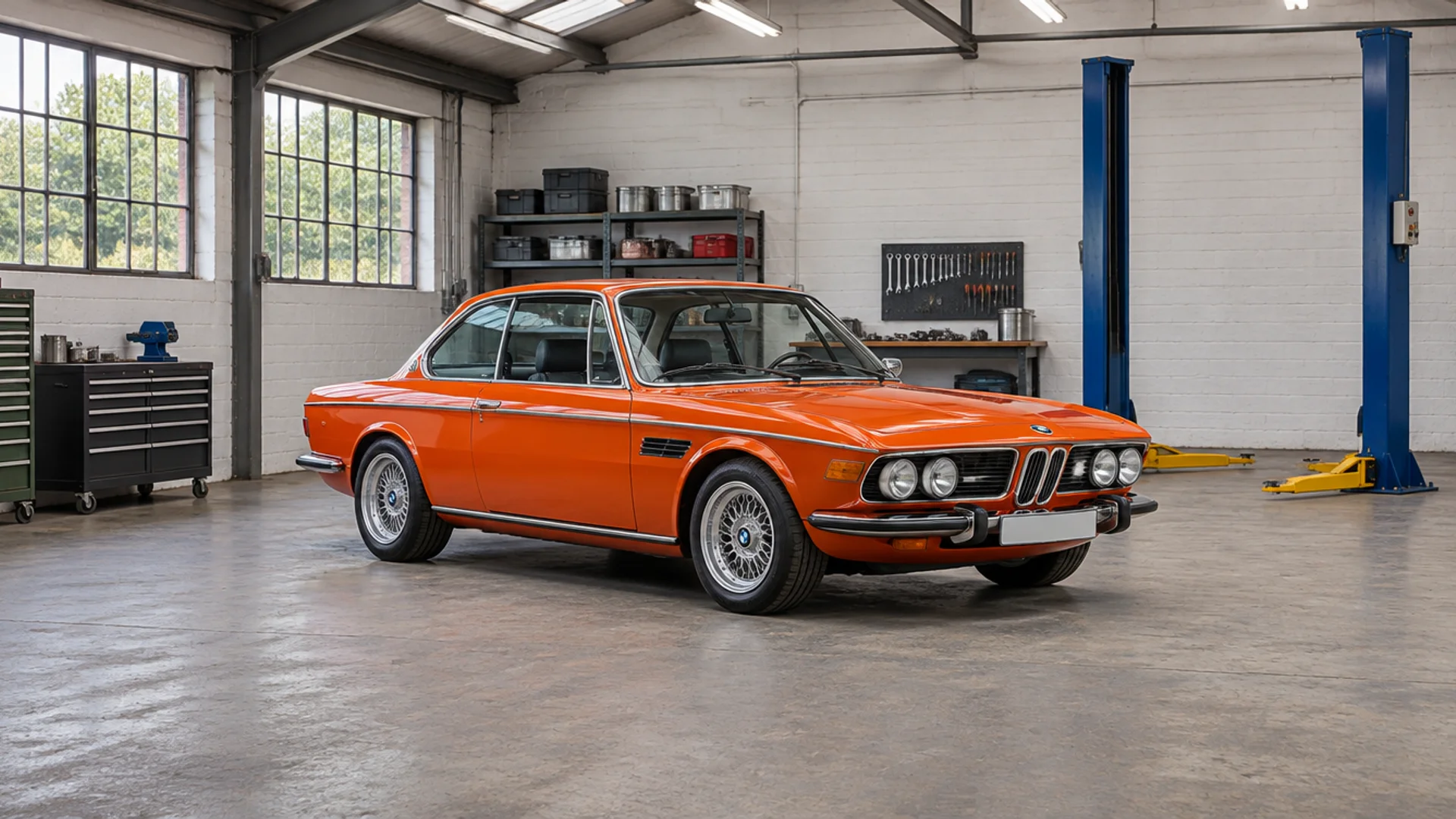
Plan the fitting before the car arrives
Give the workshop the kit reference and the car's options list before it orders fitting parts. Use a workshop experienced with classic BMWs, and have it inspect the shell around the suspension mounts for corrosion. Have it check the top mounts, bearings, bushes and drop links, and ask for a written list of the parts it will reuse or replace.
Once fitted, check clearance with the actual wheels and tyres through steering lock and suspension travel. Let the car settle at the agreed height before alignment, and record the starting damper settings.
Inspect the shell and mounts
Have a classic BMW specialist inspect the strut towers, rear mounts and floor for corrosion and previous repairs. Fix any problems before fitting new suspension.
Measure the wheel and tyre clearance
Give the fitter the wheel width, offset and tyre size, including any spacers. At the intended height, check tyre clearance to the arches and wheel clearance to the springs, dampers and adjusters.
Leave travel for normal use
Tell the workshop about your usual roads and what the car usually carries. At the proposed height, check how much room remains for the suspension to compress with the kit's bump stops fitted.
Set the geometry after the height
Have the car aligned once the ride height is final and the suspension has settled. Get the readings and starting damper settings recorded.
The current E9 2800 CS and 3.0 CS range.
See the controls and hardware in the listed kit.

I-44 is listed for the 1968-1975 E9 in BR RA form, with a pillowball front and rubber rear, 30-way rebound adjustment and default rates of 6 kg/mm front and 5 kg/mm rear. BC's application name includes '(Weld)', so ask BC exactly how it fits your car.
View BC Racing E9 2800 CS and 3.0 CS kitsFind your E9 2800 CS and 3.0 CS coilovers.
Prices include UK VAT. Choose an application and brand, then open a kit for its current options and availability.
1 listing
Selected application: All E9 2800 CS and 3.0 CS applications
Match the drivetrain, body style and axle-load limits on the product page before ordering.
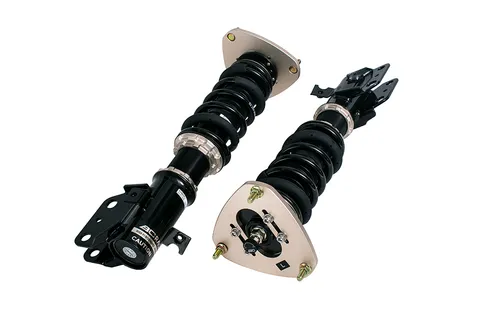
BC Racing · BCR-I-44
BC Racing Coilovers - BMW New Six Cs (Weld) (68-75) [E9]
Check the exact application
All E9 2800 CS and 3.0 CS kit links and part numbers
Before you order.
Identify your car
Send the model, build date, VIN or chassis number, and details of any previous suspension work.
Match the kit
Confirm the full kit reference for your car and check that it covers your engine, drivetrain and build date.
Check what’s included
Ask for a written list of the mounts, springs and fitting parts supplied with the kit. Confirm which existing parts will be reused and which need replacing.
Check your modifications
Supply wheel width, offset and tyre size, together with the intended use. Agree a height with adequate clearance and suspension travel.
Plan fitting
Get fitting, alignment and setup quoted together, including any inspection, corrosion repairs and fitting work BC specifies. Confirm delivery timing before reserving workshop time.
See what the adjustments do.
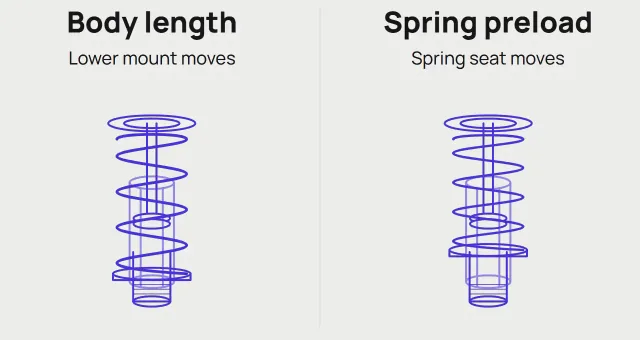
Ride height and spring preload
Understand the two adjustments before choosing a lowering range.
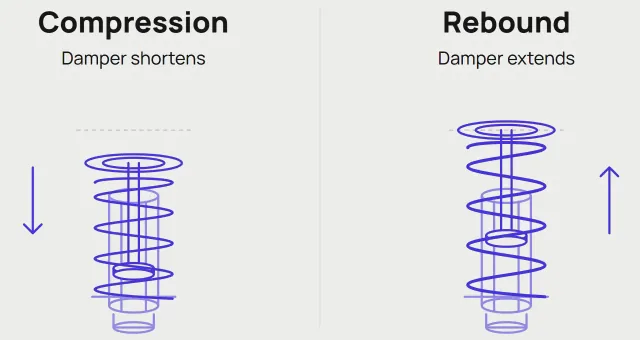
Damping adjustment explained
What combined, two-way and three-way controls change.
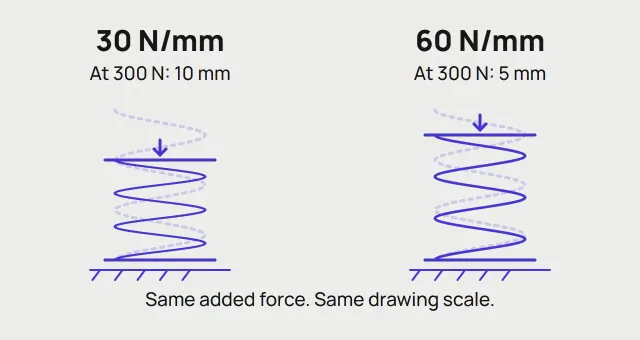
What spring rate tells you
Compare force and movement, read the units and choose a spring with the damper in mind.
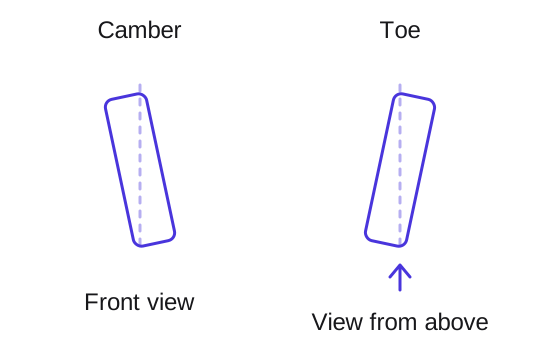
Alignment after changing ride height
Set the intended height, check the geometry and keep a useful record of the result.
Questions about BMW E9 2800 CS and 3.0 CS coilovers.
Check the details before choosing your kit.
Does fitting I-44 need welding?
BC's application name includes '(Weld)'. Ask BC exactly what that means for your car before booking the work.
Does I-44 fit the 3.0 CSL?
BC lists the E9 coupe from 1968 to 1975. Ask BC to confirm a CSL, which has lightweight panels and its own specification.
Can I keep my original parts?
Yes. Store the original struts and springs, and ask whether the kit can be fitted without permanent changes.
How low should I set the car?
Choose the height with the fitter using the kit instructions, wheel clearance and room for suspension movement. A lowering range shows what is available, not a target for every E9. Check the alignment at the final height.
When should I book fitting?
Agree the specification and delivery timing with the supplier first, then book fitting and alignment once the parts are confirmed.
Let’s talk suspension.
Send the E9's engine, build date, options list and current suspension details. Include the kit reference you are considering so the application and fitting parts can be checked together.