Height and geometry belong in one plan
Changing ride height changes the position at which the suspension operates. The installer needs to check the finished alignment, not assume that the previous settings remain suitable. Agree the intended height and use before the car goes on the alignment equipment.
Ask for the actual before-and-after readings. A description such as “fast road” leaves the measured values and the manufacturer’s permitted range unstated.
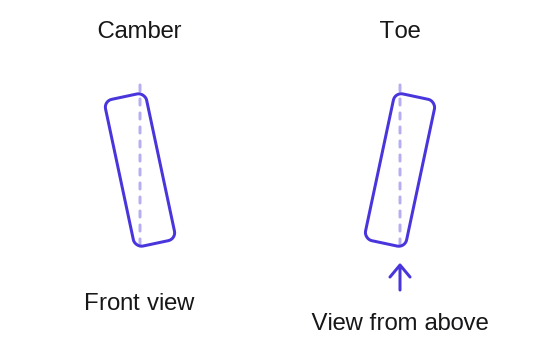
Camber and toe describe different angles
Camber is the wheel’s inward or outward tilt viewed from the front. Toe describes its direction viewed from above. Our simple diagram separates those views; its exaggerated angles are not target settings.
An adjustable top mount may change one aspect of the geometry, depending on the strut and mounting arrangement. It does not establish that every axle has the adjustments needed to reach any requested figure. Additional arms or other hardware must be checked for the exact car.
Use the vehicle and kit requirements
Give the specialist the wheel and tyre specification, chosen ride height and kit instructions. They can check the available adjustments, mounting condition and clearances as a complete fitted setup. Ask them to identify any figure outside the applicable range and explain the practical options before treating the job as finished.
Lowering can also affect the working position of rubber-mounted suspension components. Bilstein’s workshop guidance discusses this when ride height changes; the relevant workshop procedure belongs with the installer.
Keep the setup sheet
Retain the alignment printout with the date, mileage, ride-height measurement method and tyre details. It gives the next workshop a useful starting point and helps explain what changed if the car later behaves differently. If you alter height again, ask whether another alignment check is needed. We can help check kit and mount options; final geometry is a fitted-car measurement.
Questions about this guide.
Check the details before choosing your kit.
Should alignment be checked after lowering the car?
Changing height changes the position at which the suspension operates. Ask the installer to check the finished alignment at the agreed height and give you the before-and-after readings.
Are camber and toe the same adjustment?
Camber is the wheel’s inward or outward tilt viewed from the front. Toe describes its direction viewed from above. The available adjustments depend on the suspension and mounting arrangement.
What should I keep from the alignment appointment?
Retain the printout with the date, mileage, tyre details and ride-height measurement method. It gives a later workshop a useful reference. Ask whether another alignment check is needed if you change height again.
Technical references
Reviewed 24 October 2026. Manufacturer material may cover other markets or applications. Confirm the specification supplied for your UK kit.