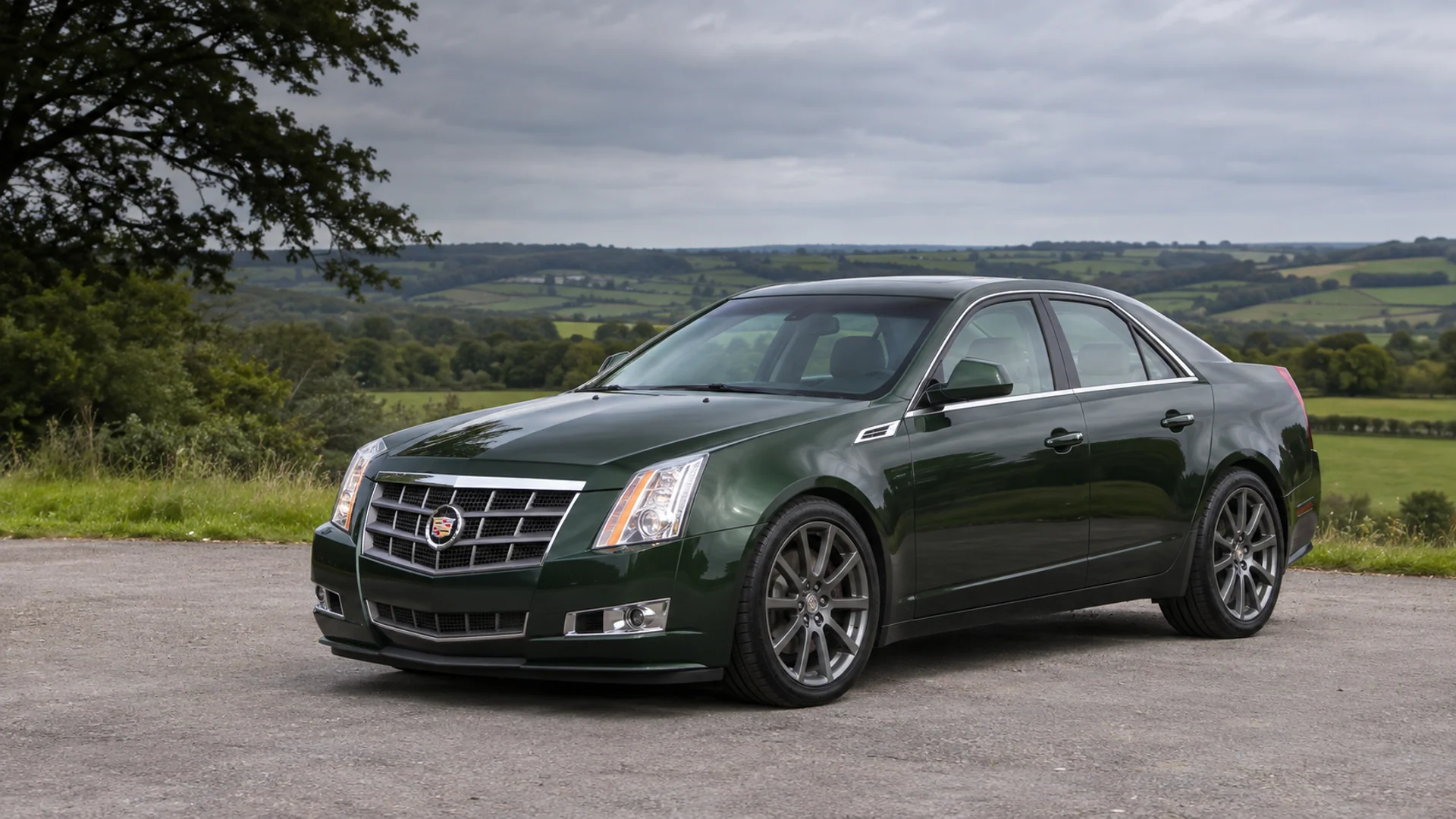
Cadillac CTS Sigma II.
The coilover guide.
Shop the coiloversA 2014 registration alone won't identify the kit: BC's saloon listing ends at 2013, while its estate and coupé listings run to 2014. Rear-wheel drive and all-wheel drive have separate BC applications with different standard rear springs.
Identify the body and suspension package.
BC North America lists the 2008 to 2013 saloon, 2010 to 2014 estate and 2011 to 2014 coupé for both drivetrains. ZN-01 is the RWD application, sold here as BCR-ZN-01; ZN-02 is the AWD application, sold as BCR-ZN-02. Give the supplier the body style, build details and engine so it can confirm your car against the exact kit. CTS-V and the 2014 saloon are outside these body-year listings.
Tell the fitter how the car is loaded on a normal journey. If you regularly fill the estate's load area, include that load when checking the proposed height. Provide the wheel and tyre sizes, then have the workshop assess clearance and suspension travel before agreeing the springs and fitting work.
Cadillac's US 2011 Sport Sedan and Sport Wagon specifications describe short/long-arm front suspension and a modified multi-link rear. Its Canadian 2014 coupé and Sport Wagon tables also describe those layouts. These descriptions identify the factory design; the supplier still needs to confirm the kit and mounting parts for your exact car.
The selected Canadian tables distinguish suspension packages, including FE2 and FE3 options for the estate. Have the workshop identify the package and parts now fitted, especially if a previous owner has changed the dampers or springs. A trim badge cannot confirm what remains on the car.
Start with your CTS Sigma II.
Confirm the chassis, year and existing suspension before choosing your setup.
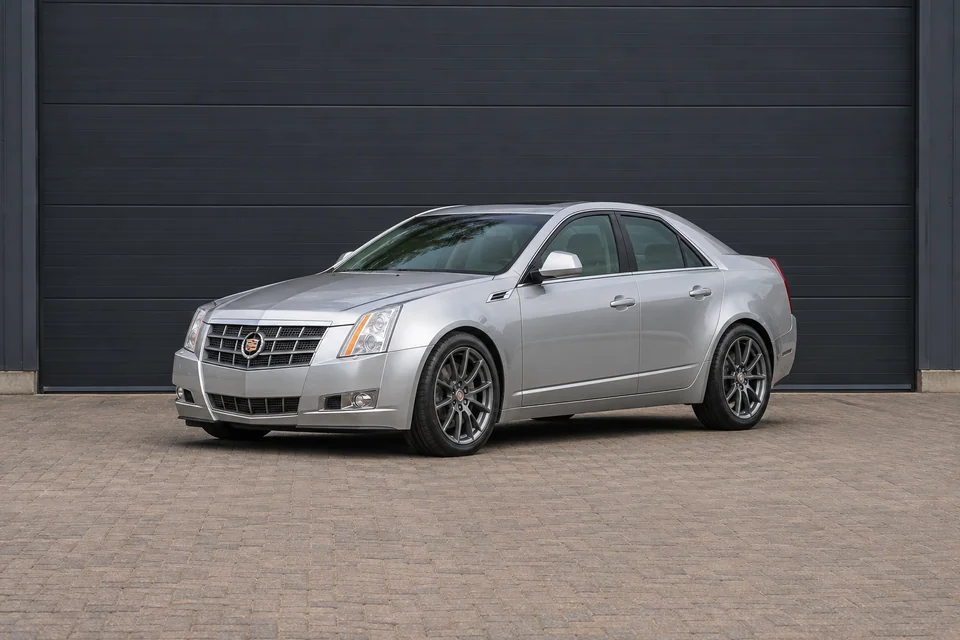
CTS rear-wheel drive: check ZN-01
BC North America lists ZN-01-BR-RN for the 2008 to 2013 saloon, 2010 to 2014 estate and 2011 to 2014 coupé with rear-wheel drive. The shop's BCR-ZN-01 has listed spring rates of 10 kg/mm front and 12 kg/mm rear. Send the body and build details to confirm the application, supplied mounts and rear spring hardware.
Check my RWD CTSCTS all-wheel drive: check ZN-02
ZN-02-BR-RN is BC North America's separate AWD listing for the same body-year ranges: 2008 to 2013 saloon, 2010 to 2014 estate and 2011 to 2014 coupé. The shop's BCR-ZN-02 lists 10 kg/mm front and 14 kg/mm rear. Ask the supplier to confirm the exact AWD car and the parts your installation will retain.
Check my AWD CTSWhat do you want
from the car?
Choose advice for everyday driving, occasional circuit days or a dedicated track project.
Plan the height with the loads the car normally carries.
Read the buying advice
An estate can have less clearance with passengers and luggage aboard. Tell the fitter how you normally load the car, and show them any entrance or speed hump that already causes trouble. Have the workshop assess the existing ride and worn parts before you choose the spring specification. Ask for the fitting quotation to include any mounts or fixings that need replacing.
- Check clearance with normal passengers and luggage
- Include worn parts in the fitting quotation
Give the fitter both wheel specifications if you swap wheels for track days.
Read the buying advice
Include wheel widths, offsets and tyre sizes for each set, along with any spacers. The workshop needs to check for contact and usable suspension travel with each combination. Agree a spring and damper specification for the road journeys as well as the circuit use. Record the initial damper settings and alignment so later changes can be assessed against a known starting point.
- Check the road and track wheel combinations
- Record the starting alignment and damper settings
Agree the suspension with the builder before ordering the kit.
Read the buying advice
Give the builder the tyre specification and details of any suspension or weight changes. The builder should assess the proposed height and usable travel, then agree the springs and dampers with the supplier. Obtain the exact mounting and rear spring instructions before booking the installation. Confirm suitability for the intended events separately from the vehicle application.
- Describe the car's modifications and intended events
- Confirm the springs and mounting parts with the builder
Inspect the rear spring hardware as well as the damper.
In GM's drawing for the selected 2012 Cadillac CTS Base 3.0, the rear spring and damper are mounted separately.
Component layout only. Mounts, dimensions and adjusters vary by kit.GM's parts drawing for a selected 2012 CTS Base 3.0 shows spring 2 beside a separate shock absorber, item 1. It identifies factory components for that selection. Have the workshop check the arrangement on your car and obtain the exact BC rear fitting instructions.
Ask which rear springs, seats or height adjusters and mounting parts the order includes. The fitter needs to check spring retention and damper travel through suspension movement at the agreed height. The factory drawing cannot confirm the contents or installation of the BC kit.
Understand ride height and spring preload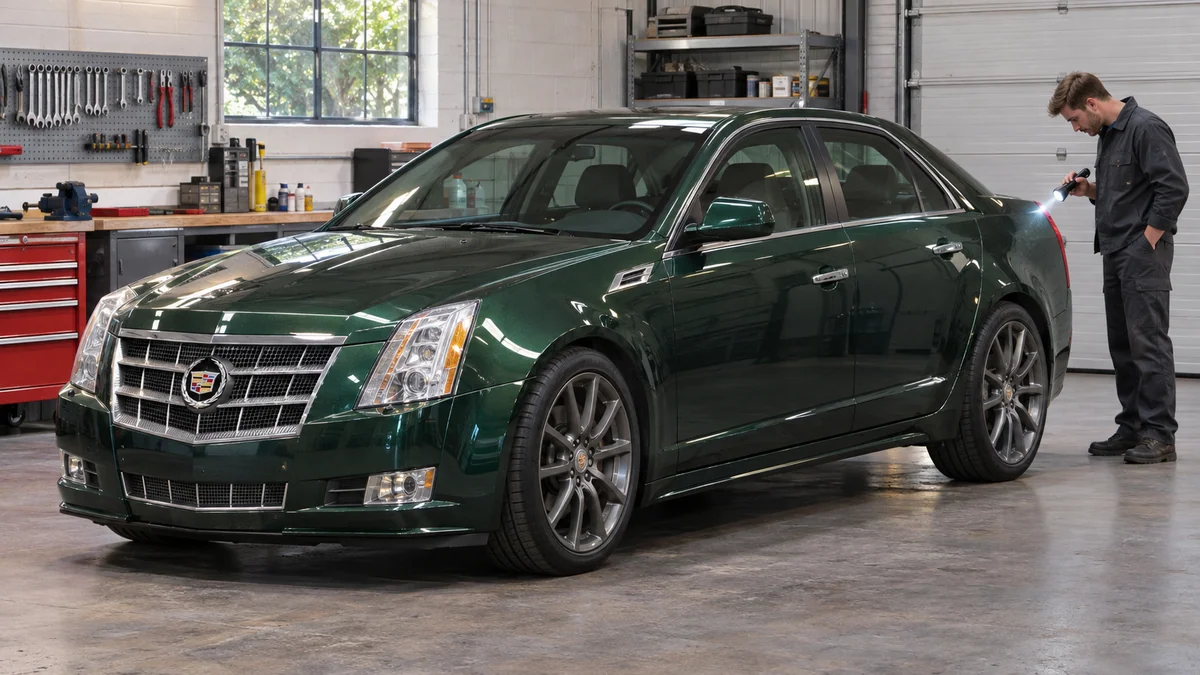
Check the parts the installation will retain.
The shop labels both BR RN kits with no front top mount supplied and rubber rear mounts. BC North America's general RN table describes rubber or reused original mounts at each end. Ask the supplier for an itemised list for the exact order, then have the workshop inspect the mounts and fixings it plans to retain. Camber plates are not confirmed for these orders.
Tell the workshop about earlier lowering, replacement dampers or changed suspension arms. It needs to assess the car as it stands before planning the work. Agree the finished height after checking clearance and travel, then arrange alignment. Confirm the kit and any additional parts will be available before reserving fitting time.
Wheels, tyres and spacers
Provide the width and offset of each wheel, the tyre sizes and any spacer thicknesses. Have the fitter check for contact through steering and suspension movement. Ground clearance also needs checking with the car carrying its normal load.
Existing suspension changes
List replacement arms, bushes, dampers and springs, including parts fitted by a previous owner. Ask the workshop to identify anything uncertain on the car before the supplier confirms the application and required mounting parts.
Retained mounts and rear spring parts
Confirm the front mounts and fixings the fitter must reuse, and ask which rear spring seats or adjusters the order supplies. Inspect retained parts before booking the work so replacements can be included in the parts order.
Alignment and damper settings
Plan alignment after the finished height is agreed. The BR adjuster changes compression and rebound together. Follow the supplied damper instructions for initial settings and record subsequent changes.
The current CTS Sigma II range.
Compare the controls and hardware included in each range.

The shop lists BCR-ZN-01 for RWD and BCR-ZN-02 for AWD, both as BR RN. Their listed rates match the exact BC North America pages: 10 kg/mm front and 12 kg/mm rear for ZN-01, and 10 kg/mm front and 14 kg/mm rear for ZN-02. BC describes BR with 30 clicks of simultaneous compression and rebound adjustment. One control changes both; there is no separate compression setting.
View BC Racing CTS Sigma II kitsFind your CTS Sigma II coilovers.
Prices include UK VAT. Choose an application and brand, then open a kit for its current options and availability.
2 listings
Selected application: All CTS Sigma II applications
Match the drivetrain, body style and axle-load limits on the product page before ordering.
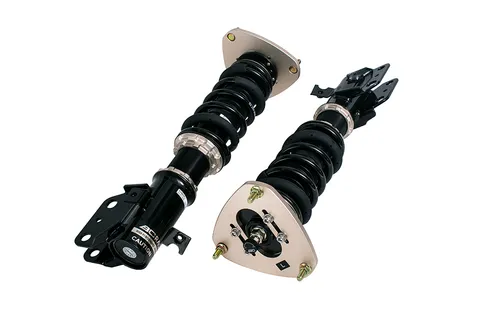
BC Racing · BCR-ZN-01
BC Racing Coilovers - Cadillac Cts (Sigma Ii) (08-14)
Check the exact application
BC Racing · BCR-ZN-02
BC Racing Coilovers - Cadillac Cts (AWD) (08-14)
Check the exact application
All CTS Sigma II kit links and part numbers
Before you order.
Identify your car
Send the body style, build date, engine and market specification. Confirm whether the car is RWD or AWD, and check its model year against the saloon, estate or coupé listing.
Match the kit
Ask the supplier to confirm ZN-01 for your exact RWD car or ZN-02 for your AWD car. Agree the spring specification on the order: the listed rates are 10/12 kg/mm for ZN-01 and 10/14 kg/mm for ZN-02, front/rear.
Check what’s included
Obtain an itemised list of supplied and retained mounts, fixings and rear spring hardware, including any seats or height adjusters. Ask for the exact fitting instructions.
Check your modifications
Provide wheel widths, offsets, tyre sizes and spacer thicknesses, plus details of earlier suspension changes. Have the workshop check how those parts affect clearance and the proposed installation.
Plan fitting
Have the workshop inspect the parts it will retain and assess usable suspension travel with the normal load. Agree the finished height, include alignment in the quotation, and confirm parts availability before booking the installation.
See what the adjustments do.
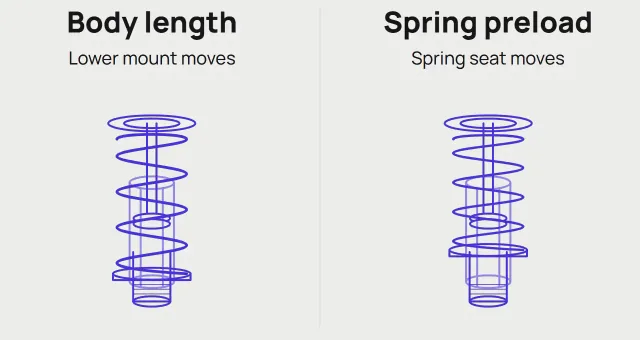
Ride height and spring preload
Understand the two adjustments before choosing a lowering range.
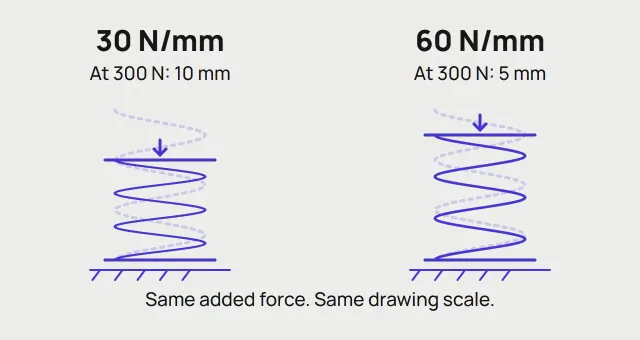
What spring rate tells you
Compare force and movement, read the units and choose a spring with the damper in mind.
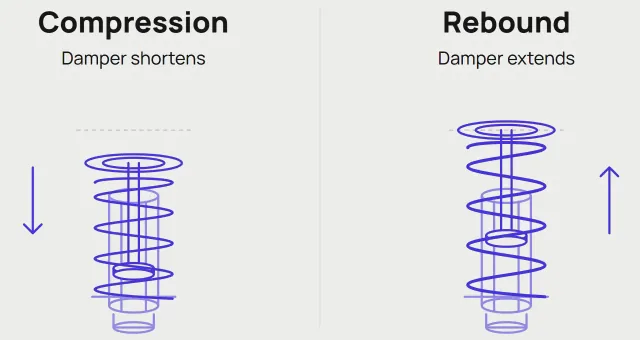
Damping adjustment explained
What combined, two-way and three-way controls change.
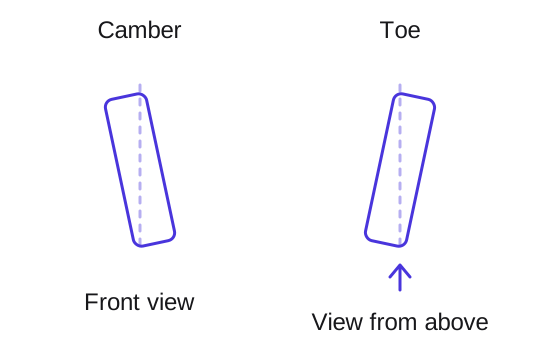
Alignment after changing ride height
Set the intended height, check the geometry and keep a useful record of the result.
Questions about Cadillac CTS Sigma II coilovers.
Check the details before choosing your kit.
Which body styles and years do the BC listings cover?
BC North America's ZN-01 RWD and ZN-02 AWD pages both list the 2008 to 2013 saloon, 2010 to 2014 estate and 2011 to 2014 coupé. Give the supplier your exact body, build and market details for confirmation.
Does the 2008 to 2014 shop label include a 2014 saloon?
The exact BC North America saloon listings end at 2013. Their 2014 coverage names the estate and coupé. A 2014 saloon needs a separate exact application enquiry; registration year alone does not establish which kit the car needs.
Can I use the same kit for RWD and AWD?
BC lists them separately: ZN-01 for rear-wheel drive and ZN-02 for all-wheel drive. The shop SKUs are BCR-ZN-01 and BCR-ZN-02. Match the drivetrain before ordering and have the supplier confirm the exact car; the shared CTS name does not establish that the kits interchange.
What are the listed spring rates?
ZN-01 RWD is listed at 10 kg/mm front and 12 kg/mm rear. ZN-02 AWD is listed at 10 kg/mm front and 14 kg/mm rear. The shop and exact BC North America pages agree on those figures. Confirm the specification the supplier will fulfil; the rates alone do not establish the ride or handling of your particular car.
Will I need to reuse my front top mounts?
The shop's BR RN labels say no front top mount is supplied and describe rubber rear mounts. Ask which original mounts and fixings the installation must retain and which replacements the order includes. The generic RN rubber-or-reuse table is not an exact hardware inventory for either CTS order.
Are the rear springs separate from the dampers?
GM's drawing for a selected 2012 CTS Base 3.0 shows spring 2 separately from shock absorber 1. Have the fitter confirm the arrangement on your own car, particularly after earlier modifications, and obtain the exact BC rear fitting instructions and hardware list.
Does the BR knob adjust compression or rebound?
BC describes 30 clicks of simultaneous compression and rebound adjustment. Turning the single control changes both, without a separate compression setting. Follow the instructions for the supplied dampers and keep a record of the settings.
How much should I lower the car?
Agree the height with the fitter after checking tyre and ground clearance, usable suspension travel and normal passengers or luggage. Include the steep entrances or speed humps you regularly use. An exact usable lowering amount has not been confirmed for your car and order.
Can I choose a kit for both commuting and track days?
Describe both uses before agreeing the springs and dampers. Include the roads and loads the car has to cope with, along with any different track wheels and tyres. Have the supplier and fitter assess the completed car; a vehicle application listing does not guarantee comfort or suitability for a particular event.
Do these enquiries cover CTS-V or other CTS generations?
CTS-V is outside these standard CTS applications and needs its own exact confirmation. The earlier Sigma I, the 2014 saloon and later CTS models also need their own application checks. ATS and CT4 are separate models.
Let’s talk suspension.
Send the body style and build details with your CTS enquiry, and confirm RWD or AWD. Include the wheel and tyre sizes, photographs of previous suspension changes and the loads the car normally carries so the supplier and fitter can agree the kit and fitting plan.