
Caterham Seven de-Dion.
The coilover guide.
Shop the coiloversConfirm your de-Dion Seven's front track and rear damper mounting position before choosing a Nitron kit. The listings also split around 1996, so include the chassis and build details with your enquiry. Have the fitter identify the lower or central rear mount.
Front track and chassis size are separate questions.
Send the chassis number, build details and photographs of the front suspension and rear damper mounts with your enquiry. Include records of wide-track conversions or other suspension changes. The supplier needs to identify the application from the car as it is now; a registration year or engine badge will not settle the order.
R1 has one adjuster that changes compression and rebound together. R3 separates rebound from low-speed and high-speed compression adjustment. Discuss your roads, tyres and circuit use before agreeing the springs and valving, and decide who will set up the car and keep a record of changes.
Caterham introduced the larger SV chassis in 2000. Nitron separates narrow- and wide-track de-Dion applications, with a further split around 1996. Those listing names do not identify S3 or SV. Tell the supplier which chassis you have as well as the front suspension fitted. A wide-track label alone does not confirm an SV application.
Caterham's Sigma assembly guide shows a chassis-mounted differential, a separate de-Dion tube linking the rear wheel assemblies, and a spring around each rear damper. The CSR uses a different, fully independent rear suspension. Live-axle Sevens also need their own application check. Confirm the actual arrangement before using the de-Dion references.
Start with your Seven de-Dion.
Confirm the chassis, year and existing suspension before choosing your setup.

Narrow track, catalogue -96
Nitron uses CA010 for the narrow-track de-Dion -96 application: NTCCA010R1 and NTCCA010R3. Send the build details and photographs of the current front suspension and rear damper mounting position. Have the supplier confirm this division, including any car built or registered around 1996, before specifying the order.
Check my narrow-track -96 SevenNarrow track, catalogue 96-
NTCCA011R1 and NTCCA011R3 are the narrow-track de-Dion 96- references. Confirm the chassis and fitted suspension with the supplier, then identify the lower or central rear damper mount. Give details of replacement tubes, altered mounts or conversions; the registration date does not identify the suspension now fitted.
Check my narrow-track 96- SevenWide track, catalogue -96
Nitron lists NTCCA012R1 and NTCCA012R3 for wide-track de-Dion -96 cars. Send the original build details, front suspension and rear mount photographs, and the date and specification of any wide-track conversion.
Check my wide-track -96 SevenWide track, catalogue 96-
NTCCA013R1 and NTCCA013R3 are the wide-track de-Dion 96- references. State whether the car has a standard or SV chassis, and describe the current front suspension. Agree the lower or central rear mount and the required mounting parts before ordering. Keep CSR and live-axle enquiries separate.
Check my wide-track 96- SevenWhat do you want
from the car?
Choose advice for everyday driving, occasional circuit days or a dedicated track project.
Discuss an R1 build for your usual roads, occupants and luggage.
Read the buying advice
R1 keeps compression and rebound adjustment on one control and has no remote canister. Describe rough surfaces, steep entrances and any places where the car catches the road. Agree springs and a height that leave usable suspension movement with your usual occupants and load. Confirm access to the adjuster once fitted and keep the supplier's starting settings with the car's records.
- Combined compression and rebound adjustment
- Agree springs and ground clearance for your roads
Choose the adjustment you need and check any road and circuit wheel sets.
Read the buying advice
Discuss an R1 build for your road mileage and track days. Consider R3 when you want separate rebound and compression adjustments and have someone to develop the settings with you. Supply the size, offset and tyre specification of each wheel set. Plan the drive to the circuit as well as the session, and record settings with the tyres and conditions so you can return to a known starting point.
- Compare one combined control with three independent adjustments
- Check road and circuit wheel clearance
Specify the R3 controls, spring choice and reservoir installation together.
Read the buying advice
R3 provides separate rebound, low-speed compression and high-speed compression controls. Give the supplier your tyre specification, changes to vehicle weight and the behaviour you want to address. Confirm the exact reservoir arrangement, its secure mounting and adjustment access. For competition, agree the current class requirements with the organiser before ordering; an adjustable kit's catalogue listing does not establish eligibility.
- Independent rebound and compression controls
- Agree reservoir placement and current competition requirements
Photograph the rear damper mounts before ordering.
The rear spring surrounds the damper on a standard Caterham Seven covered by the Sigma assembly guide.
Component layout only. Mounts, dimensions and adjusters vary by kit.Nitron requires the lower or central rear mounting location for each of these de-Dion applications. Have the fitter identify the location on your car and send clear photographs to the supplier. Obtain the required damper length, end fittings and mounting parts as part of the agreed specification.
The rear assembly in Caterham's Sigma guide has the coil spring around the damper. The de-Dion tube connects the wheel assemblies while the differential mounts to the chassis. Have the workshop identify your car's tube, locating parts and mounts. Obtain the replacement dimensions and installation instructions from the supplier.
Understand spring preload and ride height
Agree the mounting specification and setup with the fitter.
Ask the workshop to inspect the front suspension, de-Dion locating parts, bushes and damper mounts. Take the car's build records and details of conversions. Resolve worn or damaged parts before agreeing the spring and damper specification, and obtain an itemised list of supplied and retained mounting parts.
Plan adjustment access and any reservoir installation before fitting. Have the fitter check wheel, wing and ground clearance through the relevant steering and suspension movement. Agree the finished height, alignment and starting damper settings, then confirm the build and delivery lead time before booking fitting or circuit dates.
Wide-track conversions
Tell the supplier if the front suspension has been converted. Include the wishbones, dampers and any spacers in the photographs, along with the conversion paperwork. Keep the original chassis and build details separate from the dates of later work.
Rear mounts and replacement tubes
Declare changes to the de-Dion tube, rear damper mounts or locating parts. Have the fitter identify the lower or central mounting location and confirm the replacement unit's dimensions with the supplier. Do not select it from a photograph of another Seven.
Wheels, tyres and wings
List wheel widths, offsets, tyre sizes and spacer thicknesses for every set. Include changed front wings and rear arches. Ask the fitter to check clearance through steering and suspension movement at the proposed height.
Height and setup records
Discuss ground clearance with the usual occupants and load, including the roads and entrances you use. Once the height and alignment are set, retain the measurements, spring specification and damper settings so later changes have a recorded starting point.
The current Seven de-Dion range.
Compare the controls and hardware included in each range.

Each of the four de-Dion application divisions has R1 and R3 listings. R1 changes compression and rebound together; R3 has separate rebound, low-speed compression and high-speed compression controls. Nitron describes both as serviceable, individually sprung and valved builds. Confirm the application, rear mount and complete specification by enquiry. Road and Track are setup choices; bespoke spring rates and valving need a separate discussion.
View Nitron Seven de-Dion kitsFind your Seven de-Dion coilovers.
Prices include UK VAT. Choose an application and brand, then open a kit for its current options and availability.
8 listings
Selected application: All Seven de-Dion applications
Match the drivetrain, body style and axle-load limits on the product page before ordering.
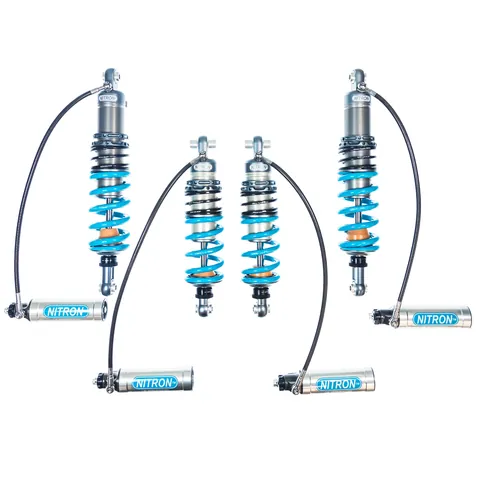
Nitron · NTCCA011R3_
Nitron Caterham Narrow track de-Dion (96-) R3 Coilover Suspension Kit
Check the exact application
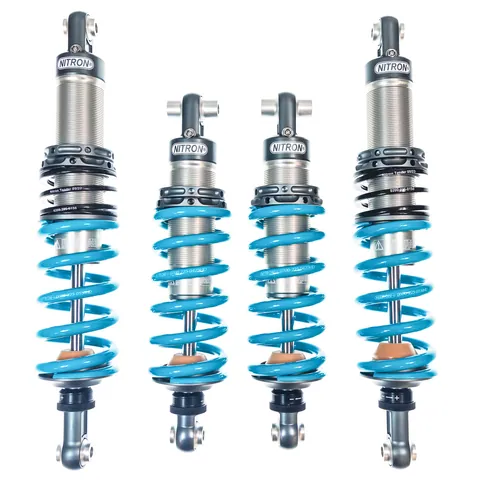
Nitron · NTCCA013R1_
Nitron Caterham Wide track de-Dion (96-) R1 Coilover Suspension Kit
Check the exact application
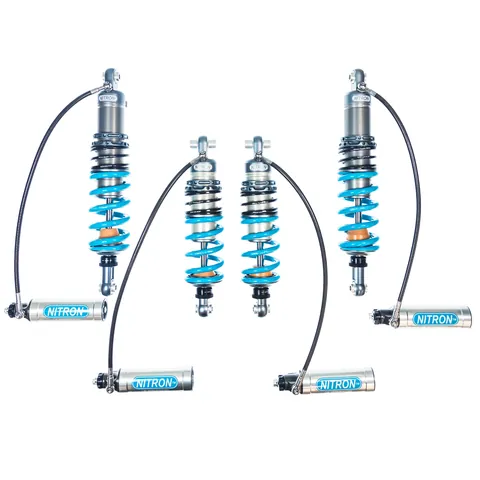
Nitron · NTCCA012R3_
Nitron Caterham Wide track de-Dion (-96) R3 Coilover Suspension Kit
Check the exact application
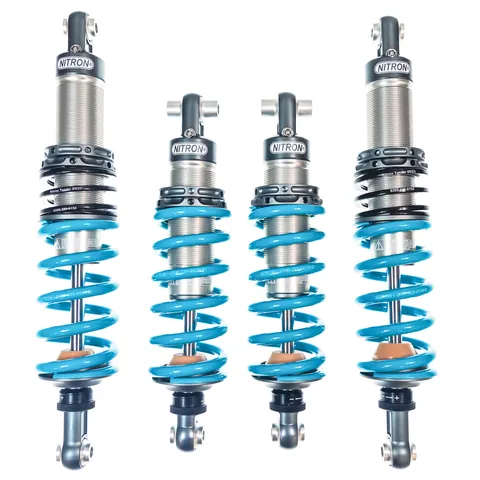
Nitron · NTCCA011R1_
Nitron Caterham Narrow track de-Dion (96-) R1 Coilover Suspension Kit
Check the exact application
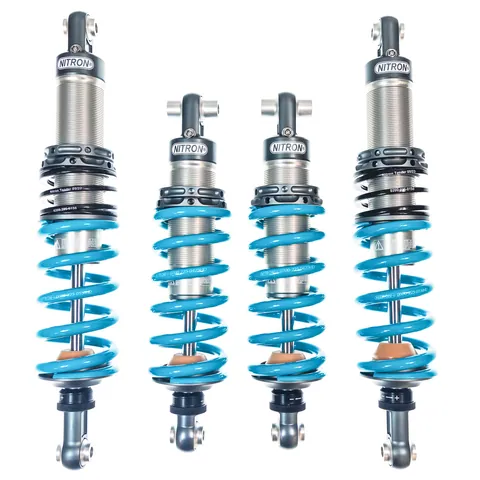
Nitron · NTCCA012R1_
Nitron Caterham Wide track de-Dion (-96) R1 Coilover Suspension Kit
Check the exact application
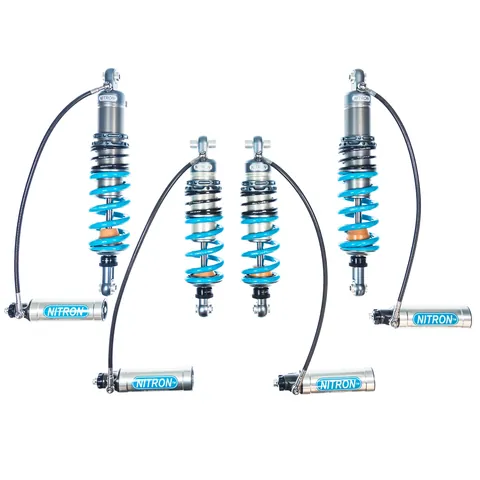
Nitron · NTCCA013R3_
Nitron Caterham Wide track de-Dion (96-) R3 Coilover Suspension Kit
Check the exact application
All Seven de-Dion kit links and part numbers
- Nitron · NTCCA010R3_: Nitron Caterham Narrow track de-Dion (-96) R3 Coilover Suspension Kit
- Nitron · NTCCA011R3_: Nitron Caterham Narrow track de-Dion (96-) R3 Coilover Suspension Kit
- Nitron · NTCCA010R1_: Nitron Caterham Narrow track de-Dion (-96) R1 Coilover Suspension Kit
- Nitron · NTCCA011R1_: Nitron Caterham Narrow track de-Dion (96-) R1 Coilover Suspension Kit
- Nitron · NTCCA012R3_: Nitron Caterham Wide track de-Dion (-96) R3 Coilover Suspension Kit
- Nitron · NTCCA013R3_: Nitron Caterham Wide track de-Dion (96-) R3 Coilover Suspension Kit
- Nitron · NTCCA012R1_: Nitron Caterham Wide track de-Dion (-96) R1 Coilover Suspension Kit
- Nitron · NTCCA013R1_: Nitron Caterham Wide track de-Dion (96-) R1 Coilover Suspension Kit
Before you order.
Identify your car
Send the chassis number, build year, engine details and photographs of the fitted front and rear suspension. State the chassis size and any conversions.
Match the kit
Confirm the narrow- or wide-track application and Nitron's -96 or 96- division. For a car from around 1996, ask the supplier which group applies using the build and suspension details.
Check what’s included
Identify the lower or central rear damper mounting location. Agree the damper lengths, end fittings, bushes, spacers and fixings, with supplied and retained parts itemised.
Check your modifications
Describe your roads and circuit use, tyre specification and wheel sets. Agree R1 or R3, the spring and valving specification, and any reservoir mounting and adjustment access.
Plan fitting
Arrange any preparatory repairs, clearance checks, final height and alignment with the fitter. Confirm current availability and build and delivery lead times before booking fitting.
See what the adjustments do.
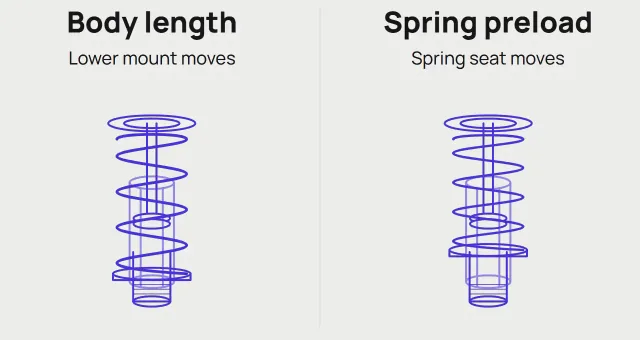
Ride height and spring preload
Understand the two adjustments before choosing a lowering range.
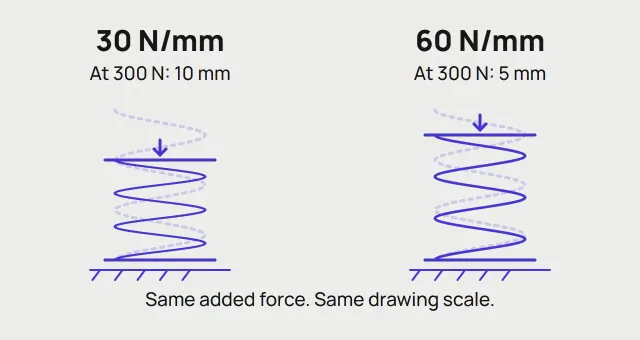
What spring rate tells you
Compare force and movement, read the units and choose a spring with the damper in mind.
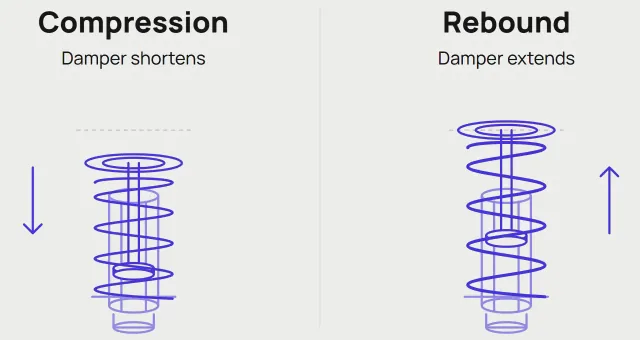
Damping adjustment explained
What combined, two-way and three-way controls change.
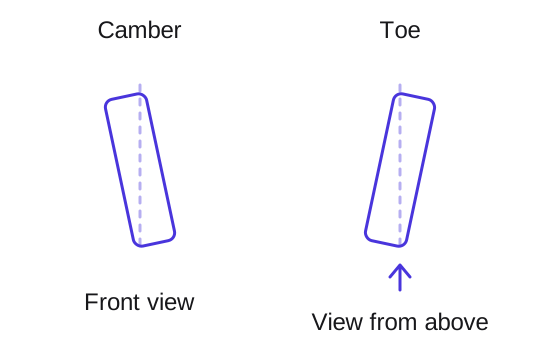
Alignment after changing ride height
Set the intended height, check the geometry and keep a useful record of the result.
Questions about Caterham Seven de-Dion coilovers.
Check the details before choosing your kit.
Which Nitron reference should I enquire about?
CA010 identifies narrow-track de-Dion -96, CA011 narrow-track 96-, CA012 wide-track -96 and CA013 wide-track 96-. Each has R1 and R3 listings. Supply the chassis and build details, current suspension photographs and rear damper mounting location so the supplier can confirm the exact application.
How should I choose a kit for a car from around 1996?
Ask the supplier to resolve the -96 or 96- division using the chassis and build details and photographs of the fitted suspension. The -96 and 96- names do not give an exact chassis change point. Include records of conversions and replacement parts; registration year alone does not settle the order.
Does wide track mean the same thing as an SV chassis?
Confirm both separately. Caterham introduced the larger SV chassis in 2000, while Nitron's de-Dion entries use narrow- and wide-track names without specifying S3 or SV. Give the supplier the chassis details and the current front suspension, including any wide-track conversion.
Why does the rear damper mounting position matter?
Nitron requires the lower or central rear mounting location when ordering each of these de-Dion applications. Have the fitter identify the location and send photographs to the supplier. Agree the damper dimensions, end fittings and mounting parts for that arrangement before the order is specified.
What is the difference between R1 and R3 adjustment?
R1 has one adjuster that changes compression and rebound together and uses no remote canister. R3 separates rebound, low-speed compression and high-speed compression adjustment. Choose the controls with the person setting up the car and confirm the exact R3 reservoir installation and access.
Are Road and Track different damper ranges?
They are setup choices within the listed R1 or R3 range. Describe your road mileage, circuit use, tyres and changes to the car's weight before agreeing the build. Bespoke spring rates and valving need an enquiry so the complete specification can be agreed.
Are the rear springs separate from the dampers?
Caterham's Sigma assembly guide shows a coil spring around each rear damper, with a separate de-Dion tube connecting the wheel assemblies and a differential mounted to the chassis. Have the workshop identify your car's fitted arrangement and mounting position before specifying replacement parts.
Does this include CSR or live-axle Sevens?
Those need separate application enquiries. Caterham describes the CSR's rear suspension as fully independent, and Nitron lists CSR and the legacy narrow-track live-axle application separately from the four de-Dion divisions. A shared Seven name does not confirm the same dampers or mounting parts.
Can I order these kits online?
These listings require a specification enquiry. Confirm the application, rear mount, spring and valving choice and complete mounting parts before ordering. Ask for current availability and build and delivery lead times before booking the workshop; the catalogue listing alone is not a stock or dispatch promise.
What should I agree before fitting or racing?
Have the fitter check ground and wheel clearance and usable suspension movement with your usual load, then agree the finished height and alignment. Retain the starting damper settings. For competition, confirm the current class rules and organiser's requirements before committing to a kit.
Let’s talk suspension.
Send the chassis details, suspension photographs and wheel specifications with your enquiry. Include the roads you drive and any circuit plans so the supplier and fitter can agree the application, rear mounts and R1 or R3 build.