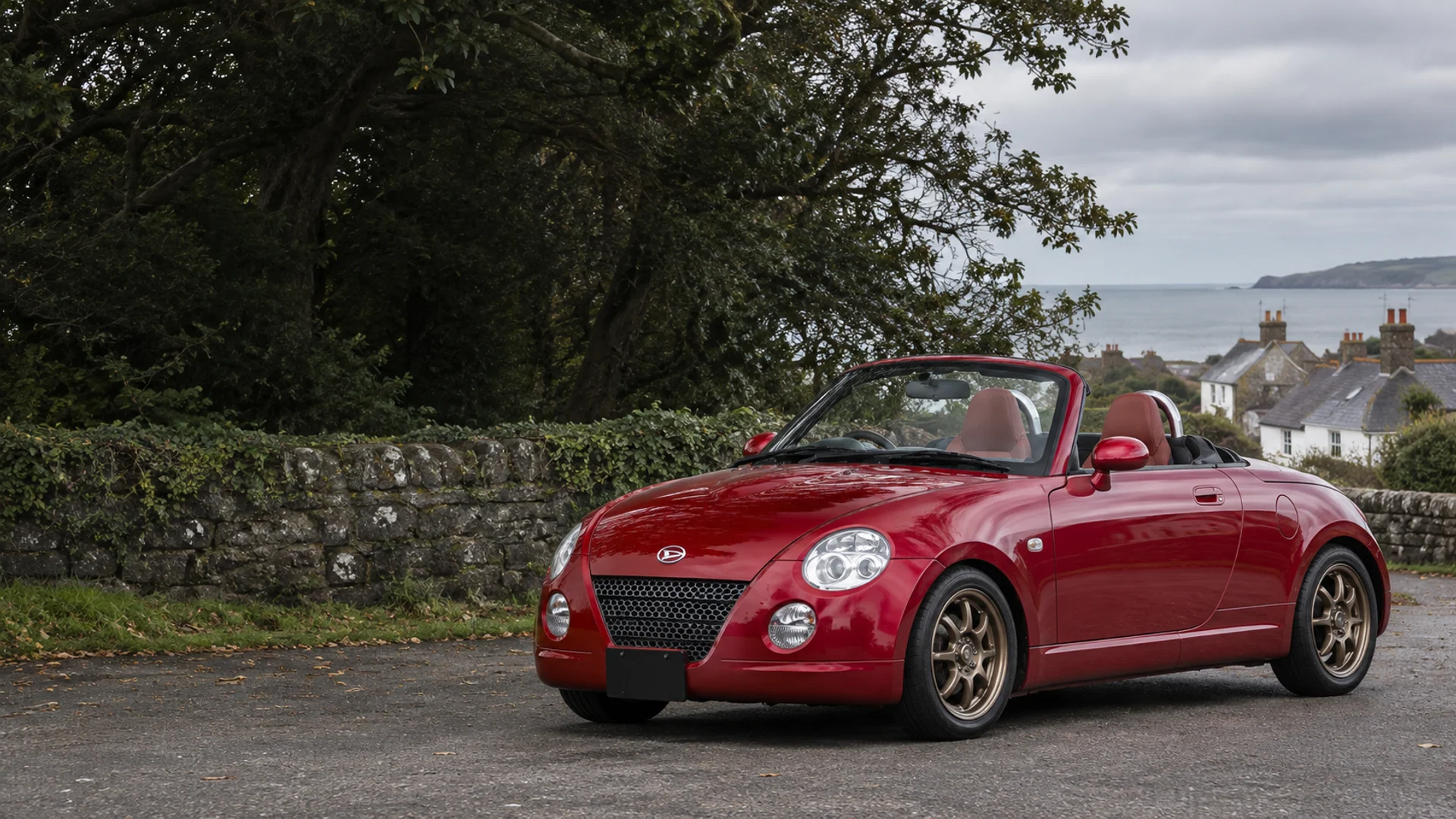
Daihatsu Copen L880.
The coilover guide.
Shop the coiloversChoose around the first Copen’s engine, original market and folding roof. Compare the two listed kits, keep usable travel and plan the rear spring adjustment with the final alignment.
The hardtop roadster that arrived in 2002.
The first Copen pairs a folding hardtop with a small front-wheel-drive chassis. Before choosing a lower height, record the engine, original market and current wheels. The Japanese 660 turbo and export 1.3 need separate application checks.
Our current L880K range has BC Racing BR RS BCR-ZF-04 and TEIN FLEX Z VSD14-C1AS1. Their mounts, springs and adjustment details differ. TEIN’s exact row is for the Japanese 660 car; a general Copen model name does not extend it to every UK or export version.
Daihatsu launched the original Copen in Japan on 19 June 2002. The launch car used a transverse JB-DET four-cylinder turbo engine and front-wheel drive. Buyers could choose a five-speed manual or four-speed automatic, with an electrically folding Active Top roof.
A separate Detachable Top version was announced for later in 2002. That roof distinction still matters when identifying a car and planning access around its original equipment. Give the installer the actual roof specification and any added braces or cage.
The export range also included a naturally aspirated 1.3-litre car. Confirm its engine and frame details before using a Japanese L880K application row. Daihatsu’s later 2014 redesign is a separate generation; its LA400-series kits are outside this guide.
Model history: Daihatsu: original Copen launchDaihatsu: twentieth-anniversary historyDaihatsu: export model history.
Start with your Copen L880.
Match the model year, engine and body style before comparing brands.
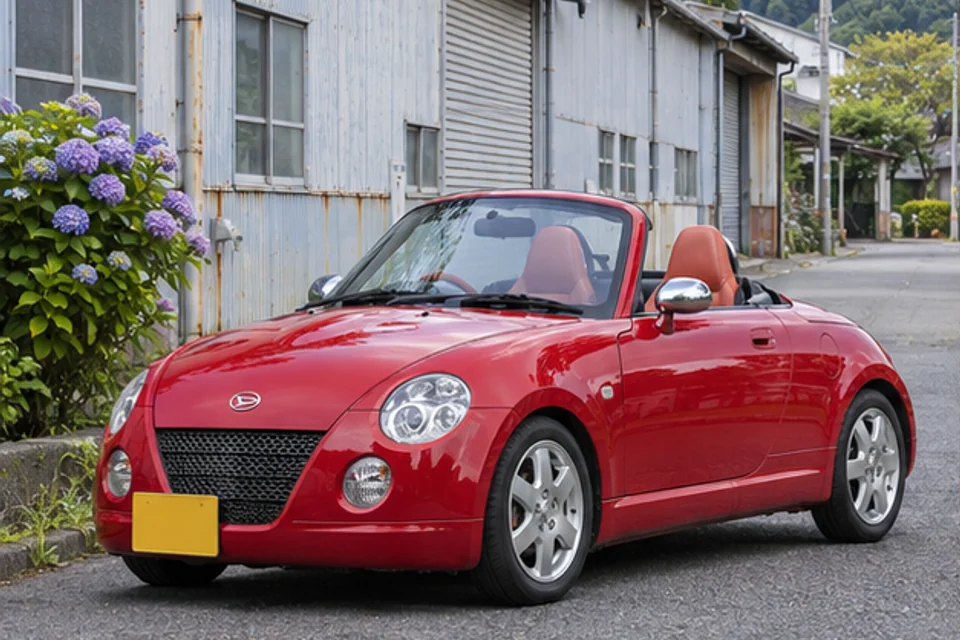
Japanese 660 turbo L880K
Start with the exact L880K frame code and JB-DET engine. TEIN’s VSD14-C1AS1 row names Japanese 660 FF cars from June 2002 to August 2012, including Active Top and Detachable Top. BC’s L880K listing is also shown here for checking against the actual car.
Compare the L880K starting kits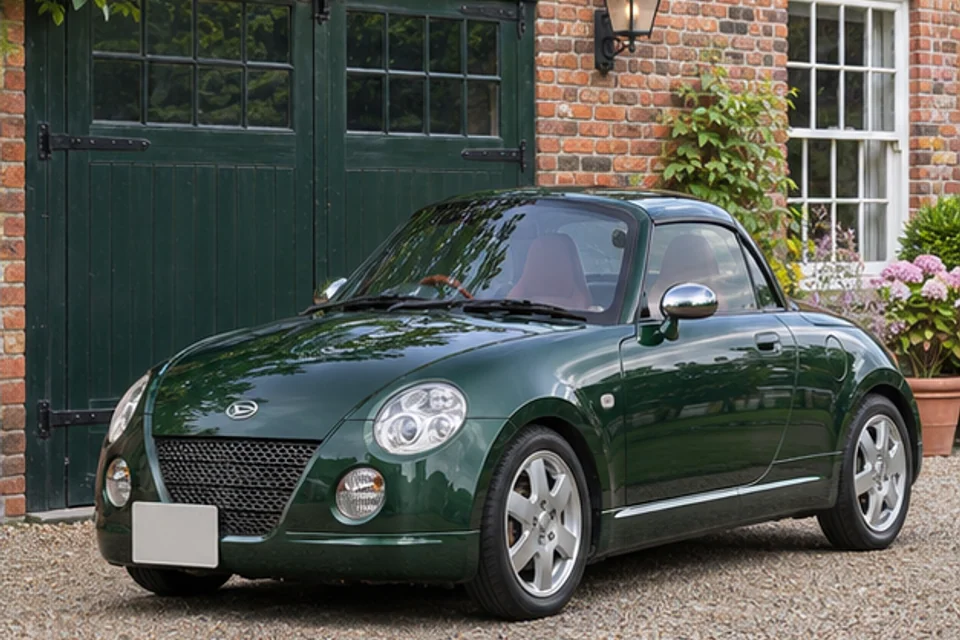
UK-market 660 cars
Confirm the original market as well as the engine. The BC listing identifies L880K without a separate market row, so it is a starting point for checking. TEIN’s Japanese row does not establish UK-car compatibility; ask us to check that exact specification before choosing it.
View the UK 660 starting listing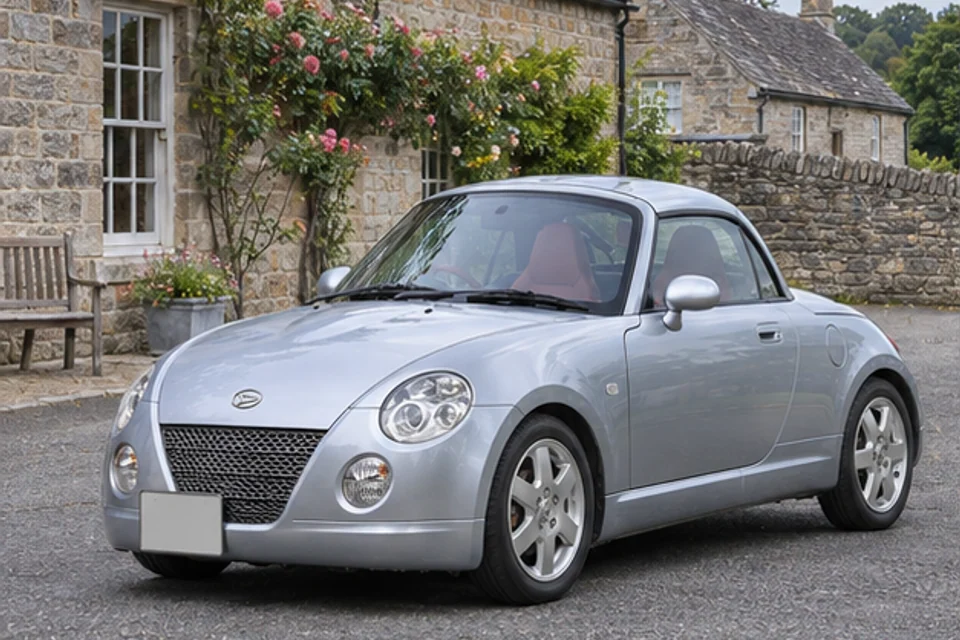
Export 1.3-litre cars
The larger naturally aspirated engine is a different application from the Japanese 660 turbo. Neither of the current L880K rows establishes the exact 1.3 export specification. Give us the frame code, engine and original market for a separate check.
Check my 1.3 application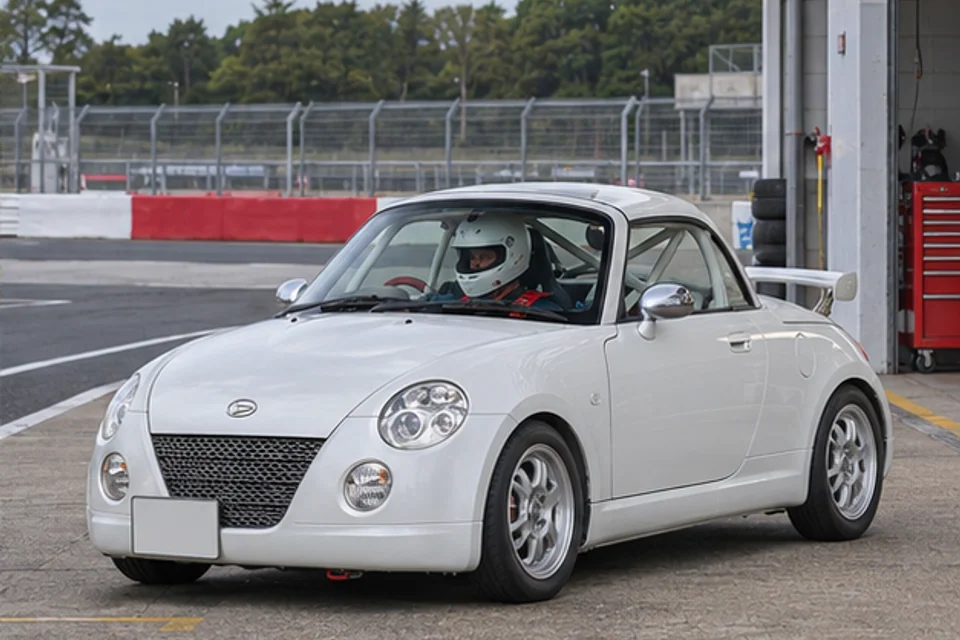
Converted and competition cars
An engine conversion, cage, different suspension arms or substantial weight change needs an individual specification. Include tyres and intended events. A road-car fitment row does not establish a complete competition package.
Discuss my modified CopenWhat do you want
from the car?
Road miles, circuit weekends or a car built around the lap. Start with how you drive.
Keep the rubber-mount arrangement and plan a usable road height.
Read the buying advice
The current BC BR RS BCR-ZF-04 listing specifies rubber top mounts with 4 kg/mm front and 3 kg/mm rear springs. Confirm the exact L880K before ordering. BR uses a combined damping control; it does not offer independent compression and rebound settings. Inspect existing hardware and settle the intended wheels and height with the fitter before the final alignment.
- Rubber top mounts
- Listed 4 front / 3 rear kg/mm springs
- Plan road clearance and travel
Check the front mount and the exact Japanese application.
Read the buying advice
For the listed Japanese 660 L880K, TEIN FLEX Z VSD14-C1AS1 has 16-level damping adjustment, front camber-adjustable mounts and original rear mount reuse. Its named springs are 5 kgf/mm front and 2.8 kgf/mm rear. TEIN recommends front height changes from -20 to 0 mm and rear from -25 to -4 mm relative to OE on its reference vehicle. Confirm the actual car, tyres and event requirements; those figures do not predict the height of every modified Copen.
- Japanese 660 L880K row
- Front camber mount; rear mount reuse
- Use the named recommended range
Specify the car and event before choosing a suspension package.
Read the buying advice
We do not have a verified bespoke competition package listed for this model. Give us the engine, weight changes, tyres, suspension hardware and intended ruleset. Check cage and driver clearance with the roof in place, then discuss springs, damping and available travel with the installer and supplier.
- Provide the complete build specification
- Check the roof and event requirements
- Discuss springs, damping and travel
Separate rear springs and dampers.
On a standard Daihatsu Copen L880, the rear spring and damper are mounted separately.
Component layout only. Mounts, dimensions and adjusters vary by kit.The first Copen has MacPherson struts at the front and a torsion-beam rear axle. At the rear, each coil spring sits on its own seats beside a separate damper. A kit sold as coilovers can keep that separate rear arrangement.
Follow the instructions for the actual rear spring adjuster and damper. Do not assume that changing rear damper length alone sets the car’s height, or transfer a front coilover adjustment sequence to the rear. Spring seating and available travel need to be checked together.
Set the intended height before the final alignment. TEIN’s front camber-adjustable mount is a front-axle feature; it does not provide rear camber adjustment. Have the fitter check the rear measurements and the car’s condition without assuming an adjustment range that the hardware does not have.
Understand height and preload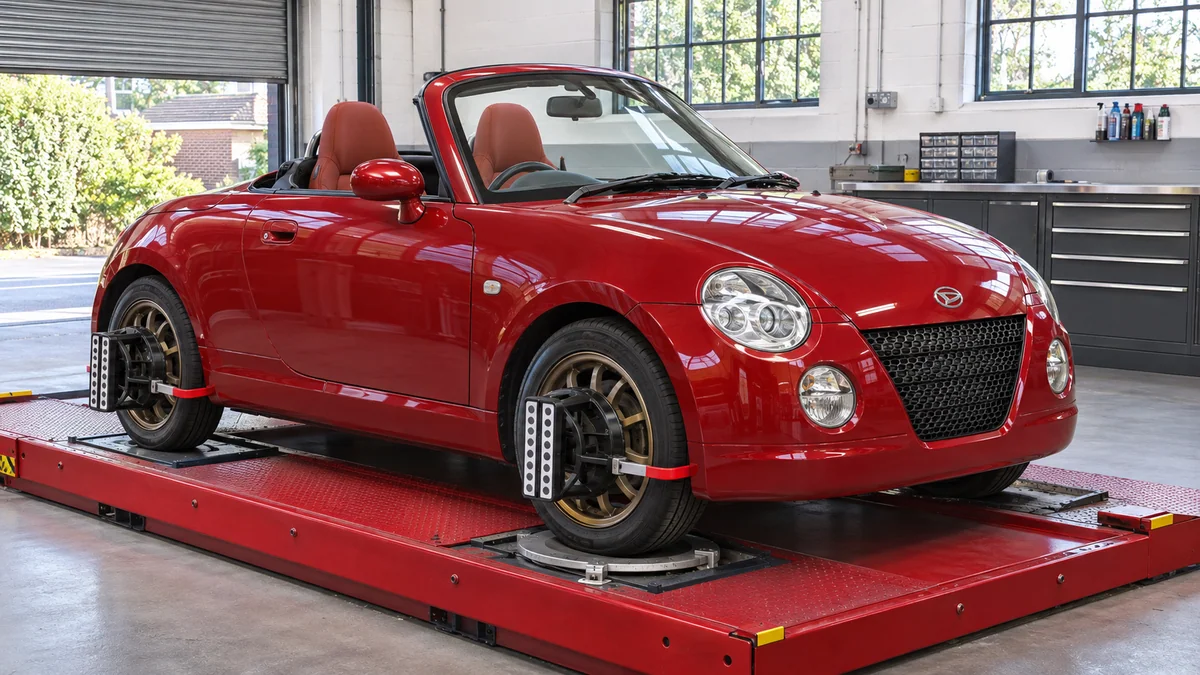
Plan around the wheels and the folding roof.
Record the actual front and rear wheel widths, offsets and tyre sizes. Check inner clearance, arches and brake-hose routing through steering and suspension movement at the intended height. Use the selected kit’s limits rather than copying the stance of another Copen.
Inspect bushes, joints, top mounts, spring seats and alignment hardware before fitting. With FLEX Z, include the original rear mounts that the kit reuses. Confirm access to the controls around roof equipment, braces or a cage, then retain the final alignment printout and settings.
Wheels and front strut clearance
Provide the exact widths, offsets and tyres before the fitting appointment. A different wheel can change both inner strut clearance and arch clearance. Check the front through steering and suspension movement, and the rear through its required travel.
Rear spring seats and mounting hardware
Identify which seats, adjusters and mounts the chosen kit supplies or reuses. Inspect the rear supports and bushes while the suspension is apart. The separate spring and damper need the installation sequence for that kit.
Roof equipment, braces and a cage
Tell the fitter about added braces and any cage. Establish how the damper controls will be reached and how the roof will be used after installation. For circuit driving, check the event’s requirements with the actual roof, cage and driver seating position.
Engine changes and export specification
Record the engine and original market even if the car looks like another L880. An engine conversion or different export specification needs its own application review. Discuss substantial weight and tyre changes before selecting springs.
The current Copen L880 range.
Compare the controls and hardware included in each range.

The current BR RS BCR-ZF-04 is the rubber-mount choice with listed 4 kg/mm front and 3 kg/mm rear springs. The maker’s table names L880K; confirm the exact car and original market. Its combined damping control differs from separate compression and rebound controls.
View BC Racing Copen L880 kits
VSD14-C1AS1 is FLEX Z for the Japanese 660 L880K row. It specifies front camber-adjustable mounts, rear original-mount reuse and 5 / 2.8 kgf/mm springs. Use that row’s recommended height range and check optional controller requirements separately; controller compatibility does not mean a controller is included.
View TEIN Copen L880 kitsFind your Copen L880 coilovers.
Prices include UK VAT. Choose an application and brand, then open a kit for its current options and availability.
2 listings
Match the engine, body style and axle-load limits on the product page before ordering.
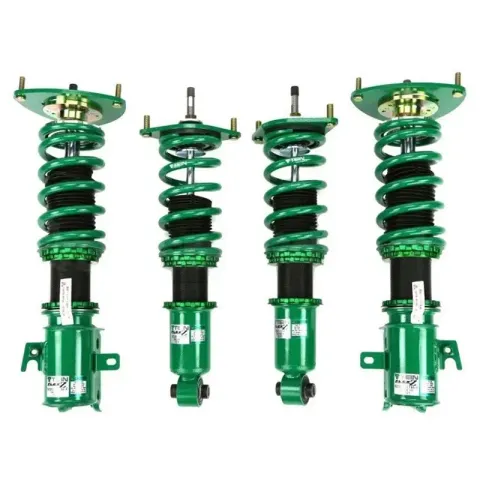
TEIN · VSD14-C1AS1
TEIN FLEX Z Coilovers for Daihatsu Copen L880K (Japanese-market imports) - VSD14-C1AS1
Japanese 660 turbo L880K
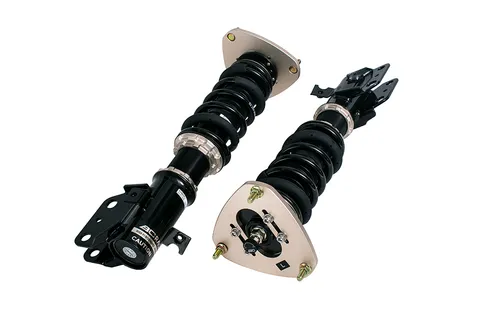
BC Racing · BCR-ZF-04
BC Racing Coilovers - Daihatsu Copen (02-12) [L880K]
Japanese 660 turbo L880K / UK-market 660 cars
Before you order.
Identify your car
Confirm first-generation frame code, engine, gearbox, original market and roof type.
Match the kit
Match the exact kit row; resolve UK or 1.3 export questions before ordering.
Check what’s included
List supplied or reused mounts and the separate rear spring hardware.
Check your modifications
Provide wheel widths, offsets and tyre sizes for clearance and travel checks.
Plan fitting
Arrange fitting and final alignment at the chosen height; retain the printout and settings.
See what the adjustments do.
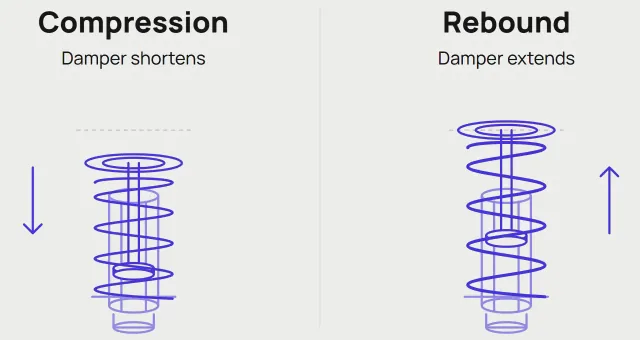
Damping adjustment explained
What combined, two-way and three-way controls change.
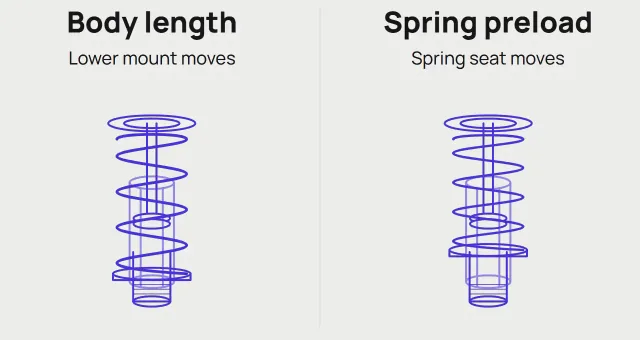
Ride height and spring preload
Understand the two adjustments before choosing a lowering range.
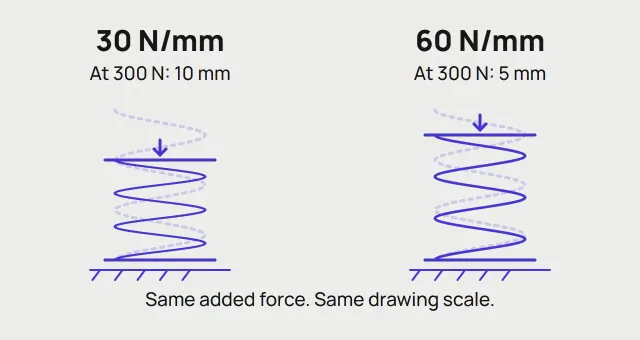
What spring rate tells you
Compare force and movement, read the units and choose a spring with the damper in mind.
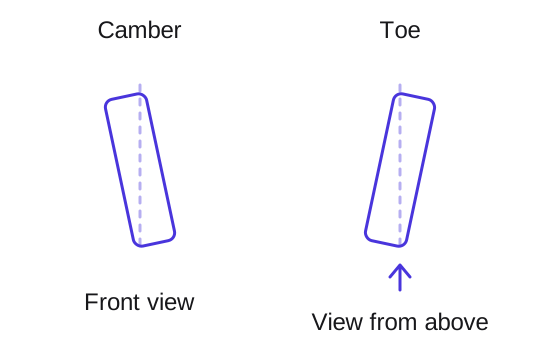
Alignment after changing ride height
Set the intended height, check the geometry and keep a useful record of the result.
Questions about Daihatsu Copen L880 coilovers.
Check the details before choosing your kit.
Which kits are currently listed for the first Copen?
The current L880K range has BC Racing BR RS BCR-ZF-04 and TEIN FLEX Z VSD14-C1AS1. Open each product for its current options and availability. The TEIN row is specifically Japanese-market 660; confirm the actual car before ordering.
Can I use a Japanese 660 kit on my export 1.3?
The current rows do not establish that application. Give us the frame code, engine and original market for a separate check. A shared Copen name or similar exterior is insufficient fitment evidence.
Does TEIN’s Japanese row also cover a UK 660 car?
Not automatically. TEIN identifies market JPN for this part. UK or other export cars need their exact specification checked before that application can be confirmed.
Does the TEIN row include both original roof versions?
TEIN’s named Japanese L880K row lists Active Top and Detachable Top. Confirm the actual roof, engine, market and any later modifications; that roof list does not extend the row to every export version.
Why are the rear springs separate from the dampers?
That is the first Copen’s rear layout: the torsion beam carries separate spring seats and dampers. A kit marketed as coilovers can retain it. Follow its rear spring-adjuster and damper instructions rather than treating the rear as another front strut.
Are the top mounts the same on both listed kits?
No. The BC listing specifies BR RS rubber top mounts. The named TEIN row specifies a front camber-adjustable mount and rear original-mount reuse. Confirm the application-specific hardware before fitting.
How low should I set the TEIN kit?
For its Japanese 660 L880K reference row, TEIN recommends front changes from -20 to 0 mm and rear from -25 to -4 mm relative to OE. Actual results vary with the car and installation. Stay within the exact kit’s limits and check clearance, travel and final alignment.
Does this guide cover the 2014-on Copen?
The LA400-series car is a separate generation. Its kits are not included in this first-generation L880 guide. Use the later car’s exact application instead of transferring these part numbers.
What should I arrange alongside fitting?
Inspect worn hardware, identify reused mounts and spring seats, and provide the actual wheels and tyres. Check control access around the roof equipment, then arrange final alignment after the intended height is set.
Let’s talk suspension.
Tell us the engine, original market, frame code and current wheels on your first Copen. We can check the named kit’s application and discuss the fitting plan.