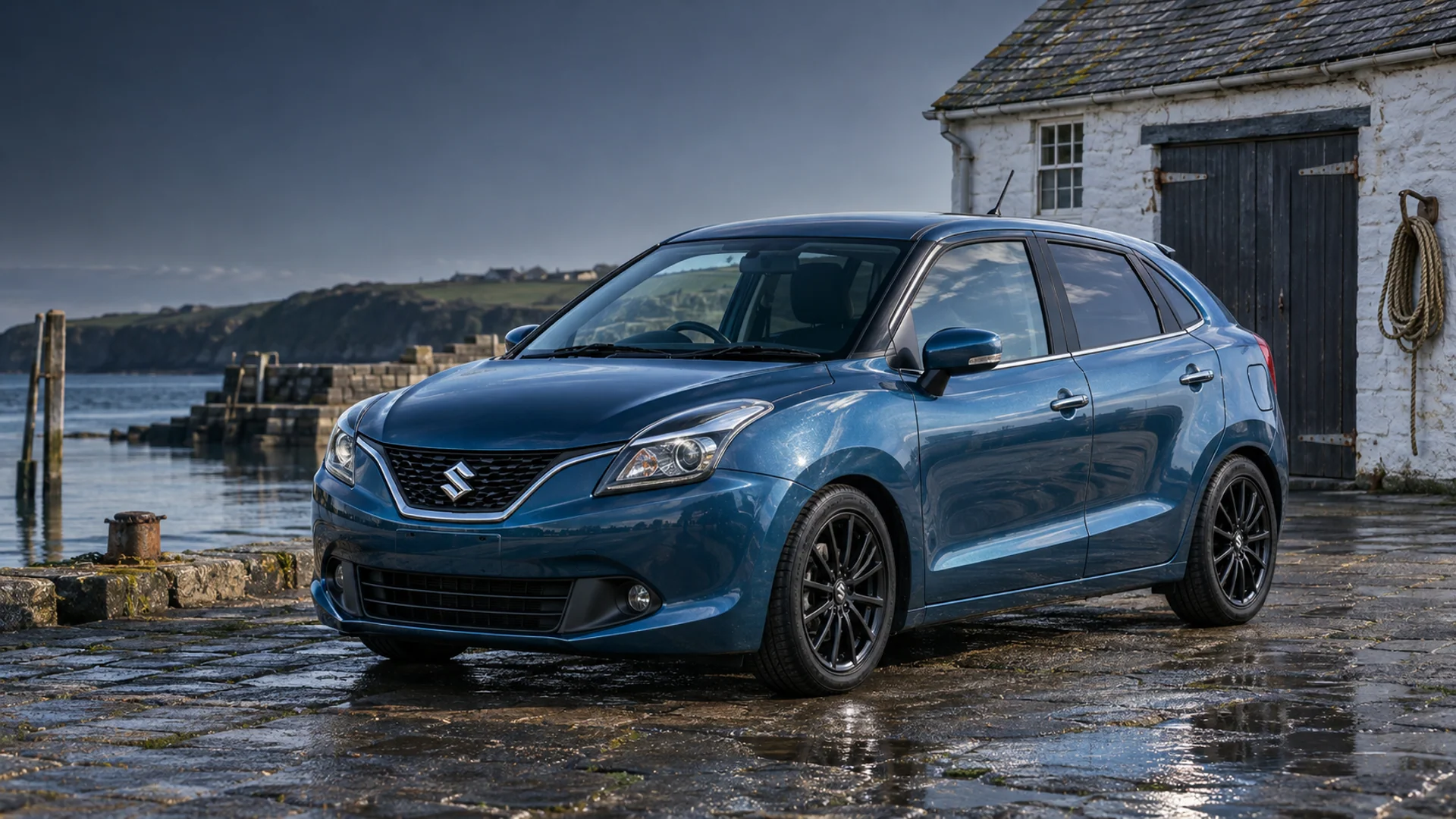
Suzuki Baleno WB42S.
The coilover guide.
Shop the coiloversOur current Baleno kit names WB42S. Start with the chassis code and original market, then check the engine and mounts; the 1.2, SHVS and other-market cars need their own application confirmation.
A global hatchback with different engine choices.
The 2016-generation Baleno combines a short hatchback body with a useful rear seat and boot. A lower stance needs to work with the passengers, wheels and roads the car still uses.
The listed starting kit is BC Racing V1 VN L-29, for the front-wheel-drive WB42S, 2016–2021. Have the chassis and retained mounts confirmed before ordering, especially if the car was supplied in another market.
Suzuki revealed this Baleno at Frankfurt in September 2015, following the iK-2 concept shown at Geneva earlier that year. Built by Maruti Suzuki in India for several markets, it went on sale in India that October and reached Europe in spring 2016.
The five-door body is just under four metres long, with a 2,520 mm wheelbase. Suzuki's new platform made room for a practical cabin without stretching the car into a larger class. Keeping that everyday usefulness is a sensible starting point when choosing suspension: check the loaded car as well as the empty one.
Japan's XG arrived in March 2016 with the 1.2-litre K12C and CVT, identified as WB32S. The XT followed in May with the 1.0-litre K10C BOOSTERJET turbo and six-speed automatic, identified as WB42S. The European launch also included 1.2 DUALJET and SHVS versions; India's original engine range included petrol and diesel choices.
Record the actual identification plate and engine when ordering a chassis-specific kit. Include wheel changes, a remap or a planned track day in the setup discussion, while matching the kit to the car's original application and any hardware already changed.
Model history: Suzuki: Frankfurt Baleno premiereSuzuki: original Japanese launchSuzuki: Baleno digital historySuzuki: Indian launch.
Start with your Baleno WB42S.
Confirm the chassis, year and existing suspension before choosing your setup.
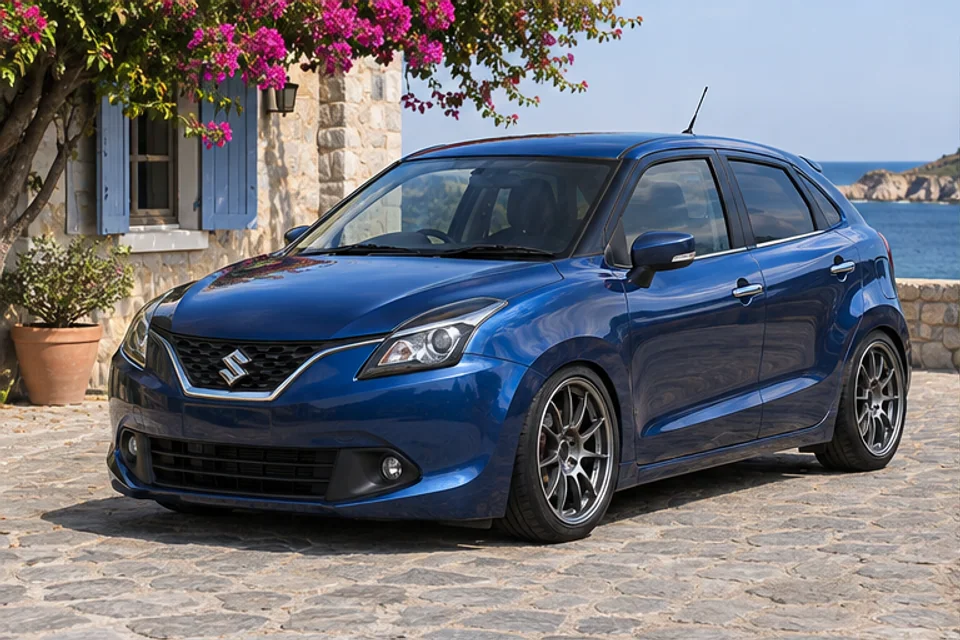
WB42S turbo
BC L-29 names the front-wheel-drive Baleno WB42S, 2016–2021. Suzuki's Japanese specification identifies WB42S as the XT with K10C 1.0 turbo and six-speed automatic. Confirm the original market, build date and retained mounts against the selected V1 VN kit.
See the WB42S V1 starting kit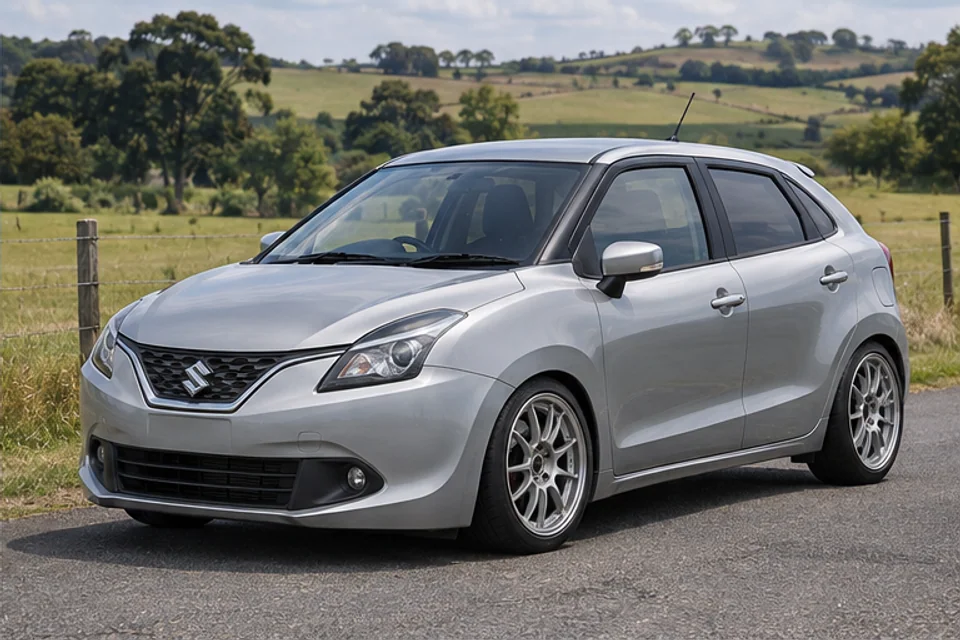
WB32S 1.2-litre
Suzuki gives the Japanese 1.2 K12C/CVT car a separate WB32S code. Our current BC application names WB42S. Send the full WB32S specification for confirmation before choosing a kit; shared bodywork does not establish the mount and damper specification.
Check my WB32S application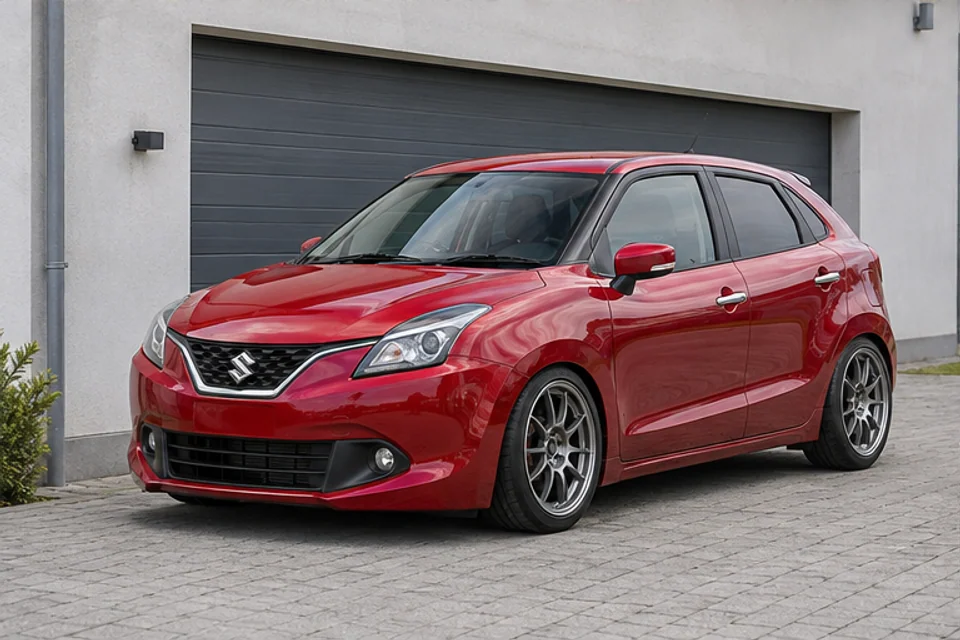
UK, European or other-market car
Include the VIN or chassis identification, engine, transmission and original market. The European range included BOOSTERJET, DUALJET and SHVS choices. A UK registration or familiar trim name alone cannot extend the WB42S listing to an unconfirmed specification.
Confirm my market and engine
Converted or competition project
Tell us about changed hubs, arms, mounts or rear spring seats, as well as the tyres and any cage. Earlier Balenos and the later 2022 generation need separate applications. A developed car needs its existing hardware checked before the catalogue reference can be used.
Discuss my Baleno projectWhat do you want
from the car?
Road miles, circuit weekends or a car built around the lap. Start with how you drive.
Check the V1 reference and the original mounts it will use.
Read the buying advice
L-29 V1 VN is our current WB42S starting kit. It lists adjustable damping and default rates of 5 kg/mm front and 3 kg/mm rear. VN supplies no front top mount and lists a rubber rear arrangement. Inspect the retained mounts and bearings, then agree a height that leaves room for steering movement, rear passengers and luggage.
- WB42S front-wheel-drive application
- Inspect reused mounts and bearings
- Check travel with normal loads
Discuss the tyre and travel requirements before choosing settings.
Read the buying advice
Give us the chassis code, tyre compound and wheel specification, and describe the circuit use. Have the supplier confirm whether the current V1 configuration is appropriate for that car. Keep the agreed height, damping settings and alignment readings so changes can be made deliberately between events.
- Confirm chassis and existing hardware
- Include wheel and tyre specification
- Agree settings for the intended use
Build the specification around the car's actual weight and hardware.
Read the buying advice
A cage, stripped interior, changed brakes and competition tyres affect the setup discussion. Include the measured corner weights if available and the rules of the intended event. Ask about spring and damper requirements before assuming the single listed road starting point is suitable for the build.
- Describe weight and hardware changes
- Include tyres and event requirements
- Confirm spring and damper specification
Separate rear springs, with a torsion beam.
On a standard Suzuki Baleno WB42S, the rear spring and damper are mounted separately.
Component layout only. Mounts, dimensions and adjusters vary by kit.Suzuki specifies MacPherson struts at the front and a torsion-beam rear axle for the original WB42S/WB32S hatchback. At the rear, the spring sits separately from the damper. A complete suspension kit can therefore be sold as coilovers while using separate rear springs and dampers.
Check the selected kit's rear spring seat, height adjustment and damper-length instructions. The spring must remain properly located through the usable movement. The front strut adjustment is not a guide to setting the separate rear spring assembly.
Measure rear toe and camber at the intended finished height. Ask the fitter which corrections are available and appropriate for the beam and hardware actually fitted; a height-adjustable spring seat does not itself add geometry adjustment.
Understand height and spring preload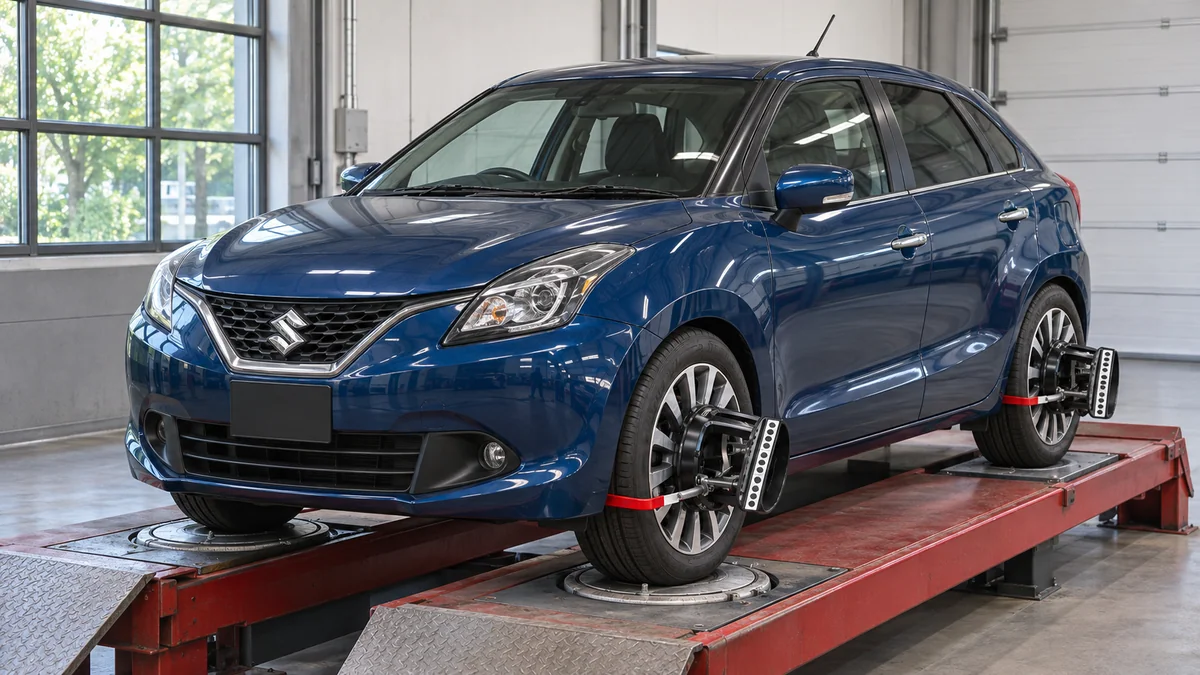
Keep the wheel change in the fitting plan.
Record the wheel width, offset and tyre size, including spacers. Check the tyre against the inner suspension and outer arch through steering and suspension movement, with the passengers and luggage the car normally carries.
Inspect the original upper mounts, front bearings, spring pads and damper bushes before assembly. Confirm the retained parts for the exact V1 VN application, settle the height and arrange the final alignment. Keep the printout with the wheel specification and settings.
Wheels, tyres and the loaded car
A larger rim does not tell the fitter where its inner or outer edge sits. Provide width, offset, tyre size and spacers. Check the rear arch with the normal load on board, then the front through its steering range and usable movement.
Mounts that remain on the car
The named V1 VN configuration supplies no front top mount. Confirm the original mount and bearing requirements and replace worn parts as needed. Include any existing camber plates or other mount changes when checking the application.
Rear spring seats and beam
Photograph changed spring seats, rear dampers or beam hardware. Check spring location and damper travel against the exact instructions. Do not use the rear spring perch as a substitute for measuring toe and camber.
Engine changes and intended use
Include a remap, changed brakes, different tyres or a stripped interior in the setup discussion. For circuit use, agree the spring and damping requirements with the supplier. Record changes so the car can be assessed against its previous settings.
The current Baleno WB42S range.
See the controls and hardware in the listed kit.

Our current Baleno selection has one V1 VN application: L-29 for the front-wheel-drive WB42S, 2016–2021. It lists 5 kg/mm front and 3 kg/mm rear default rates, adjustable damping and no supplied front top mount. Confirm the original market, exact car and retained hardware before ordering.
View BC Racing Baleno WB42S kitsFind your Baleno WB42S coilovers.
Prices include UK VAT. Choose an application and brand, then open a kit for its current options and availability.
1 listing
Match the engine, body style and axle-load limits on the product page before ordering.
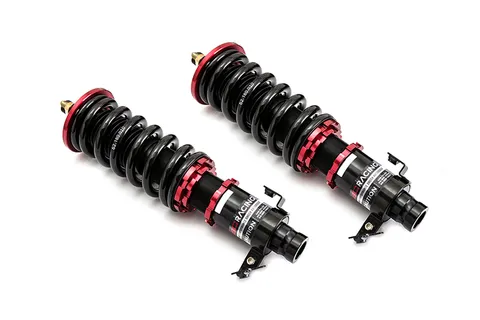
BC Racing · BCR-L-29
BC Racing Coilovers - Suzuki Baleno (16-21) [WB42S]
WB42S turbo
All Baleno WB42S kit links and part numbers
Before you order.
Identify your car
Record the chassis identification, original market, engine, transmission and build date.
Match the kit
Match the WB42S L-29 reference; send WB32S, SHVS or other specifications for confirmation.
Check what’s included
Confirm reused front mounts, bearings, rear spring-seat hardware and actual kit contents.
Check your modifications
Provide wheels, tyres, spacers and modifications for clearance and loaded-travel checks.
Plan fitting
Plan fitting, spring-location checks and final alignment at the intended finished height.
See what the adjustments do.
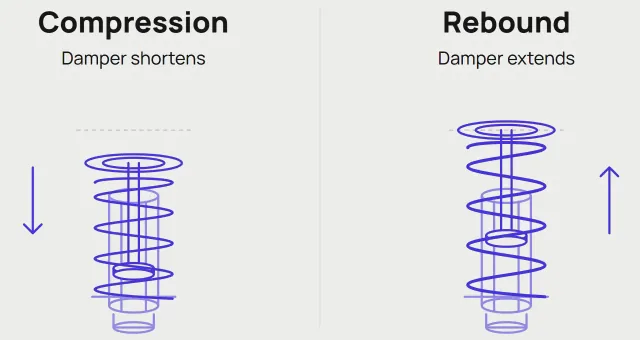
Damping adjustment explained
What combined, two-way and three-way controls change.
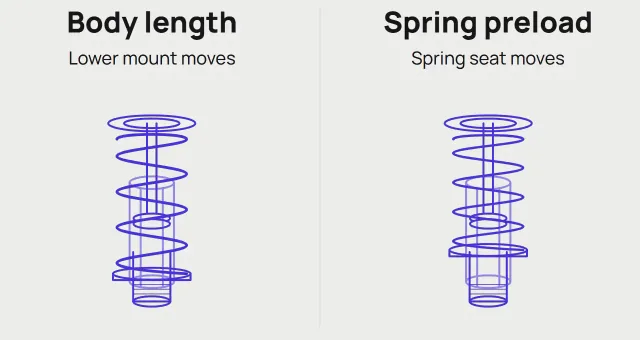
Ride height and spring preload
Understand the two adjustments before choosing a lowering range.
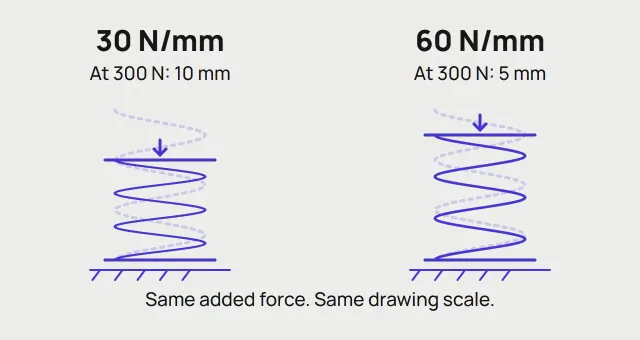
What spring rate tells you
Compare force and movement, read the units and choose a spring with the damper in mind.
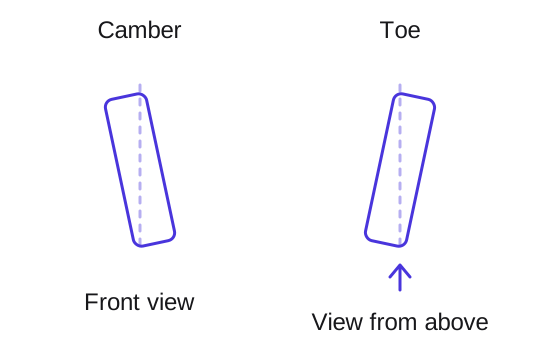
Alignment after changing ride height
Set the intended height, check the geometry and keep a useful record of the result.
Questions about Suzuki Baleno WB42S coilovers.
Check the details before choosing your kit.
Which Baleno does this guide cover?
The five-door hatchback revealed in 2015 and launched in Europe in 2016. The current BC Racing application is listed for the front-wheel-drive WB42S, 2016–2021. Earlier Balenos and the later 2022 generation need separate application checks.
Which coilover kit is currently listed?
BC Racing V1 VN BCR-L-29, with kit reference L-29-V1-VN, is the current WB42S starting point. It has one listed configuration. Confirm the actual chassis, market and retained hardware before ordering.
Does the WB42S listing also cover WB32S?
Have WB32S confirmed separately. Suzuki identifies the Japanese WB42S as the 1.0 K10C turbo/6AT XT and WB32S as the 1.2 K12C/CVT XG. The current BC application names WB42S; similar bodywork does not establish the same kit specification.
What about a UK Baleno or SHVS?
Provide the VIN or chassis identification, engine, transmission and original market. The European range included BOOSTERJET, DUALJET and SHVS versions. A registration lookup helps identify the car but does not extend the WB42S application to every engine and market.
What spring rates does the listed kit use?
The current V1 VN details list default rates of 5 kg/mm front and 3 kg/mm rear, with adjustable damping. Discuss any rate change against the actual car, tyres, load and intended use. These numbers alone do not confirm another chassis application.
Are front top mounts supplied?
The named V1 VN configuration supplies no front top mount and describes a rubber rear arrangement. Inspect the original mounts and front bearings, and confirm exactly which hardware is retained or supplied for the car before fitting.
Are the rear spring and damper separate?
Yes. The original WB42S/WB32S has a torsion-beam rear axle with the spring separate from the damper. Follow the selected kit's rear spring-seat and damper instructions, including checks that the spring stays properly located through usable movement.
How far should I lower the car?
Agree the height after checking the exact kit, wheel and tyre specification, clearance and usable movement with normal loads. We do not have a verified recommended lowering range for this BC application. Set the car using the kit instructions and measured clearance, then check alignment.
Can I choose the same kit for a competition build?
Discuss the complete build first, including chassis, tyres, weight changes, cage and event requirements. Have the supplier confirm the spring and damper specification for that use. A selectable catalogue kit is not an approval for every competition setup.
Let’s talk suspension.
Send the Baleno's chassis identification, engine and original market, then add the wheels and any changed suspension parts. We can help check the current WB42S reference or investigate an unconfirmed application.