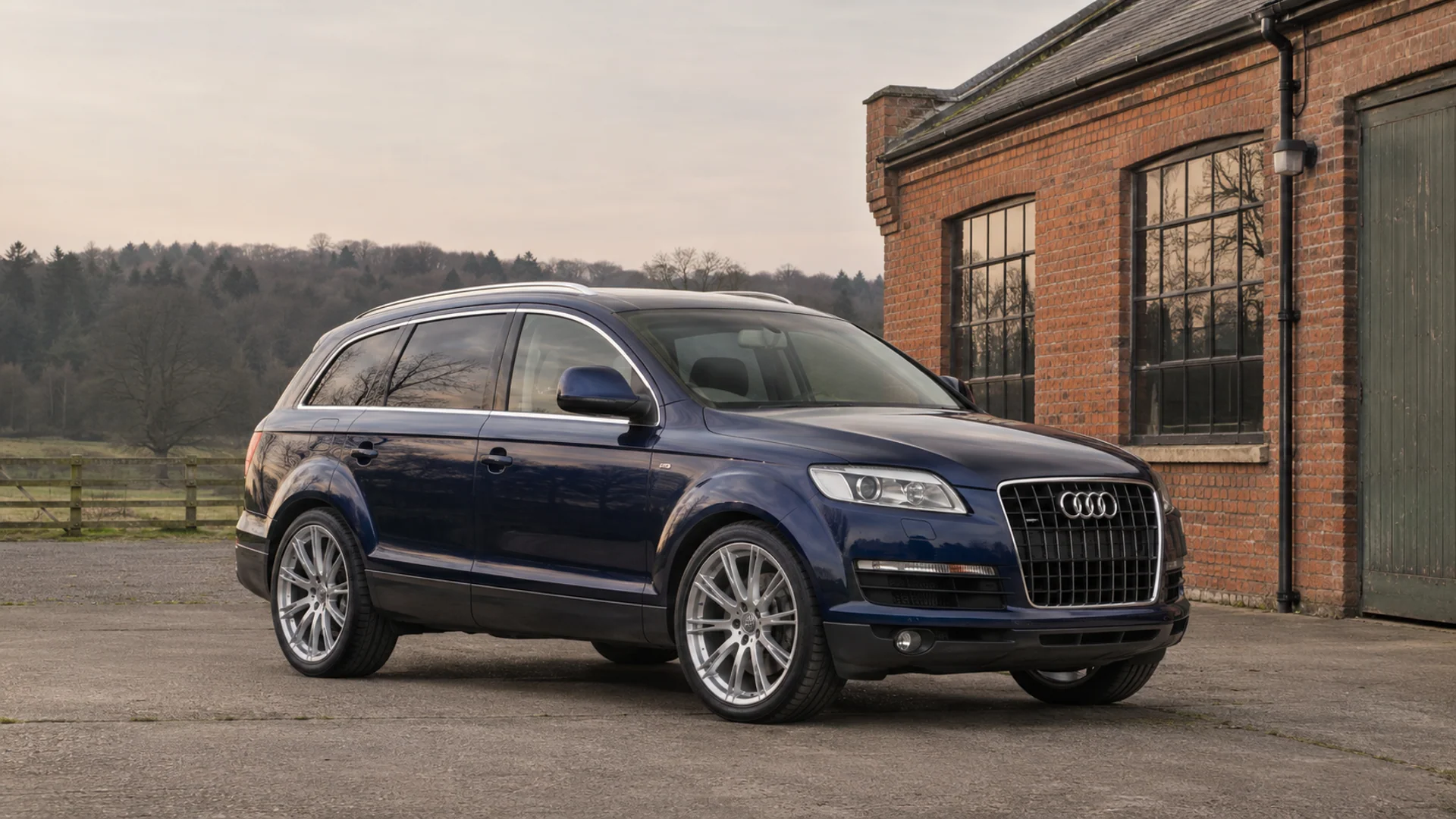
Audi Q7 4L.
The coilover guide.
Shop the coiloversThe original Q7 suits a measured drop and a well-chosen wheel package, with travel left for passengers and luggage. Identify its original steel or air suspension before choosing between the two BC Racing references.
The original seven-seat Q7
A long, wide Q7 still needs suspension movement when it is full of people and luggage. Start with the height you can use on your usual roads, then check the wheel and tyre package through that movement on the car.
The current range has a standard Q7 4L reference and a separately named air-to-coil conversion. Both are BC Racing BR RS listings. The original suspension and the work needed to change it decide which enquiry to make.
Audi showed the first Q7 to the public at the Frankfurt motor show in 2005, following the Pikes Peak quattro concept of 2003. Its first production generation ran from 2006 to 2015. Audi later reported that more than 550,000 customers chose that generation.
The 4L is the long, rounded Q7 with a tall Singleframe grille and a rear hatch that wraps around the corners of the body. It is visibly different from the more angular 4M that followed. Around the generation change, confirm the chassis instead of choosing a kit by the registration year alone.
With a body more than five metres long and space for up to seven people, the first Q7 gives you a lot of wheel and arch to work with visually. Keep the tyre sidewall and normal passenger loads in the plan. Wheels that fill the arch at rest still need clearance when the suspension moves.
Audi revised the 4L in 2009. The update changed the grille and bumpers, with new daytime-running-light arrangements on particular headlamp versions and revised details around the doors and tailgate. A facelift is still a 4L; those visible changes do not identify the suspension fitted underneath.
Steel springs and adaptive air were different factory arrangements. Audi’s chassis training shows a double-wishbone front axle and a double-wishbone rear with a split upper arm. On the steel-sprung rear, the spring surrounds the damper. The air version uses a combined air-spring and damper unit.
An older Q7 may already have different wheels, replaced dampers or a previous conversion. Check the equipment and fitted parts with the vehicle details. The current S-37 air-to-coil label starts a conversion discussion; the complete fitting and electronic-system plan still needs checking.
For a road car, choose the wheel width, offset and tyre size together before settling the height. Include spacers and brake changes in that discussion. The installer needs to check movement and alignment on the finished combination, including how the car is normally loaded.
Start with your Q7 4L.
Confirm the chassis, year and existing suspension before choosing your setup.
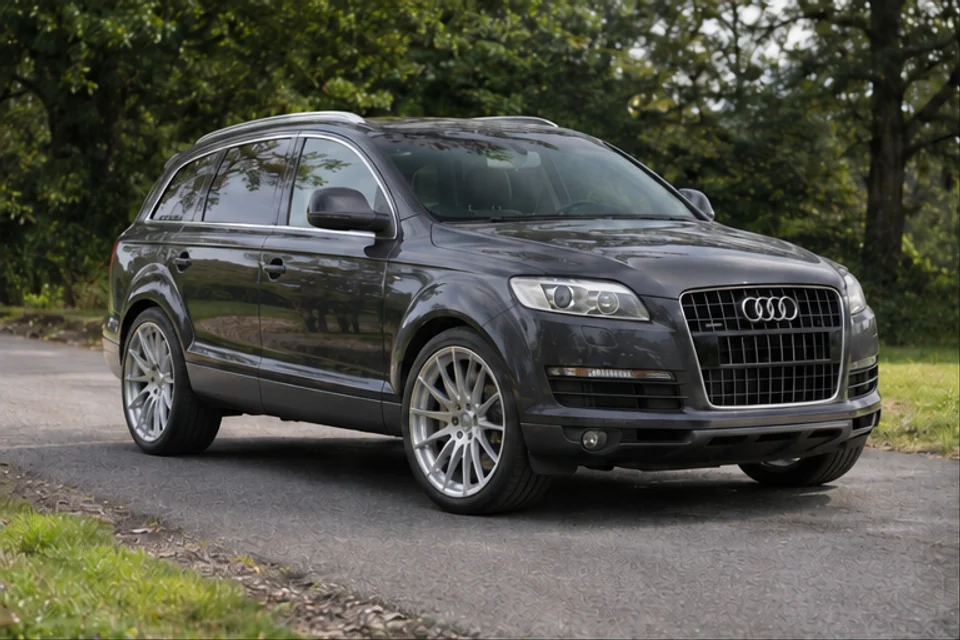
S-18 for the matching steel-sprung 4L
BC Racing’s S-18 row names the Q7 AWD, type 4L, from 2006 to 2015. The current BR RS listing specifies rubber mounts front and rear and nominal spring rates of 11 kg/mm front and 7 kg/mm rear. Confirm the exact vehicle, its original suspension and the required installation parts.
Check the S-18 application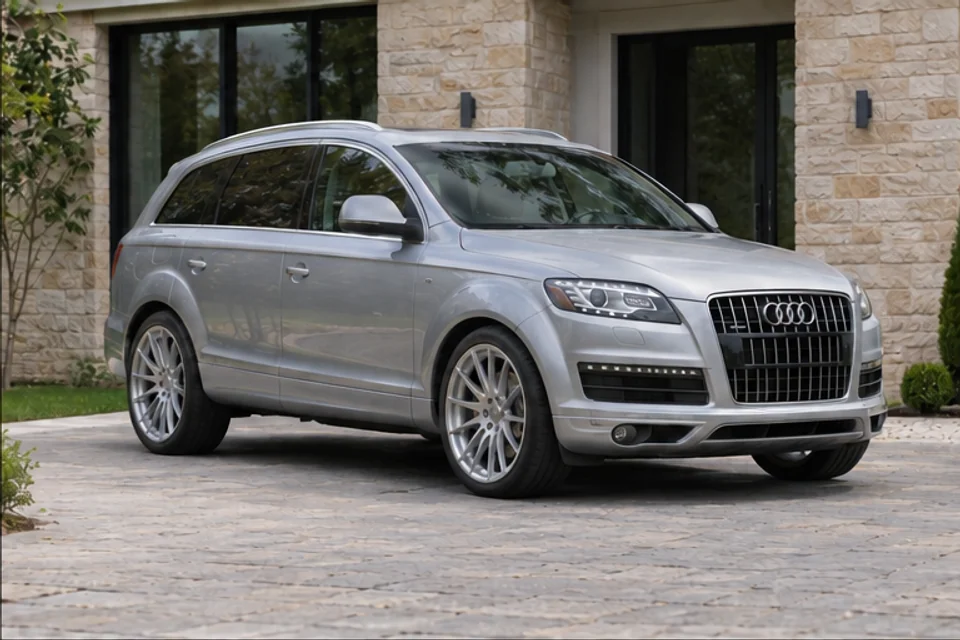
S-37 for an air-to-coil enquiry
S-37 is separately listed for the Q7 4L AWD air-to-coil conversion. Its current BR RS specification has rubber mounts at both ends and nominal 13 kg/mm front and 10 kg/mm rear springs. Have the supplied parts, removed functions and handling of the original controls agreed for your car before ordering.
Check the S-37 conversion reference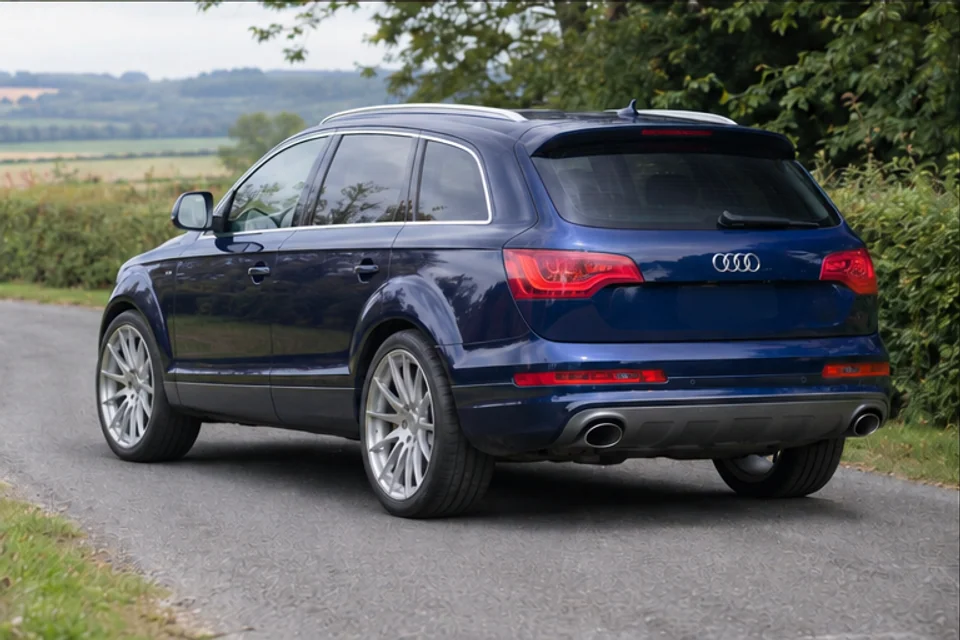
Earlier car, facelift or uncertain history
The 2009 update changed the appearance within the first generation. A later-looking grille or a newer registration does not establish the chassis or suspension. Send the exact vehicle details and identify any previous conversion if the fitted equipment is uncertain.
Ask us to check the exact Q7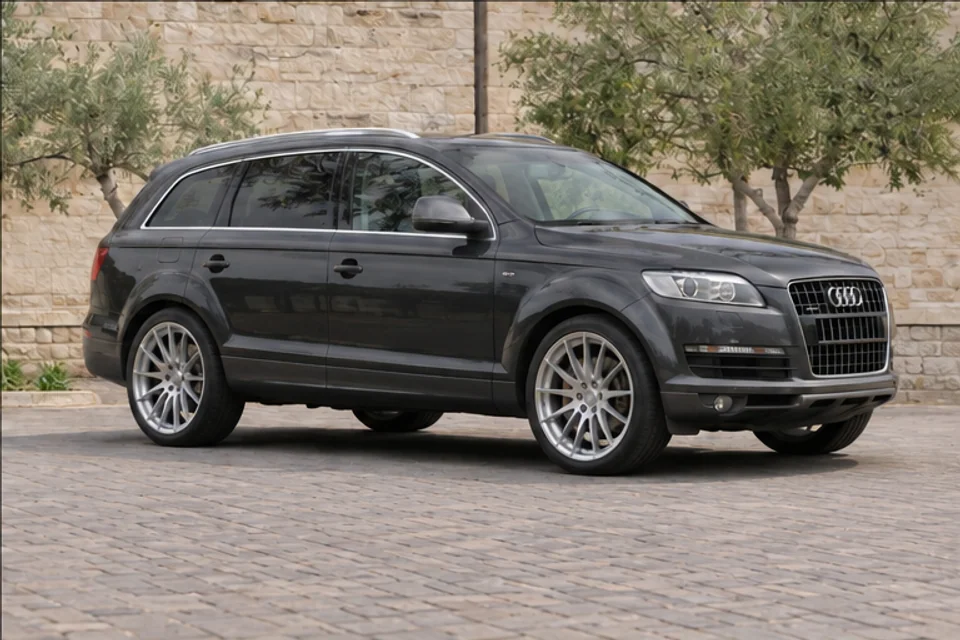
Wheels, loads and a changed car
Record wheel widths, offsets, tyre sizes and spacers, along with brake changes and the loads you usually carry. A modified or converted car needs its current parts checked. The general model row cannot approve every engine, wheel package or previous alteration.
Discuss the car’s current setupWhat do you want
from the car?
Road miles, circuit weekends or a car built around the lap. Start with how you drive.
Plan a usable height around the wheels and the loads the car normally carries.
Read the buying advice
S-18 BR RS is the current listing for the matching Q7 4L road application. It specifies rubber mounts and nominal 11/7 kg/mm springs. Confirm the original suspension and complete installation parts, then agree the working height and alignment with the fitter. A car on air suspension needs the separate conversion enquiry.
- Identify the original suspension
- Match the exact 4L reference
- Allow for passengers and luggage
Discuss the whole car and intended event before selecting its suspension.
Read the buying advice
A Q7 used for a circuit day needs a preparation plan for that vehicle and event. Bring the tyre, brake and wheel details, together with the condition of its suspension and any changes to weight. A listed road application does not establish an approved circuit specification.
- Describe the intended event
- Check the wheel and brake changes
- Agree preparation and inspection
Give the people preparing the car its measured specification and intended use.
Read the buying advice
Changes to the vehicle’s weight, tyres or mounting points need their own suspension brief. Have the hardware and setup agreed for the finished build. The air-conversion reference is an application choice and does not establish competition suitability.
- Measure the finished vehicle
- Confirm the mounting arrangement
- Plan setup and follow-up checks
A rear spring around the damper.
The rear spring surrounds the damper on a standard Audi Q7 4L with steel springs.
Component layout only. Mounts, dimensions and adjusters vary by kit.The steel-sprung Q7 4L has a rear coil spring around the damper within an independent double-wishbone arrangement. Audi’s chassis training shows that combined unit and the split upper rear arm. The suspension arms locate the wheel.
The factory air arrangement uses a combined air-spring and damper unit with its own controls. The compact steel-spring drawing here does not describe the parts or electronic work required for a conversion. Have the exact S-18 or S-37 installation instructions and supplied components checked against the car.
Understand height and spring preload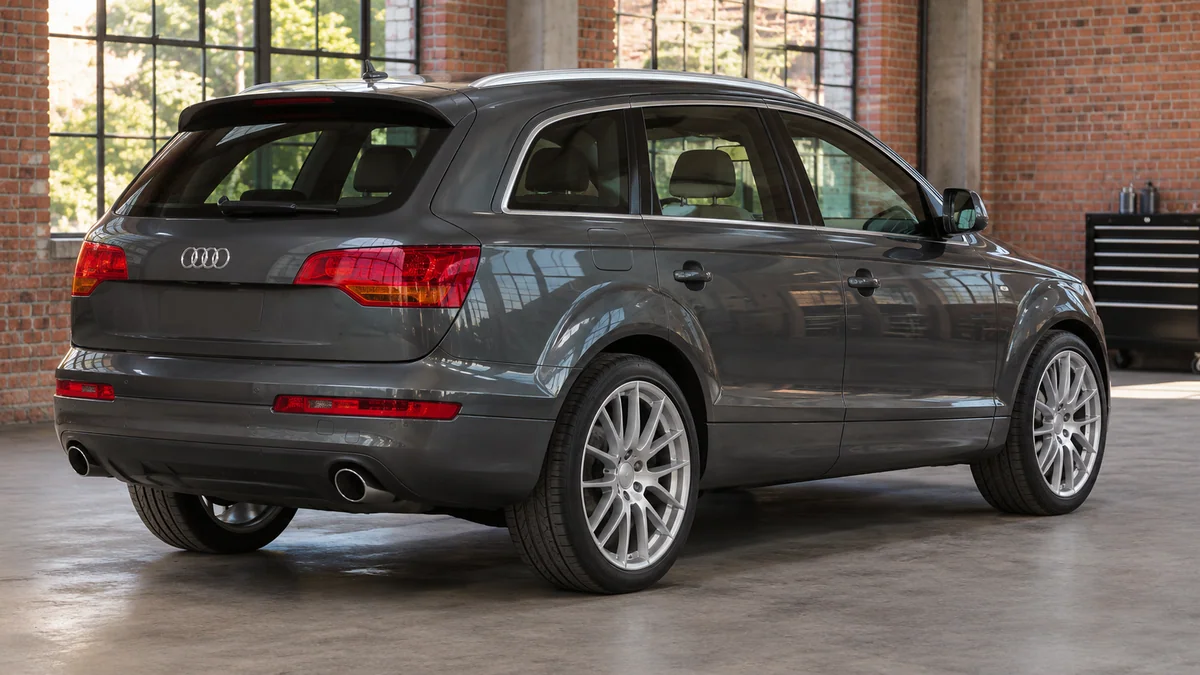
Check the suspension already on the car
Inspect the fitted springs, dampers and mounts, particularly on a car with an uncertain modification history. Confirm its original equipment and identify what has already changed before choosing a replacement reference.
For an air-to-coil enquiry, agree the complete parts and electronic-system plan before fitting. Record which original functions will be removed and how warnings and associated systems will be handled. Finish the installation plan with wheel-clearance checks, alignment at the agreed height and a follow-up inspection.
Measure the wheel and tyre package
Record wheel widths, offsets, tyre sizes and spacers. Check the arch, suspension and brake clearances through steering and suspension movement at the proposed height.
Plan around the normal load
Tell the fitter how the car is used and what it normally carries. Include regular passenger and luggage loads when agreeing a working height and checking the available travel.
Identify the original controls
Establish whether steel springs or adaptive air are fitted and identify any previous conversion. For an air-to-coil change, agree the consequences for the original functions and how associated warnings and systems will be handled.
Inspect the supporting parts
Have the mounts, bushes, joints and alignment adjusters checked before fitting. Confirm the parts supplied and reused, then arrange alignment and the fitter’s follow-up inspection at the chosen height.
The current Q7 4L range.
Compare the controls and hardware included in each range.

The current 4L range has two BR RS references. S-18 is the maker’s Q7 AWD row, with nominal 11/7 kg/mm springs in the listing. S-37 explicitly names air-to-coil conversion and is listed at 13/10 kg/mm. Both specify rubber mounts front and rear. Confirm the exact vehicle and full fitting plan; a general application row does not describe all the electronic work or prove circuit suitability.
View BC Racing Q7 4L kitsFind your Q7 4L coilovers.
Prices include UK VAT. Choose an application and brand, then open a kit for its current options and availability.
2 listings
Match the engine, body style and axle-load limits on the product page before ordering.
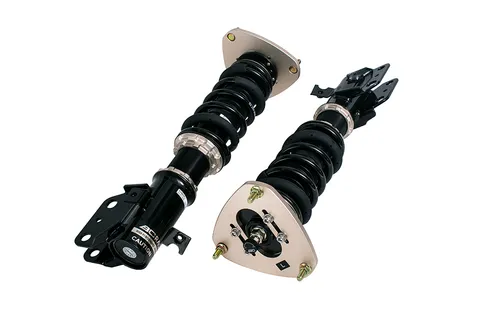
BC Racing · BCR-S-18
BC Racing Coilovers - Audi Q7 (06-15) [4L]
S-18 for the matching steel-sprung 4L
BC Racing · BCR-S-37
BC Racing Coilovers - Audi Q7 (Air To Coil) (06-15) [4L]
S-37 for an air-to-coil enquiry
All Q7 4L kit links and part numbers
Before you order.
Identify your car
Identify the first-generation 4L, exact engine and driven wheels. Keep the later 4M separate, and establish the original suspension as well as the parts fitted now.
Match the kit
Match the S-18 or S-37 application to the car. Use the air-to-coil reference only with a checked conversion plan for the exact vehicle.
Check what’s included
Confirm the supplied and reused components. For a conversion, agree any lost original functions and the required handling of controls, warnings and associated systems.
Check your modifications
Check wheel width, offset, tyres and spacers through steering and suspension movement at the intended height, including the car’s usual loads.
Plan fitting
Confirm current supply timing and the complete fitting plan before booking. Arrange alignment at the settled height and the installer’s follow-up checks.
See what the adjustments do.
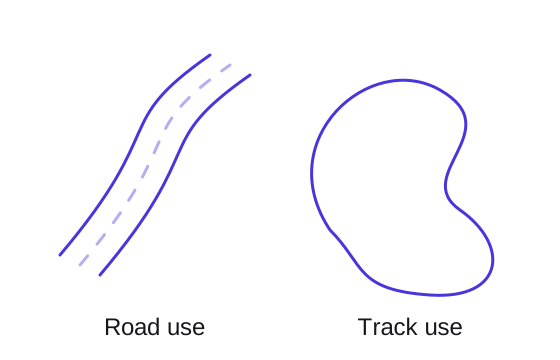
Choosing coilovers for road and track
Compare the kit against your roads, tyres and setup plans before counting adjusters.
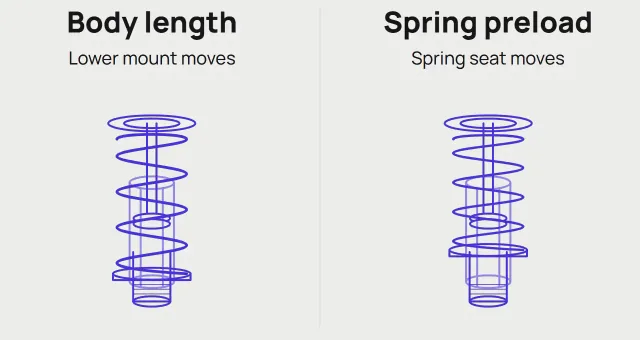
Ride height and spring preload
Understand the two adjustments before choosing a lowering range.
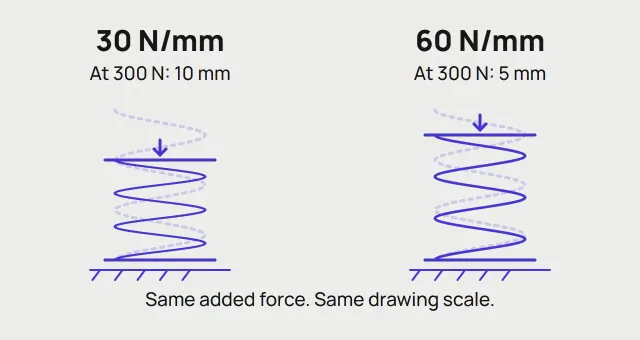
What spring rate tells you
Compare force and movement, read the units and choose a spring with the damper in mind.
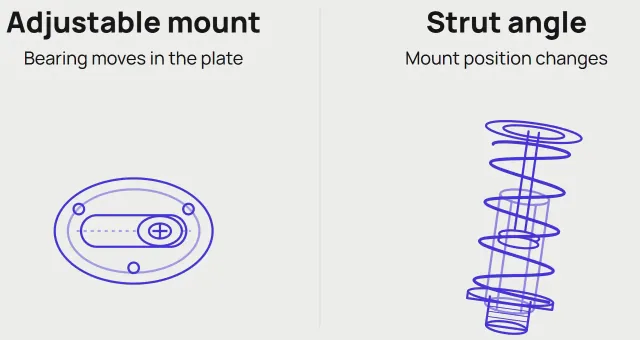
Spring rates and top mounts
Read the front/rear figures and check which mounts come with your kit.
Questions about Audi Q7 4L coilovers.
Check the details before choosing your kit.
Which Q7 does this guide cover?
The first-generation Q7, type 4L. The two current BC Racing rows name 2006 to 2015 Q7 AWD applications, with a separate air-to-coil reference. The later 4M uses a different application; confirm the chassis around the generation change.
Is the 4L rear spring separate from the damper?
On the steel-sprung 4L, the rear spring surrounds the damper in a combined unit within the independent double-wishbone suspension. Audi’s chassis training shows this arrangement. The factory air-suspension version has a combined air-spring and damper unit.
What is the current S-18 specification?
The current S-18 listing is BR RS for the maker-listed Q7 AWD 4L application. It specifies rubber mounts front and rear and nominal spring rates of 11 kg/mm front and 7 kg/mm rear. Confirm the exact car, original suspension and installation parts before ordering.
What is different about the S-37 reference?
S-37 explicitly names the Q7 4L AWD air-to-coil conversion. Its current BR RS listing specifies rubber mounts front and rear with nominal 13 kg/mm front and 10 kg/mm rear springs. It is a separate application, so do not substitute S-18 solely because both name a Q7.
Does the conversion listing settle the electronic work?
Have the complete conversion checked for your exact vehicle. The application label alone does not establish which original functions are lost, the handling of warnings or the work needed on associated systems. Agree the supplied components and electronic-system plan with the fitter before ordering.
Does the 2009 facelift make it a different generation?
The 2009 revision changed the grille, bumpers, lighting details and other trim within the first generation. Identify the 4L chassis and original suspension rather than choosing from appearance alone. A later registration can also need a generation check.
What wheel details matter before lowering a Q7?
Bring wheel width, offset, tyre size and spacer measurements, plus brake changes and the loads normally carried. Have clearance checked through steering and suspension movement at the intended height. A static arch gap does not show the available clearance throughout that movement.
Do these rows approve every engine or another shared-platform SUV?
Confirm the exact Q7 engine, equipment and current kit instructions. The broad 4L model row does not settle every individual vehicle or previous modification. Shared suspension components mentioned in Audi training do not establish that the Q7 kit fits a Touareg or Cayenne.
Let’s talk suspension.
Find your Q7, then tell us the original suspension and what is fitted now. Include the engine, wheel and tyre details, previous conversions and normal loads so the reference and fitting work can be checked.