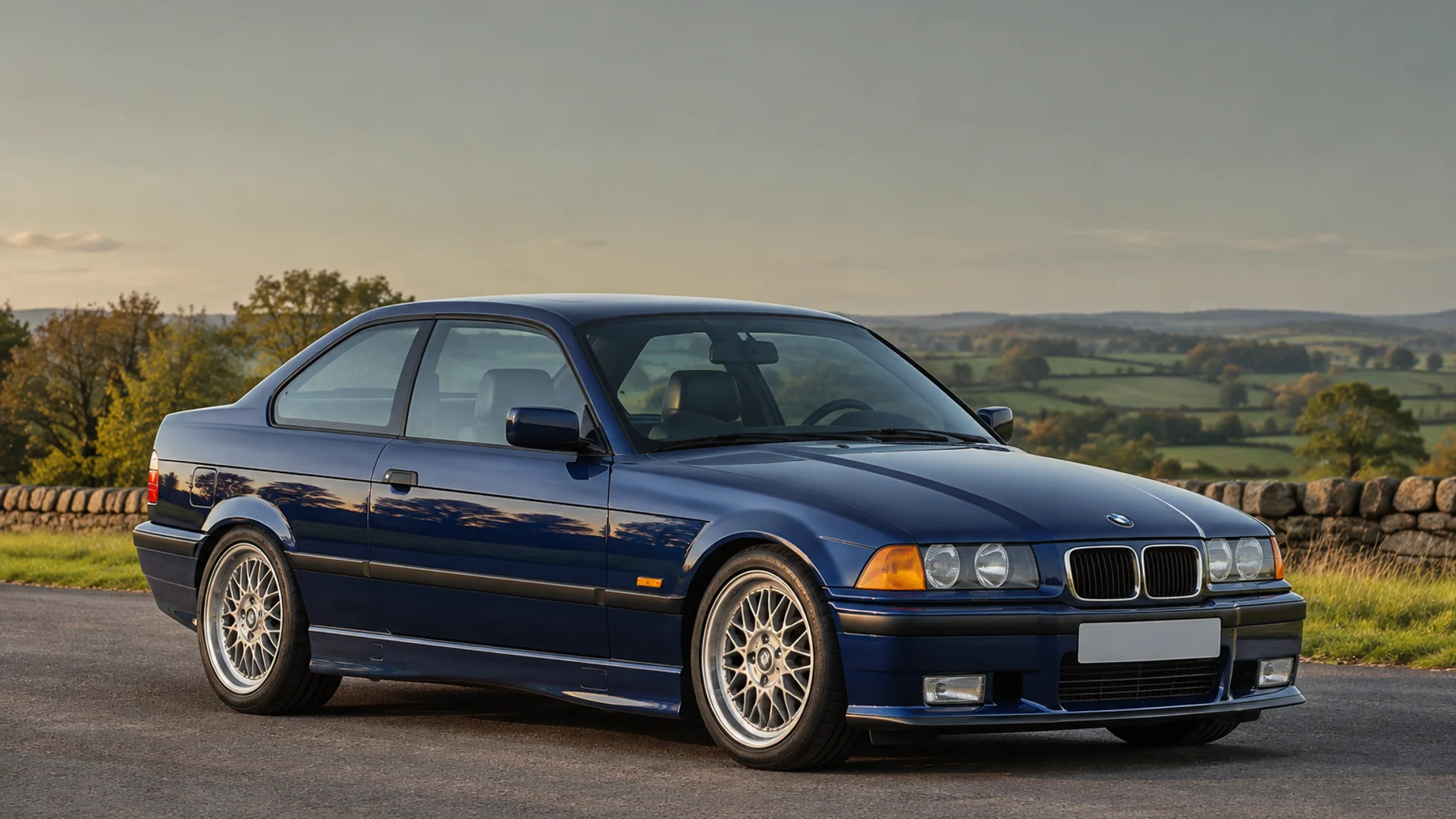
BMW E36.
The coilover guide.
Shop the coiloversA Coupe on period wheels, a daily-driven Compact or a developed M3: start with the body and the rear axle, then choose the suspension around the roads and circuits you use.
One generation, several different starting points
The E36 badge covers cars with different rear axles and different kit references. A Compact needs its own shortlist. M3 top mounts and the fitting notes for an estate or Convertible deserve the same attention as the engine and year.
Decide how much adjustment you will use and how much suspension travel the car needs. Keeping a separate rear spring is a valid road or circuit choice; a true rear coilover is a different hardware arrangement with its own installation requirements.
BMW introduced the E36 generation in 1990. Its longer wheelbase, lower profile and headlamps behind rectangular covers moved the 3 Series away from the upright E30 shape. A modest drop and well-chosen period wheels still suit those proportions.
The Coupe followed in 1992, with a lower roof and frameless door glass. The Convertible arrived in 1993, the Compact in 1994 and the Touring in 1995. Production dates differ by body and market; a broad 1990s application range does not make every kit suitable for every E36.
The Compact belongs to the E36 family, but its short hatchback body comes with a different rear axle. BMW training identifies semi-trailing arms for the E36/5 Compact and a central-link layout for the other E36 models. That difference carries through into the suspension references.
The E36 M3 introduced six-cylinder power to the M3 line. The early 3.0 and later 3.2 cars also need their own application checks. A kit described for an Evo or a particular top-mount arrangement should not be extended to every M3 from its title alone.
Today the available range spans road-oriented kits and adjustable motorsport systems. For a car used through the week, working travel, noise and tyre clearance can matter more than another adjustment knob. Circuit use gives those controls a purpose when tyres, alignment and setup time are planned together.
Check the car as it stands now. Engine swaps, changed front assemblies, different wheels and earlier repairs can matter more to the fitting decision than a registration lookup. The lookup identifies the car; it cannot inspect the parts fitted to it.
Start with your E36.
Match the model year, engine and body style before comparing brands.
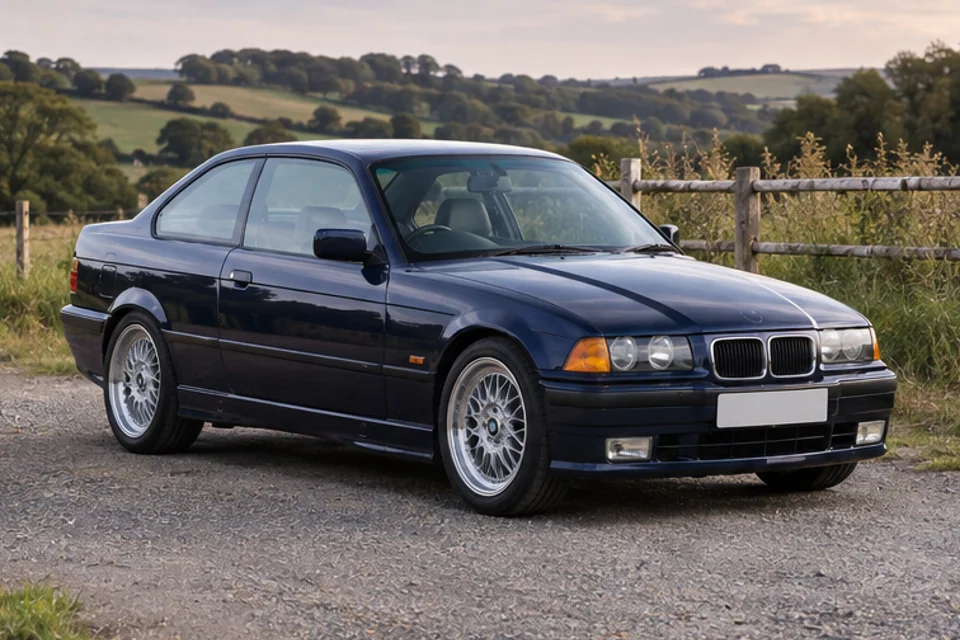
Saloon and Coupe
Use the non-M3 references for the listed engine, body and build date. BC I-01 and I-30 name Sedan/Coupe applications; the AST and MOTON tables list particular rear-drive engines. A long model-year range is not confirmation for a Touring, Convertible or converted car.
See Saloon and Coupe kits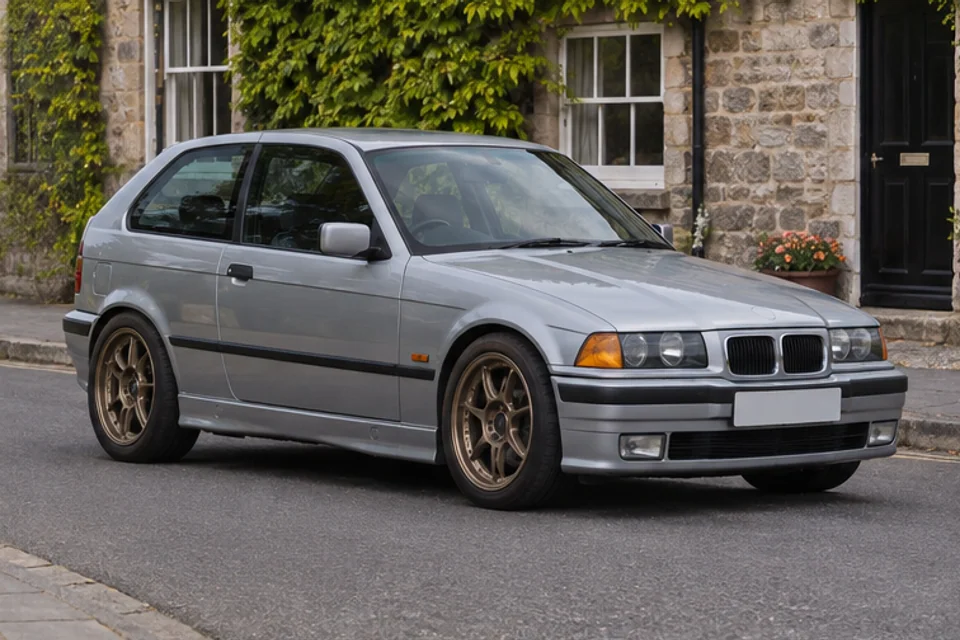
E36 Compact
The E36/5 hatchback has a semi-trailing-arm rear axle and dedicated BC, AST and SPAX references. Choose a listing naming the actual Compact, engine and build date. Early cars need particular care: the AST application window starts after the Compact entered production and extends beyond its production run.
See Compact kits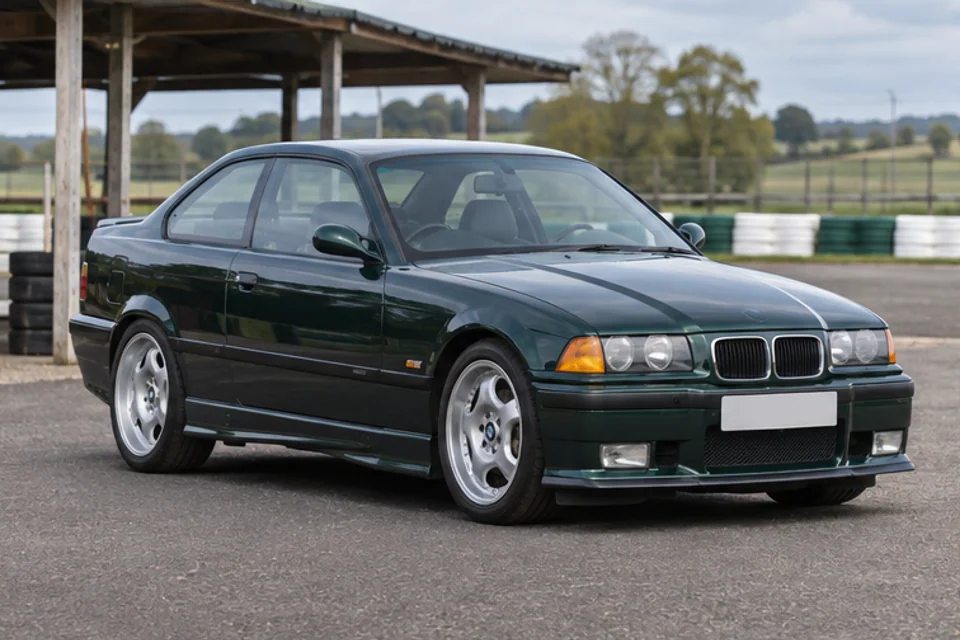
E36 M3
Match the engine, body, build date and front mounting arrangement. BC separates M3 applications; AST has M3 references alongside some shared E36/M3 sets. The SPAX M3 row carries note 28, stated on the current listing as Fits Evo 3.2 models. Resolve that restriction before choosing it for a 3.0.
See M3 kits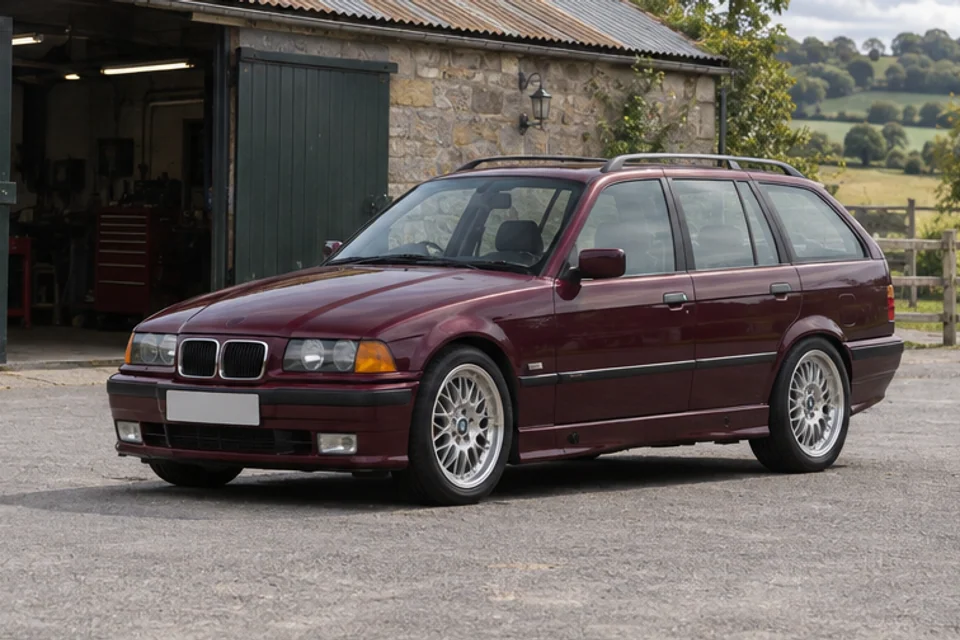
Touring and non-M3 Convertible
These bodies have explicitly named Eibach and SPAX applications. Read the individual engine and date row: Touring coverage and Convertible coverage are separate facts within each listing. Check axle loads, levelling-control exclusions and any anti-roll-bar restriction instead of borrowing the Coupe’s shortlist.
See named body applications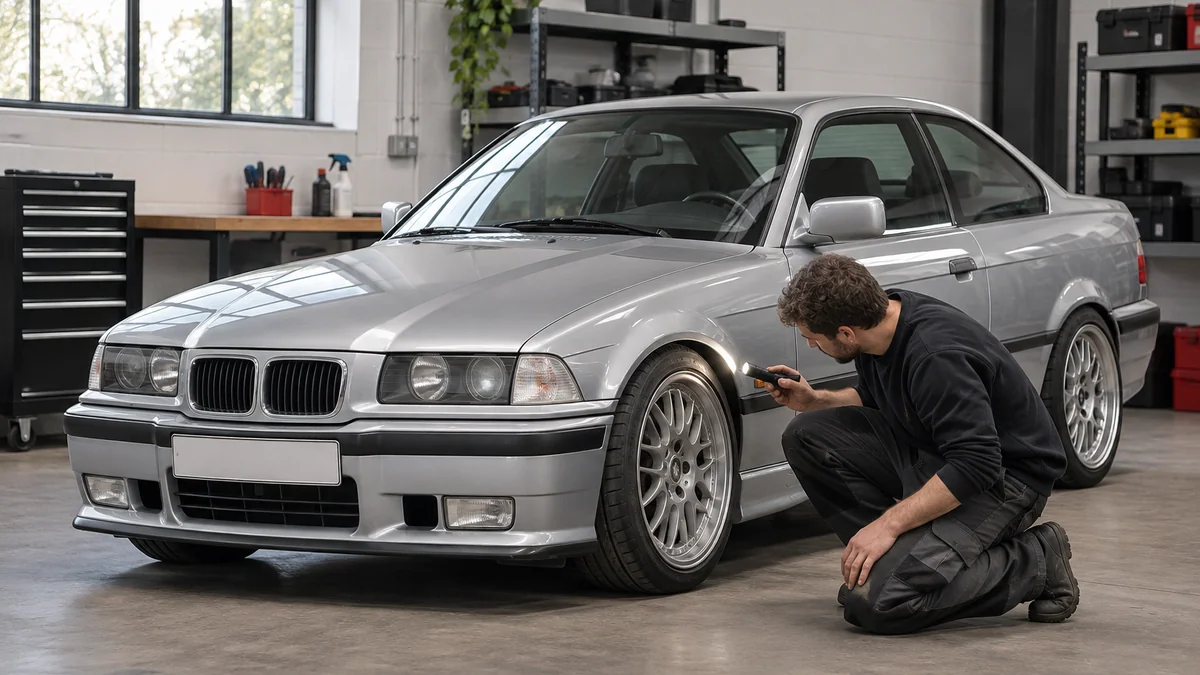
Check your E36 application
For an early build outside the kit dates, changed running gear, an engine swap or uncertain body coverage, ask for the exact part to be checked. A Z3’s E36/7 or E36/8 code does not make it a 3 Series application.
Ask about this E36What do you want
from the car?
Road miles, circuit weekends or a car built around the lap. Start with how you drive.
Keep useful travel and choose a height that works on the roads you drive.
Read the buying advice
For a standard-bodied 1996 rear-drive 328i Coupe, the I-01 BR-RA is a specific road-use starting point. Its selected configuration names a pillowball front and rubber rear mounting arrangement. Check the car’s actual mounts, wheel clearance and intended height before choosing spring specification or booking fitting.
- Confirm the non-M3 Coupe application
- Keep a practical working height
- Check mounts and wheel clearance
Use rebound adjustment with a tyre and alignment plan.
Read the buying advice
For the same 1996 rear-drive 328i Coupe, ACT-B1002S is the AST 5100 Street Performance example. The manufacturer set description names the Coupe, a separate rear spring arrangement and front top mounts. Agree the spring specification and mounting parts for the actual car. Make one recorded setup change at a time rather than copying another E36’s adjuster positions.
- Separate rear spring arrangement
- Agree springs and mounting parts
- Record tyre pressures and setup changes
Add separate damper controls when the build has time for measured setup work.
Read the buying advice
M 505 011S is the three-way MOTON example for the same 1996 rear-drive 328i Coupe. It uses remote reservoirs and a non-coilover rear arrangement: choosing a circuit kit does not automatically mean moving the rear spring onto the damper. Plan reservoir mounting, spring specification and adjustment access with the installer. Its extra controls are useful only alongside a consistent tyre, alignment and testing routine.
- Separate rebound and compression controls
- Plan reservoir mounting and access
- Retain the specified rear spring arrangement
Separate springs on both rear layouts.
On a standard BMW E36, the rear spring and shock absorber are mounted separately.
Layout only. Mounts and spring seats vary by kit.The main E36 range uses BMW’s central-link independent rear suspension. The E36/5 Compact uses semi-trailing arms. Both have the rear coil spring on its own seat beside the damper. The drawing identifies those spring and damper positions; it is not a scale drawing of either axle.
A true rear coilover carries the spring around the rear damper and changes where the spring load enters the body. BC lists separate integrated-rear references for the main E36, Compact and M3; AST and MOTON also distinguish rear arrangements by part. Agree structural condition, mounting and support requirements with the specialist fitting that exact kit. Check the supplied hardware and instructions before planning a conversion.
Understand rear springs, height and preload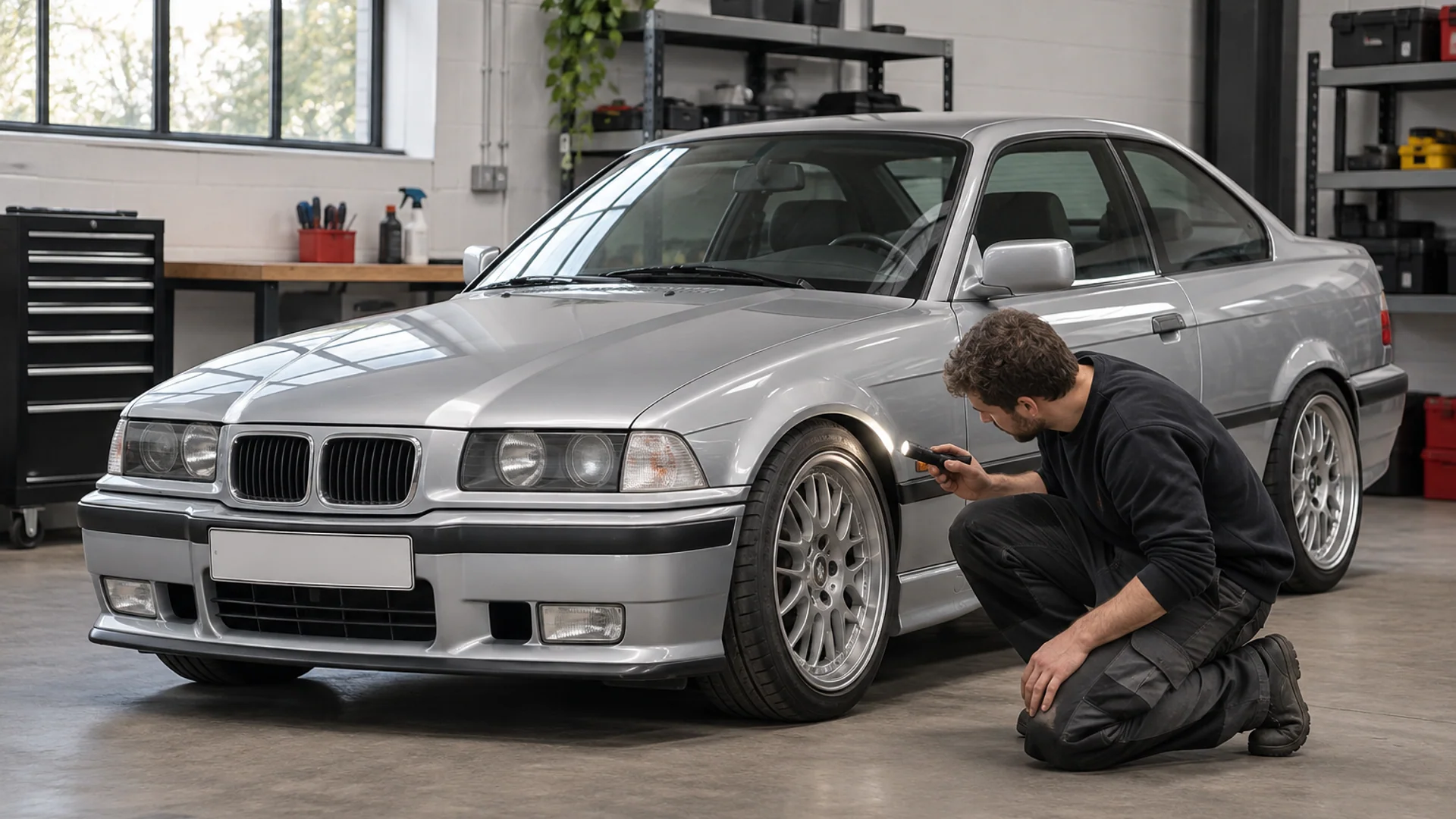
Check the car before choosing its working height
Have the installer identify the body, rear axle, front mounts and previous changes. Look at the mounting areas, bushes, joints and earlier repairs before adding firmer suspension. On a converted car, give the fitter the actual parts list as well as the registration.
Set the intended height with the chosen wheels and tyres, then check steering and suspension clearance. Agree alignment and any settling checks after fitting. Supply timing, supporting repairs and specialist work belong in the booking plan rather than being assumed from a product photograph.
Wheel offset, tyres and brakes
Record wheel width, offset, tyre size, spacers and brake changes. Check the inside of the wheel against the front strut as well as the tyre against the outer arch. Clearance must remain through steering and suspension movement, with the car carrying its normal load.
Anti-roll-bar attachments and top mounts
For the named non-M3 SPAX rows, note 4 excludes cars with the front anti-roll bar attached to the strut body. M3 mount geometry and changes made by previous owners also need checking. A generic no-modification statement cannot settle those application-specific points.
Rear axle, spring seats and supports
Identify Compact semi-trailing arms or the central-link arrangement before selecting the kit. Inspect the relevant mounting areas and spring seats. A true-rear conversion needs its own agreed support and installation plan; it is not simply a different adjuster position.
Bushes, joints and alignment
Worn joints or bushes can undermine a new damper package. After repairs and the final working height are agreed, have the alignment checked for the actual hardware. Compact and central-link rear axles do not have identical standard adjustment arrangements.
The current E36 range.
Compare the controls and hardware included in each range.

The current E36 choices separate standard Sedan/Coupe, Compact and M3, with additional true-rear-coilover references. Select the actual configuration, not the parent’s headline series. The I-26 manufacturer remark restricts off-centre top-mount availability for RM/HM/ZR; confirm the selected M3 hardware rather than treating every variant as the same kit.
View BC Racing E36 kits
RSX and double-adjustable RSX3 references cover named bodies, engines and dates. Some RSX rear drops are fixed while others are adjustable; read both axle values for the exact part. Non-M3 note 4 and M3 note 28 are fitting conditions. For RSX556, ask us to confirm the current Compact application before ordering: manufacturer catalogue versions differ.
View SPAX E36 kits
The product finder separates non-M3, M3 and Compact applications across 5100, 5200 and 5300 references. Some Compact sets also name the Z3; that shared part does not make all E36 or Z3 kits interchangeable. ACT-B1002S names a Coupe with a separate rear spring arrangement and front top mounts. Specify springs and mounting parts for the build.
View AST E36 kits
The E36/M3 MOTON range includes one-, two- and three-way systems, with separate NCO (separate rear spring) and coilover-rear references. M 505 011S retains a separate rear spring; M 505 013S is the three-way coilover-rear reference. Reservoir mounting, springs and support requirements need a build-specific plan. These current MOTON listings do not include a verified Compact option.
View MOTON E36 kits
Pro-Street S has separate non-M3 and M3 part numbers. The non-M3 listing records maximum axle loads of 890kg front and 1150kg rear; the M3 reference records 920kg front and 1130kg rear. Match the exact body, engine and certificate conditions. Notes include levelling-control exclusions, possible wheel-clearance spacers and additional original parts; they are not a blanket instruction to add spacers.
View Eibach E36 kitsFind your E36 coilovers.
Prices include UK VAT. Choose an application and brand, then open a kit for its current options and availability.
44 listings
Match the engine, body style and axle-load limits on the product page before ordering.
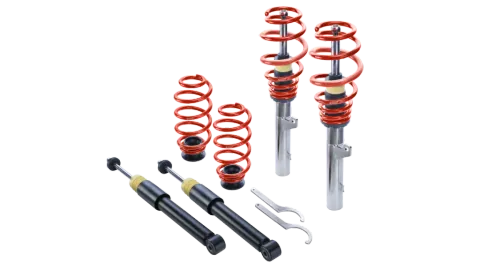
Eibach · PSS65-20-004-01-22
Eibach Pro-Street S Coilover Kit for BMW applications - PSS65-20-004-01-22
Saloon and Coupe / Touring and non-M3 Convertible
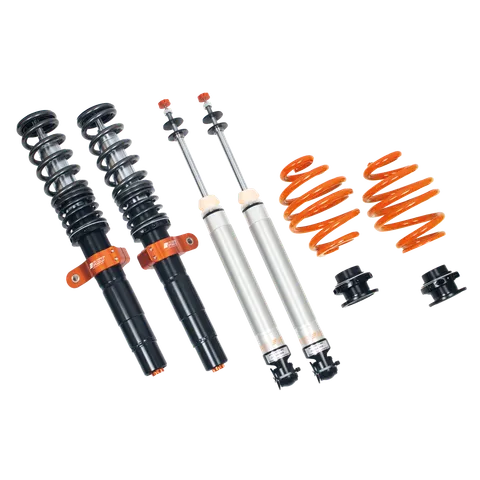
AST · ACU-B1201S
AST 5100 Street Coilovers for BMW E36/5 / E36/7 - ACU-B1201S
E36 Compact
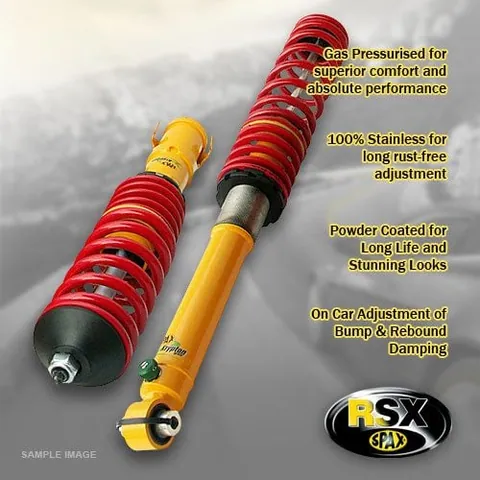
SPAX · RSX3-1952
SPAX RSX Double Adjustable Coilover Kit for BMW M3 Evo 3.2L; M3 3.0L Saloon; Coupe; Cabrio (see note) - RSX3-1952
E36 M3
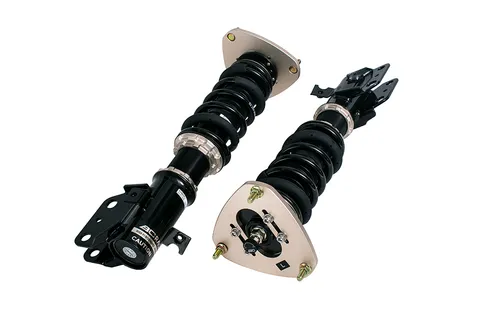
BC Racing · BCR-I-25
BC Racing Coilovers - BMW 3 Series Compact (94-00) [E36/5]
E36 Compact
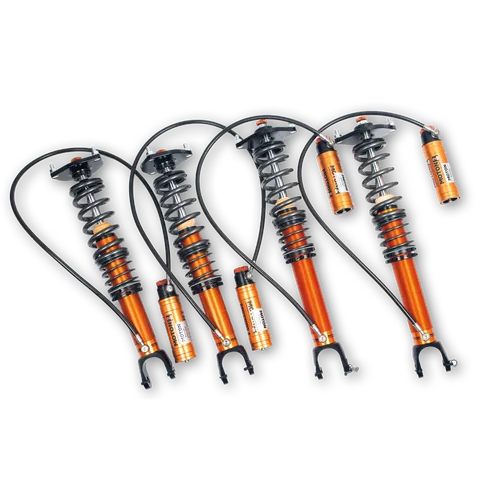
MOTON · M 505 060S
MOTON 2-Way Motorsport Coilovers for BMW E36 Applications - M 505 060S
Saloon and Coupe / E36 M3
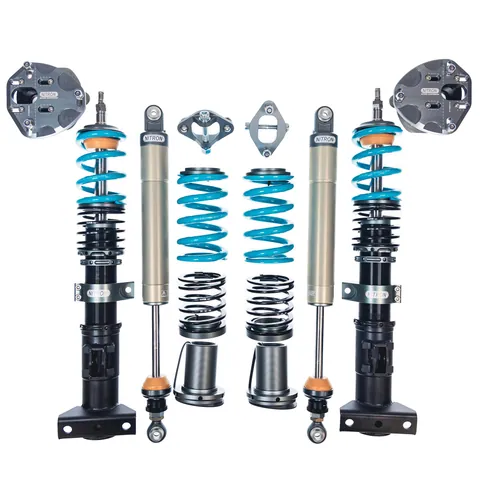
Nitron · NTCBM019R1_
Nitron BMW 3 (E36) Non M3, 3 Coupe (E36) Non M3 R1 Coilover Suspension Kit
Check your E36 application
All E36 kit links and part numbers
- BC Racing · BCR-I-01: BC Racing Coilovers - BMW 3 Series Sedan/Coupe (92-98) [E36]
- BC Racing · BCR-I-25: BC Racing Coilovers - BMW 3 Series Compact (94-00) [E36/5]
- BC Racing · BCR-I-26: BC Racing Coilovers - BMW 3 Series Sedan (Rm Not Offcentre Tm) (92-99) [E36 (M3)]
- BC Racing · BCR-I-30: BC Racing Coilovers - BMW 3 Series (True Rear Coilover) (92-98) [E36]
- BC Racing · BCR-I-79: BC Racing Coilovers - BMW 3 Series Compact (True Rear Coilovers) (94-00) [E36/5]
- BC Racing · BCR-I-120: BC Racing Coilovers - BMW 3 Series (True Rear Coilover) (RWD) (92-99) [E36 (M3)]
- AST · ACC-B1105S: AST 5100 Clubracing Coilovers for BMW E36 Applications - ACC-B1105S
- AST · ACC-B1202S: AST 5100 Clubracing Coilovers for BMW E36/5 / E36/7 - ACC-B1202S
- AST · ACS-B1002S: AST 5100 Street Coilovers for BMW E36 Applications - ACS-B1002S
- AST · ACS-B1005S: AST 5100 Street Coilovers for BMW M3 E36 - ACS-B1005S
- AST · ACS-B1201S: AST 5100 Street Coilovers for BMW E36/5 / E36/7 - ACS-B1201S
- AST · ACT-B1002S: AST 5100 Street Performance Coilovers for BMW E36 Applications - ACT-B1002S
- AST · ACT-B1005S: AST 5100 Street Performance Coilovers for BMW M3 E36 - ACT-B1005S
- AST · ACT-B1201S: AST 5100 Street Performance Coilovers for BMW E36/5 / E36/7 - ACT-B1201S
- AST · ACU-B1002S: AST 5100 Street Coilovers for BMW E36 Applications - ACU-B1002S
- AST · ACU-B1005S: AST 5100 Street Coilovers for BMW M3 E36 - ACU-B1005S
- AST · ACU-B1201S: AST 5100 Street Coilovers for BMW E36/5 / E36/7 - ACU-B1201S
- AST · RAC-B1002S: AST 5300 3-Way Motorsport Coilovers for BMW E36 Applications - RAC-B1002S
- AST · RAC-B1005S: AST 5300 3-Way Motorsport Coilovers for BMW M3 E36 - RAC-B1005S
- AST · RAC-B1201S: AST 5300 3-Way Motorsport Coilovers for BMW E36/5 / E36/7 - RAC-B1201S
- AST · RIV-B1002S: AST 5200 2-Way Motorsport Coilovers for BMW E36 Applications - RIV-B1002S
- AST · RIV-B1005S: AST 5200 2-Way Motorsport Coilovers for BMW M3 E36 - RIV-B1005S
- AST · RIV-B1201S: AST 5200 2-Way Motorsport Coilovers for BMW E36/5 / E36/7 - RIV-B1201S
- MOTON · M 505 011S: MOTON 3-Way Motorsport Coilovers for BMW E36 Applications - M 505 011S
- MOTON · M 505 013S: MOTON 3-Way Motorsport Coilovers for BMW E36 Applications - M 505 013S
- MOTON · M 505 060S: MOTON 2-Way Motorsport Coilovers for BMW E36 Applications - M 505 060S
- MOTON · M 505 061S: MOTON 2-Way Motorsport Coilovers for BMW E36 Applications - M 505 061S
- MOTON · M 505 172S: MOTON 1-Way Clubracer Coilovers for BMW E36 Applications - M 505 172S
- SPAX · RSX3-1088: SPAX RSX Double Adjustable Coilover Kit for BMW applications - RSX3-1088
- SPAX · RSX3-1112: SPAX RSX Double Adjustable Coilover Kit for BMW Compact 318TDs; 323Ti - RSX3-1112
- SPAX · RSX3-1952: SPAX RSX Double Adjustable Coilover Kit for BMW M3 Evo 3.2L; M3 3.0L Saloon; Coupe; Cabrio (see note) - RSX3-1952
- SPAX · RSX544: SPAX RSX Coilover Kit for BMW applications - RSX544
- SPAX · RSX556: SPAX RSX Coilover Kit for BMW Compact 318TDs; 323Ti - RSX556
- SPAX · RSX763: SPAX RSX Coilover Kit for BMW applications - RSX763
- SPAX · RSX764: SPAX RSX Coilover Kit for BMW applications - RSX764
- SPAX · RSX976: SPAX RSX Coilover Kit for BMW M3 Evo 3.2L; M3 3.0L Saloon; Coupe; Cabrio (see note) - RSX976
- Eibach · PSS65-20-004-01-22: Eibach Pro-Street S Coilover Kit for BMW applications - PSS65-20-004-01-22
- Eibach · PSS65-20-004-02-22: Eibach Pro-Street S Coilover Kit for BMW applications - PSS65-20-004-02-22
- Nitron · NTCBM019R3_: Nitron BMW 3 (E36) Non M3, 3 Coupe (E36) Non M3 R3 Coilover Suspension Kit
- Nitron · NTCBM015R3_: Nitron BMW 3 (E36) M3, 3 Coupe (E36) M3 R3 Coilover Suspension Kit
- Nitron · NTCBM019R1_: Nitron BMW 3 (E36) Non M3, 3 Coupe (E36) Non M3 R1 Coilover Suspension Kit
- Nitron · NTCBM015R1_: Nitron BMW 3 (E36) M3, 3 Coupe (E36) M3 R1 Coilover Suspension Kit
- Nitron · NTCBM017R3_: Nitron BMW Z3 (E36) R3 Coilover Suspension Kit
- Nitron · NTCBM017R1_: Nitron BMW Z3 (E36) R1 Coilover Suspension Kit
Before you order.
Identify your car
Identify the actual E36: body, engine, build date and any changed running gear. Separate Compact and M3 applications from the main Saloon/Coupe range.
Match the kit
Match the exact kit and configuration. Check body dates, axle loads, front mounts and the relevant anti-roll-bar or Evo fitting note.
Check what’s included
Agree the rear spring arrangement and inspect its supports. A true-rear conversion needs a specific installation plan.
Check your modifications
Record wheels, offset, tyres, spacers and brakes. Check inner-strut and arch clearance through steering and suspension movement at the intended height.
Plan fitting
Confirm supply timing, supporting repairs, fitting and alignment. Follow the exact kit’s instructions and the installer’s settling and recheck plan.
See what the adjustments do.
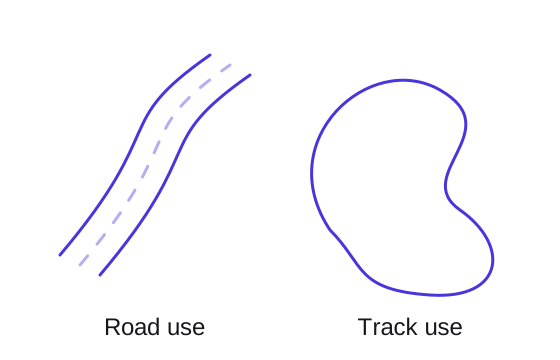
Choosing coilovers for road and track
Compare the kit against your roads, tyres and setup plans before counting adjusters.
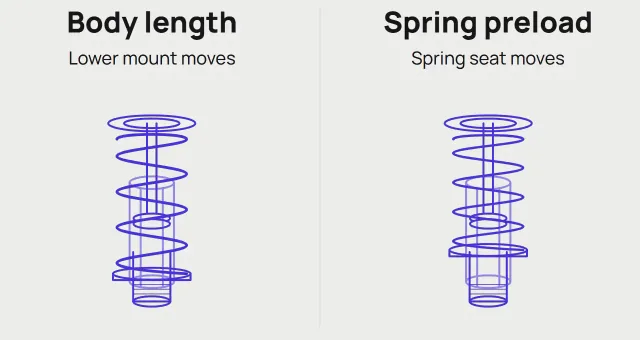
Ride height and spring preload
Understand the two adjustments before choosing a lowering range.
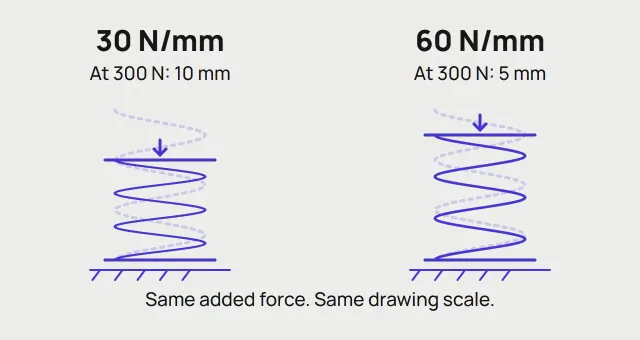
What spring rate tells you
Compare force and movement, read the units and choose a spring with the damper in mind.
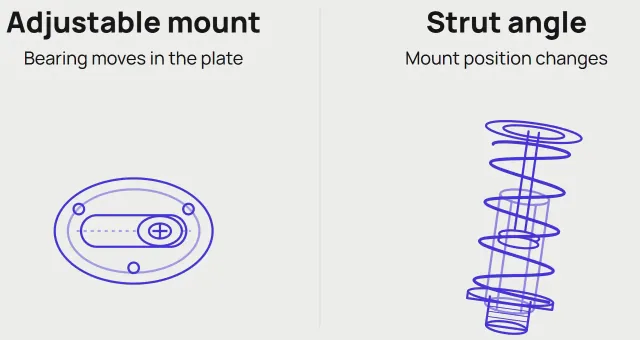
Spring rates and top mounts
Read the front/rear figures and check which mounts come with your kit.
Questions about BMW E36 coilovers.
Check the details before choosing your kit.
Do regular E36 coilovers fit the Compact?
Do not assume so. The E36/5 Compact has a different rear axle and dedicated kit references. Use a listing that names the actual Compact application, then check its engine, build date and fitting conditions. A shared AST Compact/Z3 reference does not make every Z3 kit an E36 Compact kit.
Does the E36 have separate rear springs and dampers?
Yes. BMW’s factory diagrams show a separate rear coil spring and damper for the main E36 central-link rear axle and the Compact semi-trailing-arm layout. Some aftermarket kits use a true rear coilover instead; that changes the spring load path and needs an agreed installation and support plan.
Can I fit an E36 M3 kit to a non-M3?
A general E36 chassis label is not enough. The current catalogue has distinct M3 references and some genuinely shared sets. Match the exact manufacturer part, front mounts, body and build date. Declare any changed hubs, mounts or running gear before asking for compatibility advice.
What is the SPAX anti-roll-bar restriction?
For the named non-M3 E36 applications, fitting note 4 says the fronts and kits do not fit cars with the front anti-roll bar attached to the strut body. Have the car’s actual attachment arrangement identified before ordering. Do not treat a generic product FAQ as an override of that fitting note.
Are the SPAX M3 references suitable for every 3.0 and 3.2?
That needs an exact application check. The row names M3 applications but carries note 28, expanded on the current listings as Fits Evo 3.2 models. Confirm the engine, build date, body and mount arrangement for the actual part instead of assuming the broader title approves every M3.
How low should I set E36 coilovers?
Start with the travel and clearance the car needs. Check inner-strut clearance, outer arches and steering movement with the actual wheels and tyres. Manufacturer lowering figures depend on the original suspension and do not prove that the lowest position is usable on your car. Agree the working height, then have the alignment checked.
Do I need a true rear coilover for track use?
No. The current motorsport range includes sets retaining a separate rear spring as well as coilover-rear versions. Choose around the build and the installer’s support plan. More damper controls or a higher price do not by themselves make a rear conversion necessary.
Will a registration lookup prove which kit fits my E36?
It helps identify the vehicle, but it cannot inspect axle loads, wheel clearance, changed running gear or previous repairs. Add the actual body, engine, build date and modifications, then check the exact kit’s current application and fitting conditions before ordering.
Let’s talk suspension.
Find your E36, then add the body, engine, build date, wheel details and any changed running gear. Tell us whether it is a road car or a circuit build so the exact application and kit can be checked.